
**Expert Warns Oldest Cave Art Dates May Be Too Old**
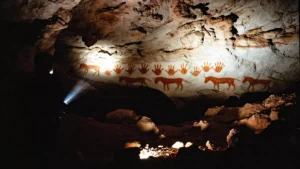
A prominent French researcher has sparked fresh debate over some of the world’s oldest claimed cave paintings and hand stencils. He argues that uranium-thorium dating, the key method used to date these artworks, may have produced ages that are significantly too old. The criticism challenges high-profile claims that Neanderthals created symbolic art in Europe over 65,000 years ago and that modern humans produced art in Indonesia nearly 68,000 years ago.
This controversy touches on one of the biggest questions in human evolution: when did our ancestors and close relatives begin making symbolic art? If the oldest dates hold, they rewrite the timeline of creative intelligence. If they are inflated, scientists must rethink long-held assumptions about Neanderthals and early modern humans.
Expert Warns Oldest Cave Art Dates May Be Too Old

### The Rise of Very Old Cave Art Dates
In recent years, researchers working in Spain and Indonesia have published astonishingly ancient dates for prehistoric art. Hand stencils in Sulawesi, Indonesia, were dated to about 67,800 years ago. Red paintings in Spanish caves such as La Pasiega and Ardales produced ages around 65,000 years. These Spanish dates attracted worldwide attention because they suggested Neanderthals, not modern humans, were the first artists in Europe.
Such findings have reshaped textbooks and museum displays. They imply that symbolic thinking and artistic expression appeared much earlier than previously believed and may have developed independently in different human species.
However, Georges Sauvet of the Center for Research and Studies of Prehistoric Art in France believes many of these dates are unreliable. In a detailed critique published in the *AOJ of Histoarchaeology and Anthropological Exploration*, he warns that researchers may be rushing to claim record-breaking ages without properly addressing limitations in the dating method.
### How Uranium-Thorium Dating Works
Uranium-thorium (U-Th) dating measures the age of calcite layers that form over cave paintings. When mineral-rich water flows across cave walls, it deposits thin calcite crusts that trap uranium from groundwater. Over time, uranium-234 decays into thorium-230. Scientists calculate the age by measuring the changing ratio between these isotopes.

This technique became essential because many cave paintings were created with mineral pigments or engraved directly into rock, leaving no organic material for radiocarbon dating. A calcite layer above a painting gives a minimum age for the artwork beneath it.
Sauvet argues the method assumes the calcite layer remained a chemically “closed system” after formation. In reality, many caves experience ongoing water movement that can remove uranium from the mineral layers. When uranium leaches out, the remaining thorium makes the sample appear much older than it actually is.
### Problematic Dates from Famous Sites
Sauvet highlights several cases where U-Th dates conflict with other evidence:
– At Nerja Cave in southern Spain, one calcite layer produced a U-Th age of nearly 119,000 years. Yet radiocarbon dating of the underlying charcoal drawing gave an age of about 19,000 years, and the calcite itself dated closer to 14,000 years.
– In Sulawesi’s Leang Balangajia cave, an outer calcite layer dated roughly 7,800 years older than the layer directly beneath it — an impossible result if the layers formed sequentially.
He also points to mineral complications. Some cave deposits contain aragonite, which absorbs more uranium than calcite. When aragonite transforms into calcite, uranium can be released and washed away, again creating artificially old dates. This process may explain some of the extreme ages reported from Spanish caves like La Pasiega.
### Why the Debate Matters for Human Evolution
The age of the oldest cave art directly influences theories about Neanderthals and modern humans. If the Spanish paintings truly exceed 60,000 years, they represent the earliest known symbolic art and suggest Neanderthals possessed advanced cognitive abilities. This would challenge the long-held idea that symbolic behavior was a unique advantage of Homo sapiens.
If Sauvet is correct and many dates are inflated, the evidence for very early Neanderthal art weakens. The oldest confirmed artworks would then likely belong to modern humans who entered Europe around 45,000 years ago. This would restore a more traditional timeline while still acknowledging Neanderthals as intelligent and capable.
The controversy also affects interpretations of Southeast Asian art. Very old dates from Sulawesi suggest modern humans developed symbolic traditions soon after leaving Africa. Questioning those dates would push back the timeline for the emergence of artistic behavior.
### Strengths and Limitations of U-Th Dating
Proponents of the older dates emphasize that careful sampling and strict laboratory protocols can minimize errors from uranium loss. Many recent studies include multiple samples and cross-checks to ensure reliability. They argue that when applied correctly, U-Th dating remains one of the best tools available for dating cave art.
Sauvet agrees the method has value but calls for greater caution. He recommends combining U-Th dating with radiocarbon analysis whenever possible and conducting detailed mineralogical testing of calcite samples before publishing groundbreaking results. He also stresses the need for transparency about potential open-system behavior in cave environments.
### The Role of Multiple Dating Methods
Most archaeologists now recognize that no single dating technique is perfect. The strongest studies combine several approaches:
– Radiocarbon dating for organic materials
– U-Th dating for calcite layers
– Optically stimulated luminescence for sediments
– Detailed stratigraphic analysis
When different methods converge on similar ages, confidence increases. When they conflict, researchers must investigate further. Sauvet’s critique encourages this more rigorous, multi-method approach rather than relying heavily on a single technique.
### Broader Context of Prehistoric Cave Art
Cave art represents one of humanity’s earliest expressions of symbolic thought. Images of animals, hand stencils, and abstract signs show that ancient people observed their world, communicated ideas, and created meaning through visual symbols.
Famous European sites like Lascaux and Altamira contain spectacular paintings dated to around 17,000–35,000 years ago. The much older claims from Spain and Indonesia have pushed the origins of art deeper into the past. Indonesia’s Sulawesi caves, in particular, have produced a growing number of early dates that suggest artistic traditions in Southeast Asia developed independently or alongside those in Europe.
Questioning these dates does not diminish the importance of the art. Even if some ages are younger than currently claimed, the paintings still represent remarkable achievements by ancient humans and Neanderthals.
### Future Directions in Cave Art Research
The scientific community continues to refine dating techniques. New methods for detecting and correcting uranium loss are under development. Improved imaging technologies allow researchers to study calcite layers in greater detail without damaging the art.
Collaborative projects between geochemists, archaeologists, and dating specialists will likely produce more reliable chronologies in coming years. Many researchers now advocate for open data sharing so independent teams can re-analyze results and test competing interpretations.
Public fascination with the oldest cave art remains strong. Discoveries that push back timelines generate excitement, but they also require careful scrutiny. Healthy scientific debate, as seen in Sauvet’s critique, ultimately strengthens our understanding of the past.
### Conclusion
The challenge to extremely old cave art dates reminds us that science advances through careful questioning and rigorous testing. While uranium-thorium dating has produced exciting results, Georges Sauvet’s analysis highlights important limitations that researchers must address before accepting record-breaking ages.
Whether the oldest paintings ultimately prove to be 65,000 or 35,000 years old, they still reveal profound creativity among early humans and Neanderthals. As dating methods improve and more caves are studied, we will gain a clearer, more accurate picture of when and where symbolic art first emerged.
This ongoing debate enriches our appreciation of prehistoric creativity while demonstrating the self-correcting nature of scientific research. The world’s oldest cave art continues to inspire wonder — and healthy scientific discussion — about the deep roots of human imagination.
**FAQ**
**Q: What dating method is being questioned?**
A: Uranium-thorium (U-Th) dating, which measures calcite layers formed over cave paintings, is under scrutiny for potentially producing ages that are too old due to uranium loss.
**Q: Which sites have the oldest claimed cave art?**
A: Hand stencils in Sulawesi, Indonesia (around 67,800 years) and paintings in Spanish caves such as La Pasiega (around 65,000 years) have produced the most discussed ancient dates.
**Q: Why do these dates matter for human evolution?**
A: Very old dates in Spain suggest Neanderthals created symbolic art long before modern humans arrived in Europe, changing ideas about Neanderthal intelligence and creativity.
**Q: What causes inaccurate U-Th dates?**
A: Ongoing water movement in caves can remove uranium from calcite layers, making samples appear significantly older than they actually are.
**Q: What solution does the researcher propose?**
A: Georges Sauvet recommends using multiple dating methods, careful mineral testing, and greater caution before announcing extremely old ages for cave art.
**Q: Are all old cave art dates now invalid?**
A: No. The critique calls for more rigorous verification rather than dismissing the entire method. Many dates may still prove reliable with additional testing.
**Q: Where can the public see these ancient paintings?**
A: Many important caves, including those in Spain and Indonesia, have restricted access to protect the art, but replicas and virtual tours are available in museums and online.