
Ming Dynasty Tools Reveal Toxic Herbal Anesthetic
Archaeologists have discovered the first direct chemical evidence of surgical anesthesia in ancient China. Microscopic analysis of 600-year-old iron surgical tools from a Ming Dynasty tomb has uncovered traces of a powerful herbal anesthetic derived from the toxic plant monkshood. This breakthrough provides physical proof that Chinese physicians in the 14th and early 15th centuries used carefully prepared plant compounds to manage pain during operations.
The findings from the tomb of physician Xia Quan in Jiangyin, Jiangsu province, offer a rare glimpse into sophisticated medical practices during the early Ming Dynasty. They demonstrate that East Asian surgeons possessed advanced pharmacological knowledge, balancing the dangers of toxic substances with the need to relieve patient suffering centuries before modern anesthesia emerged.
Ming Dynasty Tools Reveal Toxic Herbal Anesthetic
 A large hidden hydraulic system mapped around the Urartian fortress of Argishtikhinili in Armenia
### The Remarkable Discovery in Xia Quan’s Tomb
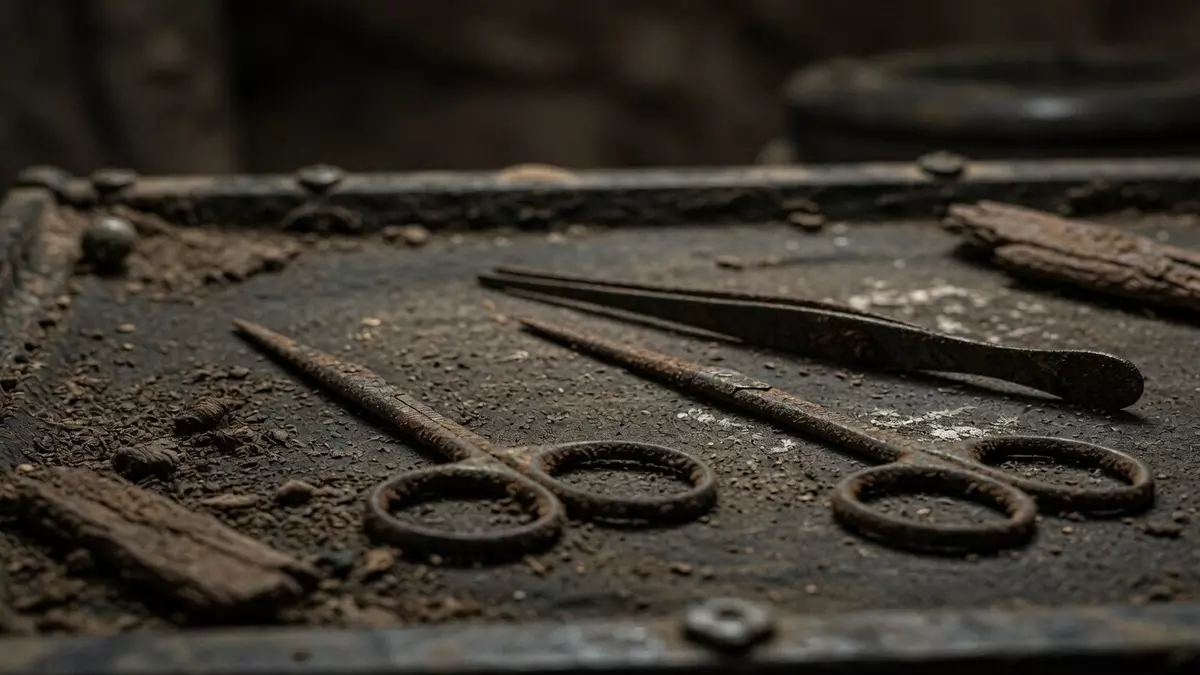
In 2026, researchers published results from a detailed study of two iron surgical instruments — a pair of scissors and tweezers — recovered from the tomb of Xia Quan, who lived between 1348 and 1411 CE. Using cutting-edge stimulated Raman scattering (SRS) microscopy, scientists identified microscopic residues of aconitine, a potent alkaloid found in plants of the Aconitum genus, commonly known as monkshood or wolfsbane.
This non-destructive imaging technique allowed experts to map the distribution of the chemical on the tool surfaces without damaging the artifacts. The residue patterns suggest that liquid medicine containing the anesthetic splashed onto the instruments during actual surgical procedures, likely applied topically to the patient’s skin before incisions.

The presence of aconitine on both tools marks the first time such direct physical evidence has been linked to ancient Chinese surgical instruments. Previous knowledge of herbal anesthesia in China came almost entirely from historical medical texts, making this archaeological confirmation particularly significant.
### Understanding Aconitine and Ancient Pain Management
Aconitine is a highly toxic compound that affects the nervous and cardiovascular systems. In small, carefully controlled doses, however, it can act as a powerful local anesthetic and analgesic. Ming Dynasty physicians were clearly aware of both its benefits and extreme dangers.
Historical Chinese medical records describe sophisticated preparation methods to reduce toxicity. Doctors often boiled the plant roots with vinegar or combined them with ingredients like mung beans to neutralize harmful effects while preserving pain-relieving properties. The new chemical evidence confirms these written descriptions were based on real medical practice.
The tools themselves provide additional insight into Ming surgical techniques. Both the scissors and tweezers were made from high-quality iron alloys containing over 95% iron, reflecting skilled local metallurgy. Their functional designs were well-suited for precise cutting and tissue handling, showing that Ming physicians approached surgery with both practical tools and pharmacological support.
### Why This Discovery Changes Medical History
For historians of medicine, this finding fills a crucial gap in our understanding of pre-modern anesthesia. Before the development of ether and chloroform in the 19th century, surgeons worldwide relied on herbal preparations, alcohol, or opium to manage pain. The Jiangyin instruments now provide tangible proof that Chinese doctors had developed systematic approaches to herbal anesthesia by the 14th century.
The careful application methods suggested by the residue distribution indicate a sophisticated understanding of dosage and safety. Excessive amounts of aconitine could cause paralysis or death, so physicians likely used precise topical applications rather than general ingestion. This level of pharmacological control points to a mature medical tradition that combined empirical observation with practical experience.
The study also highlights the value of advanced scientific techniques in archaeology. Traditional residue analysis often requires larger samples that rarely survive on metal tools. SRS microscopy overcame this limitation, allowing researchers to detect and map microscopic chemical traces while preserving the artifacts for future study.
### Medical Practice During the Early Ming Dynasty
The Ming Dynasty (1368–1644 CE) was a period of cultural and scientific flourishing in China. Physicians like Xia Quan belonged to a professional medical class that benefited from state support, printed medical texts, and accumulated knowledge from previous dynasties.
Surgery during this era included treatments for wounds, tumor removal, and various external conditions. The use of aconitine-based preparations would have allowed doctors to perform more complex procedures with reduced patient suffering. The presence of these tools in a physician’s tomb suggests they were important personal instruments used throughout his career.
Jiangyin, located in Jiangsu province, was part of a prosperous region with active trade and intellectual exchange. The medical knowledge reflected in Xia Quan’s tomb likely drew from both local traditions and broader Chinese pharmacological heritage dating back to earlier dynasties.
### Broader Context of Ancient Anesthesia Worldwide
The Ming Dynasty discovery adds China to a global history of pain management. Ancient civilizations used various substances:
– Egyptians and Greeks employed opium and mandrake
– Indians developed herbal mixtures including cannabis
– Mesoamerican cultures used coca leaves
What makes the Chinese evidence distinctive is the combination of detailed historical texts and now direct chemical proof on surgical instruments. This allows researchers to connect written knowledge with physical practice more confidently than in many other ancient societies.
The careful processing of toxic plants also demonstrates a scientific mindset. Ming physicians systematically experimented with methods to reduce toxicity while maintaining efficacy — an approach that foreshadows modern pharmacology.
### The Role of Technology in Archaeological Science
This study exemplifies how new analytical methods are transforming archaeology. Stimulated Raman scattering microscopy represents a major advance in residue analysis. It provides high-resolution chemical mapping without requiring the removal of material from artifacts.
Professor Congcang Zhao of Northwest University emphasized that this technology solved a long-standing problem in studying tiny residues on ancient objects. As similar techniques become more widely available, researchers expect to uncover more evidence of ancient medical practices, trade in medicinal plants, and pharmacological innovations.
The research also underscores the importance of preserving and re-examining museum collections. Objects studied decades ago can yield dramatic new insights when modern scientific tools are applied.
### Implications for Understanding Ming Dynasty Society
Beyond medicine, the discovery offers insights into Ming Dynasty craftsmanship, social structure, and attitudes toward health. The quality of the iron tools reflects advanced metallurgical skills, while the use of sophisticated anesthetics suggests a society that valued both practical care and intellectual medical traditions.
Physicians occupied respected positions in Ming society. Their tombs often contained tools, texts, and other items reflecting professional identity. The presence of anesthetic residues indicates that at least some doctors performed invasive procedures rather than limiting themselves to herbal prescriptions.
### Future Research Directions
Researchers hope to expand this work by examining additional surgical instruments from other Ming and earlier tombs. Comparative studies could reveal whether aconitine use was widespread or limited to certain regions and practitioners.
Further analysis of residue distribution patterns may provide more details about specific surgical techniques. Chemical studies of other medicinal plants mentioned in historical texts could yield additional direct evidence of ancient Chinese pharmacology.
As more tombs are excavated and analyzed with non-destructive methods, our picture of pre-modern Asian medicine will continue to grow richer and more nuanced.
### Conclusion
The detection of aconitine residues on 600-year-old Ming Dynasty surgical tools from Jiangyin represents a landmark discovery in the history of medicine. It provides the first direct chemical evidence that Chinese physicians used toxic herbal anesthetics during operations, confirming and expanding upon centuries-old written records.
This finding demonstrates the remarkable sophistication of early Ming medical practice and highlights the value of combining traditional archaeology with advanced scientific analysis. The careful preparation and application of dangerous plant compounds reveal physicians who balanced risk and benefit with considerable skill.
As researchers continue to examine ancient medical artifacts with new technologies, we gain deeper appreciation for the ingenuity of past civilizations in confronting pain and disease. The traces left on Xia Quan’s scissors and tweezers offer a powerful connection to surgeons who worked six centuries ago, attempting to heal their patients while minimizing suffering through remarkable pharmacological knowledge.
This discovery not only enriches our understanding of Chinese medical history but also reminds us of the universal human drive to alleviate pain and advance healing practices across cultures and centuries.
**FAQ**
**Q: What substance was found on the Ming Dynasty surgical tools?**
A: Researchers identified aconitine, a toxic alkaloid from the monkshood plant, used as a topical anesthetic.
**Q: How old are the surgical instruments from the Jiangyin tomb?**
A: The iron scissors and tweezers date to the early Ming Dynasty, between 1348 and 1411 CE.
**Q: How did ancient Chinese doctors reduce aconitine toxicity?**
A: Historical texts describe boiling the plant with vinegar or mixing it with mung beans and other ingredients to weaken harmful effects.
**Q: What technology was used to detect the anesthetic residue?**
A: Stimulated Raman scattering (SRS) microscopy allowed non-destructive identification and mapping of microscopic chemical traces on the tools.
**Q: Why is this discovery important for medical history?**
A: It provides the first direct physical evidence of herbal anesthesia use in ancient Chinese surgery, confirming written records with chemical proof.
**Q: Where was the tomb of physician Xia Quan located?**
A: The tomb was found in Jiangyin, Jiangsu province, in eastern China.
**Q: What do the findings suggest about Ming Dynasty medicine?**
A: Ming physicians possessed advanced pharmacological knowledge and used carefully prepared toxic plants for pain management during surgical procedures.
**Q: Will more ancient medical tools be studied this way?**
A: Yes. Researchers plan to examine additional instruments from other periods to build a more complete picture of pre-modern Chinese surgery and pharmacology.