
Table of Contents
Sasanian Helmets Reveal Advanced Brass Technology in Persia
Ancient Persian metalworkers mastered brass production far earlier and more skillfully than previously believed. A new study of Sasanian artifacts has uncovered sophisticated use of this golden-colored alloy in military helmets, jewelry, and equipment across the vast Persian Empire between the 4th and 7th centuries CE. The findings highlight a level of metallurgical expertise that rivaled contemporary Roman and Byzantine craftsmen.
This research transforms our understanding of technological innovation in one of the ancient world’s most powerful empires. By analyzing artifacts from distant frontiers, scientists have revealed how Sasanian artisans strategically selected brass for both practical and prestigious purposes, from battlefield protection to royal display.
Sasanian Helmets Reveal Advanced Brass Technology in Persia
### The Sasanian Empire and Its Metallurgical Traditions
The Sasanian Empire (224–651 CE) was the last great pre-Islamic Persian kingdom. At its height, it stretched from Mesopotamia to Central Asia, rivaling the Byzantine Empire in the west and influencing trade routes along the Silk Road. Known for administrative efficiency, grand architecture, and a formidable military, the Sasanians also supported skilled craft traditions in metalworking, glassmaking, and textiles.
 Seizure of Carthaginian Bronze Coins Highlights Ancient Economy and Illicit Antiquities Trade
Brass — an alloy of copper and zinc — held special importance. Unlike bronze (copper and tin), brass offered a bright golden appearance and unique working properties. Producing it in antiquity required advanced knowledge. Artisans used a cementation process: heating copper with zinc ore and charcoal so zinc vapor diffused into the copper. This created brass with zinc levels typically below 30 percent.
Until recently, scholars assumed Sasanian metalworkers relied mostly on bronze. The new study proves otherwise, showing deliberate and varied brass use across different periods and object types.
### Discoveries from Two Key Sasanian Cities
Researchers from the British Museum and the University of Cambridge examined artifacts from Merv (in modern Turkmenistan) and Nineveh (in modern Iraq). These cities lay on opposite frontiers of the empire, providing a broad view of metallurgical practices.
**Early Sasanian Period (4th–5th centuries CE)**
Excavations at Merv yielded brass objects including:
– A bracelet fragment
– Rings or hooks
– Decorative fittings
– An elaborate hairpin set with lapis lazuli and colored glass
Chemical analysis revealed zinc levels ranging from 2% to 27%. This wide variation suggests metalworkers recycled older brass, mixed alloys, or worked with inconsistent supplies. Many pieces contained added lead to improve casting flow. These early objects were primarily cast in molds and used for decorative or high-status items. The golden color of brass carried prestige, making it ideal for personal adornment and display.
**Late Sasanian Period (6th–7th centuries CE)**
By this time, brass use expanded into more functional applications. Artisans exploited its excellent cold-working properties — brass can be hammered, cut, drilled, and riveted more easily than bronze without cracking. This made it valuable for sheet-metal objects.
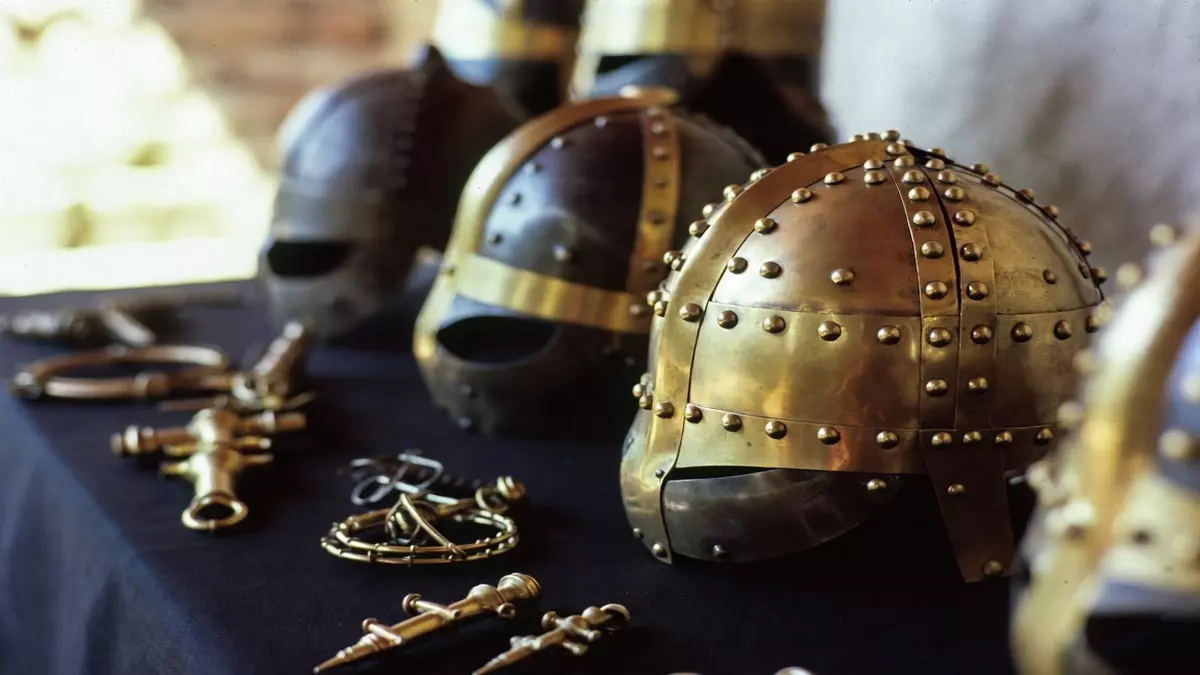
The most impressive examples come from Nineveh, where researchers studied four rare Sasanian helmets. These segmented helmets consisted of multiple iron plates joined together and covered with thin brass sheeting. Brass strips and rivets provided structural support. In one helmet, brass was strategically placed to maximize visual impact while minimizing material waste — hidden beneath support bands where it wasn’t visible.
Similar brass elements appear in other military items, including scale armor from Qasr-e Abu Nasr and a mace head with an iron core and brass coating. These finds suggest brass played an increasingly important role in Sasanian military equipment.
### Why Brass Mattered for the Sasanian Military
The Sasanian army was one of the most organized forces of its time. It featured heavy cavalry (cataphracts), infantry, and specialized units. Standardized equipment and repair systems were essential for maintaining such a large military.
Brass offered practical advantages for armor and helmets:
– Corrosion resistance better than iron
– Attractive golden appearance for elite units
– Workability for complex assembly and repairs
The use of brass in helmets and armor indicates access to reliable supplies and skilled artisans capable of large-scale production. This likely required some level of state oversight, especially during periods of frequent warfare against Byzantium and nomadic groups.
### Technical Innovations in Sasanian Metallurgy
The study reveals sophisticated material knowledge. Sasanian metalworkers understood how zinc content affected color, strength, and workability. They adjusted alloys depending on the object’s purpose — higher zinc for brighter color in jewelry, moderate levels for durable sheet metal in helmets.
Comparison with later Islamic-period brass from Merv (9th century) shows clear technological progress. Islamic brass had higher, more consistent zinc levels and fewer impurities, indicating improved production methods and greater availability. In the Sasanian era, brass remained relatively scarce and prestigious. By the Islamic period, it became more common, shifting value from the material itself to the quality of craftsmanship.
### Challenges in Studying Ancient Alloys
Many museum objects labeled simply as “bronze” or “copper alloy” have never undergone scientific testing. The Nineveh helmets, for example, were long classified as bronze until this detailed analysis identified significant brass components. This highlights the need for more systematic material studies of existing collections.
Non-destructive and minimally invasive techniques — such as X-ray fluorescence and scanning electron microscopy — now allow researchers to examine rare artifacts without damage. These methods continue to rewrite our understanding of ancient technologies.
### The Broader Impact on Ancient Technology Studies
This research challenges the idea that brass technology was primarily a Roman or Byzantine achievement. The Sasanians developed their own sophisticated traditions, adapting the alloy for both artistic and military needs across a vast empire.
The findings also connect to larger questions about trade and resource management. Zinc ores had to be sourced and transported, indicating organized supply networks. The ability to produce consistent alloys points to specialized workshops, possibly under royal patronage.
As one of the great powers of late antiquity, the Sasanian Empire transmitted knowledge that influenced later Islamic metallurgy and European developments. Understanding their brass technology helps trace these important cultural and technical exchanges.
### What This Means for Modern Archaeology
Re-evaluating museum collections with modern scientific tools continues to yield surprises. Objects studied decades ago can reveal new stories when examined with current methods. The Sasanian brass study encourages similar re-analysis of artifacts from other ancient civilizations.
For military history enthusiasts, the helmets provide rare physical evidence of Sasanian warfare equipment. For art historians, the decorative brass pieces illustrate aesthetic preferences and status symbols. For materials scientists, they demonstrate advanced empirical knowledge of alloy behavior.
### Conclusion
The discovery of advanced brass technology in Sasanian military helmets and artifacts reveals a sophisticated metallurgical tradition that spanned centuries and vast territories. From decorative jewelry in early Merv to expertly crafted helmets in late-period Nineveh, Sasanian artisans showed deep understanding of copper alloys and strategic material selection.
This research not only elevates the Sasanian Empire’s reputation for technological innovation but also demonstrates how scientific analysis continues to reshape our view of the ancient world. As more artifacts undergo detailed study, we will likely discover that brass played an even larger role in Persian history than previously imagined.
The golden gleam of Sasanian brass still shines through the centuries, reminding us of the skill, creativity, and practical intelligence of ancient Persian metalworkers who helped shape one of history’s greatest empires.
**FAQ**
**Q: What is the difference between brass and bronze?**
A: Bronze is copper mixed with tin. Brass is copper mixed with zinc. Brass typically has a brighter, more golden color and different working properties.
**Q: When did the Sasanians use brass?**
A: The study shows brass use from the 4th to 7th centuries CE, with increasing sophistication in later periods, particularly in military applications.
**Q: Where were the key artifacts found?**
A: Important finds came from Merv in Turkmenistan and Nineveh in Iraq — cities on opposite sides of the Sasanian Empire.
**Q: Why were brass helmets significant?**
A: They demonstrate advanced metalworking for military equipment, combining iron and brass for strength, appearance, and repairability.
**Q: How was brass made in ancient times?**
A: Through cementation — heating copper with zinc ore and charcoal. Zinc vapor then diffused into the copper, creating the alloy.
**Q: Did brass use change over time in the Sasanian Empire?**
A: Yes. Early use focused on decorative prestige items. Later periods expanded into functional military and sheet-metal applications.
**Q: Why is this discovery important?**
A: It shows the Sasanians had advanced brass technology comparable to Rome and Byzantium, reshaping our understanding of technological innovation in the ancient Near East.