
Table of Contents
- 1. Decoding the Ballistics of Carthaginian Wartime Currency
- 1.1. The Less-Documented Bronze Series
- 2. The Ghost Ship: Unlocking the 200-Kilogram Underwater Hoard
- 3. Modern Heritage Challenges and the Gray Market
- 4. A Victory for International Cultural Diplomacy
- 5. Frequently Asked Questions
- 5.1. Where did the seized Carthaginian coins originate?
- 5.2. How old are the recovered coins?
- 5.3. What imagery is engraved on the faces of the coins?
- 5.4. Why is losing the “archaeological context” of these coins harmful?
- 5.5. What happened to the coins after the investigation ended?
Seizure of Carthaginian Bronze Coins Highlights Ancient Economy and Illicit Antiquities Trade
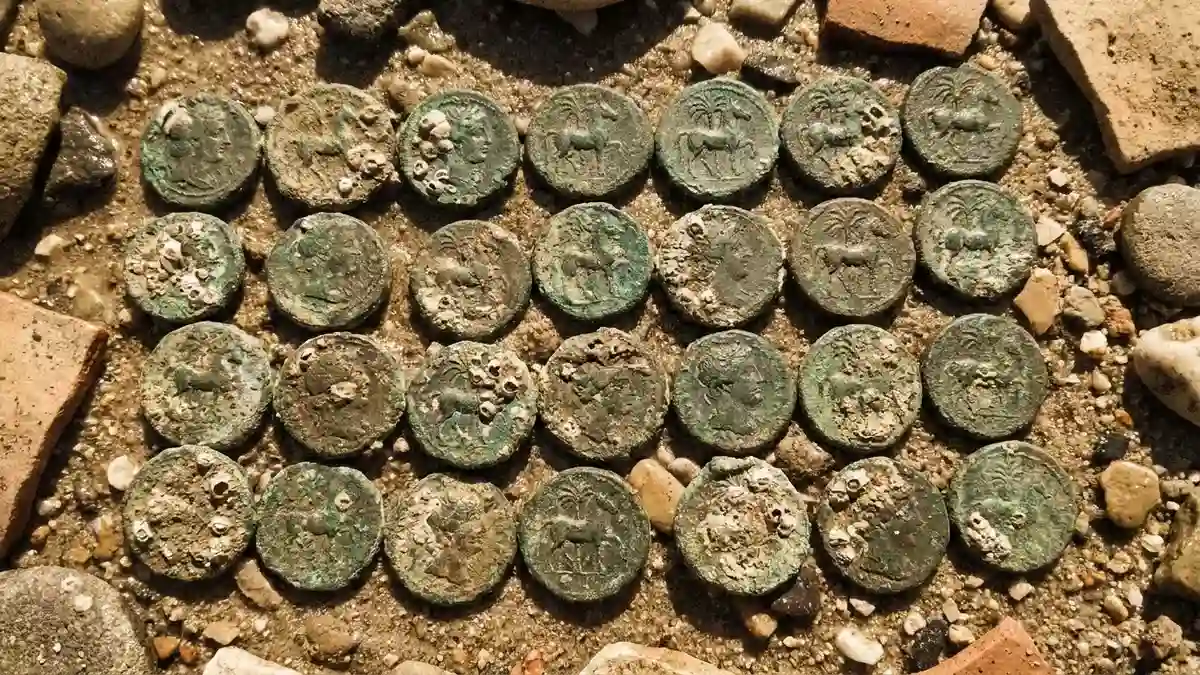
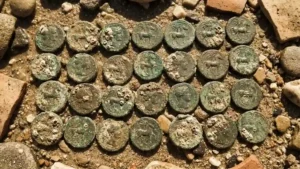
A dramatic cultural heritage case playing out between North Africa and Scandinavia has thrown a glaring spotlight on today’s global illicit antiquities trade. The international incident began when a Tunisian national attempted to broker the sale of 30 rare, ancient Punic bronze coins to a high-end antiques dealer in Oslo, Norway.
Purported by the seller to have been pulled from a massive, submerged underwater hoard off the Mediterranean coast of Tunisia, the artifacts instantly triggered red flags for the dealer due to their highly suspicious provenance. Acting on an ethical obligation, the dealer alerted Norwegian law enforcement, initiating a fast-paced, multi-national investigation.
The resulting police sting culminated in the interception of the suspect, the seizure of the ancient currency, and a highly publicized diplomatic restitution process. While the legal resolution successfully returned the treasures to their home country, modern scholars emphasize that the case exposes modern systemic vulnerabilities, showing how the global black market strips invaluable archaeological contexts from humanity’s shared heritage.
Seizure of Carthaginian Bronze Coins Highlights Ancient Economy and Illicit Antiquities Trade
Decoding the Ballistics of Carthaginian Wartime Currency
Following the initial police seizure, the coins were transferred under heavy security to the Museum of Cultural History at the University of Oslo. Specialized numismatists (coin experts) subjected the metal to rigorous stylistic and material examinations, definitively confirming their Carthaginian origin.
The analysis revealed that the coins were minted specifically during the turbulent years of the Second Punic War (218–201 BCE). This legendary pan-Mediterranean conflict saw the brilliant Carthaginian general Hannibal Barca launch his famous invasion of Italy, marching war elephants over the Alps to strike at the heart of the rising Roman Republic.
       [VISUAL ARCHITECTURE OF THE RECOVERED COINS]

       [OBVERSE FACE (FRONT)]            [REVERSE FACE (BACK)]
                 │                                 │
                 ▼                                 ▼
         Goddess Tanit                      Horse & Palm Tree
   (Consort of Baal Hammon)              (Symbol of Carthage Port)
Every single coin within the seized 30-piece lot featured an identical iconographic configuration. The obverse (front) face depicts the crisp profile of Tanit, the chief goddess of Carthage and consort of Baal Hammon, who symbolized fertility, celestial power, and protection.
The reverse (back) side features a standing horse positioned directly in front of a date palm tree—a classic, state-sanctioned propaganda motif representing the agricultural wealth, foundational myths, and maritime dominance of the Carthaginian empire.
The Less-Documented Bronze Series
Numismatists note that while Carthage’s premium gold and silver coinages have been comprehensively mapped by historians, its everyday bronze currency series remains remarkably under-studied. Because bronze was used primarily for localized domestic trade, soldier payrolls, and regional military logistics, it rarely traveled long distances via high-seas diplomacy.
 100,000-year-old Homo sapiens bones from Ethiopia may preserve earliest evidence of human cremation
Stylistic consistency across the entire Oslo lot indicates that all 30 coins originated from a single, centralized minting operation—almost certainly located within the metropolitan capital city of Carthage itself during the desperate, later phase of the war.
| Coin Attribute | Gold / Silver Punic Series | Seized Bronze Punic Series |
| Primary Economic Function | High-end international trade, state treaties, foreign mercenaries | Local marketplace transactions, domestic military logistics, local payroll |
| Historical Documentation | Extensively mapped and heavily represented in global catalogs | Poorly documented; heavily vulnerable to academic gaps |
| Corrosion Factor | High resistance; surfaces remain crisp after centuries | Deeply vulnerable to marine encrustation and heavy oxidation |
The Ghost Ship: Unlocking the 200-Kilogram Underwater Hoard
The physical condition of the coins provided investigators with undeniable proof of their marine origin. Every single piece displayed deep, characteristic encrustations, pit pitting, and heavy oxidation patterns that occur exclusively following centuries of submersion in high-salinity seawater.
+-------------------------------------------------------------+
|               THE PHANTOM UNDERWATER HOARD                  |
|                                                             |
|   • Reported Total Mass:  Estimated ~200 Kilograms of Bronze |
|   • Marine Indicators:    Deep ocean corrosion & pitting    |
|   • Suspected Origin:     Wartime shipwreck or sunken cargo |
|   • Lost Knowledge:       Exact coordinate stripped by thief|
+-------------------------------------------------------------+
Before his arrest, the seller explicitly stated in leaked emails to the Oslo antiquities shop that these 30 coins were merely a tiny sample pulled from a massive, newly discovered underwater hoard weighing an estimated 200 kilograms.
To historians, a maritime hoard of this immense scale points to one of two fascinating historical scenarios:
The Wartime Supply Ship: The coins may represent the central treasury chest of a Carthaginian military transport ship that foundered and sank while attempting to slip past Roman naval blockades to resupply imperial garrisons in North Africa or Spain.
The Submerged Depot: The deposit could mark an ancient coastal storehouse or port facility that was swallowed by the Mediterranean Sea due to seismic activity or coastal erosion over the last 2,000 years.
Because the looters stripped the coins from the sea floor without documenting their surroundings, the exact location of this underwater time capsule remains completely unknown. Archaeologists emphasize that when a treasure hunter pulls a coin from a wreck without mapping the ship’s timbers, accompanying ceramics, or ballast stones, they effectively burn the pages of history—sacrificing priceless societal knowledge for short-term personal profit.
Modern Heritage Challenges and the Gray Market
This high-stakes case highlights the immense practical difficulties that modern nations face when trying to police the international cultural property market. Coins are universally recognized by law enforcement agencies as the most heavily trafficked category of antiquity on earth.
Because of their small, highly portable physical size, they can be easily concealed inside standard passenger luggage, mailed across international borders in common envelopes, or funneled through anonymous online marketplaces.
+-----------------------------------------------------------------------+
|                    THE RECOVERY & RESTITUTION AXIS                    |
|                                                                       |
|  Oslo Dealer Flags Loot ──> Police Sting Seizure ──> Museum Authenticates |
|                                                             │         |
|  Tunisia Reclaims Heritage <── Diplomatic Handover <────────┘         |
+-----------------------------------------------------------------------+
Furthermore, ancient coins frequently circulate within frustrating legal gray areas. Unlike massive, instantly recognizable statues or fresco panels, individual coins can be easily mixed into legitimate, pre-existing private collections that predate modern international protection treaties. The successful resolution of the Oslo case was achieved only because of a flawless, immediate chain of communication linking an ethical private business owner, local municipal police forces, university museum scientists, and international diplomatic consulates.
A Victory for International Cultural Diplomacy
Following a comprehensive legal evaluation, Norwegian prosecutors dropped criminal charges against the individual in exchange for the absolute surrender and immediate forfeiture of the entire collection. This cleared the path for a formal diplomatic restitution ceremony, returning the 30 bronze coins to the state custody of Tunisia.
The case stands as a powerful testament to the value of global heritage cooperation, illustrating how even a small handful of corroded metal disks can be utilized to foster international diplomacy and strengthen cross-border law enforcement networks. By returning these Second Punic War relics to their native soil, the international community has sent a clear message to the underground market: the material remnants of antiquity are not common commodities to be traded in the shadows, but priceless cultural assets that belong strictly to the public history of their source communities.
Frequently Asked Questions
Where did the seized Carthaginian coins originate?
The 30 bronze coins were illicitly looted from a suspected 200-kilogram underwater hoard located somewhere off the Mediterranean coast of Tunisia before being illegally transported to Oslo, Norway, for sale.
How old are the recovered coins?
Specialists at the Museum of Cultural History in Oslo verified that the coins were minted during the Second Punic War, specifically dating between 218 and 201 BCE.
What imagery is engraved on the faces of the coins?
The obverse (front) of each coin features the profile of Tanit, the chief goddess and celestial protector of Carthage. The reverse (back) depicts a standing horse positioned in front of a traditional date palm tree.
Why is losing the “archaeological context” of these coins harmful?
When looters pull artifacts from the ocean floor without scientific recording, they destroy vital historical data. Without mapping the surrounding shipwreck, accompanying pottery, or cargo layout, historians lose the ability to track exact ancient trade routes, military dates, and economic networks.
What happened to the coins after the investigation ended?
Following a successful joint effort between the Oslo antiques dealer, Norwegian police, museum numismatists, and diplomatic channels, criminal charges were settled, and all 30 coins were officially repatriated to the government of Tunisia.