
Table of Contents
**2,000-Year-Old Roman Villa and Bathhouse Found in Alexandria**
Archaeologists have made a remarkable discovery in Alexandria, Egypt, uncovering a well-preserved Roman villa with stunning mosaics alongside an ancient public bathhouse. This rescue excavation in the Moharam Bek district reveals layers of the city’s rich history, from the Ptolemaic founding through Roman and Byzantine times, offering fresh insights into daily life in one of the ancient world’s greatest cultural centers.
The find highlights Alexandria’s enduring importance as a crossroads of Mediterranean civilization and provides valuable new data about urban development in a neighborhood previously understudied.
2,000-Year-Old Roman Villa and Bathhouse Found in Alexandria
 Seizure of Carthaginian Bronze Coins Highlights Ancient Economy and Illicit Antiquities Trade
### Major Discovery During Rescue Excavation
Construction plans near Alexandria Station prompted Egyptian authorities to launch a rescue excavation about nine months ago. What began as a routine check quickly expanded into a significant archaeological project as multiple occupation layers emerged beneath the modern district.
The site offers a continuous sequence of human activity spanning several centuries. Archaeologists have identified structures and artifacts from the Ptolemaic period (established by Alexander the Great’s successors), the Roman era, and the Byzantine period. This layered history shows how the area evolved from a bustling Hellenistic district to a refined Roman residential zone before later changes in city planning reduced its prominence.
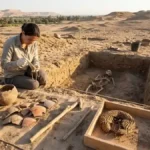
The excavation demonstrates the value of proactive archaeological work in rapidly developing urban areas, preserving treasures that might otherwise have been lost forever.
### The Circular Ptolemaic Bathhouse: A Tholoi-Type Marvel
One of the most exciting finds is a circular public bathhouse dating to the late Ptolemaic period. Known as a Tholoi-type bath due to its distinctive round design, this structure served essential hygiene needs while possibly offering therapeutic benefits common in ancient Greek-influenced societies.
Public baths in Ptolemaic Alexandria were social hubs where residents gathered, relaxed, and maintained cleanliness in a Mediterranean climate. Early investigations suggest the bath complex includes additional connected rooms still buried underground. The full layout continues to be carefully documented as digging proceeds.
This discovery adds to the growing body of evidence about bathing culture in ancient Egypt’s Hellenistic capital, where Greek architectural styles blended with local traditions.
### Luxurious Roman Villa with Exquisite Mosaics
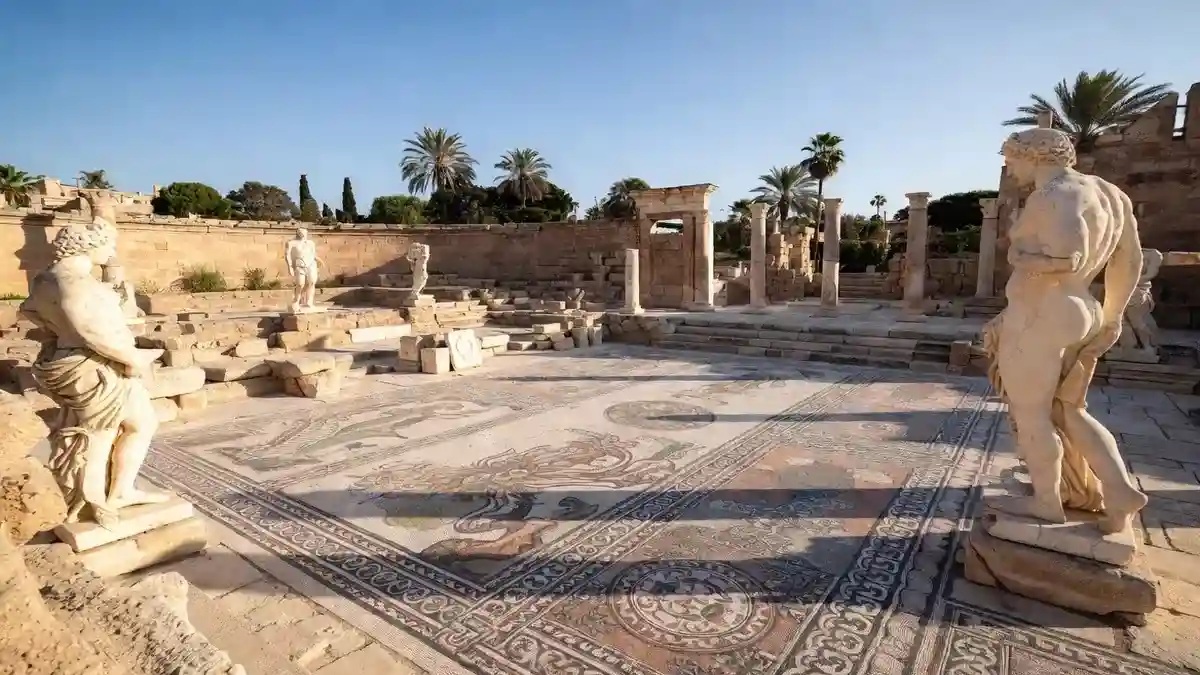
Adjacent to the bathhouse, archaeologists uncovered a sophisticated Roman residential villa that likely belonged to a wealthy family. The highlight of this elegant home is its beautifully preserved mosaic floors, showcasing advanced artistic techniques.
The mosaics feature two main styles:
– **Opus Tessellatum**: Created with small square tiles arranged into intricate patterns
– **Opus Sectile**: Using larger cut stone pieces for bold geometric and decorative designs
These floors reflect the high artistic standards and luxurious tastes of Alexandria’s Roman elite. Mosaics were not only decorative but also symbols of status and cultural refinement in Roman provinces.
The villa also boasted advanced water management systems, including a small private bathing pool connected to an organized network of drains and supply channels. Such features indicate careful urban planning and a comfortable lifestyle that rivaled homes in Rome itself.
### Artifacts Reveal Trade, Religion, and Daily Life
Excavators recovered a rich collection of movable objects that bring the site’s ancient inhabitants to life. These include coins, oil lamps, pottery vessels, and stamped amphora fragments once used to transport wine and olive oil across the Mediterranean.
Marble statues form another impressive group of finds. Notable examples depict Bacchus (the god of wine and revelry) and Asclepius (the god of medicine and healing). A headless statue believed to represent Minerva, the Roman goddess of wisdom and strategic warfare, was also discovered.
The repeated association with Asclepius has prompted researchers to explore whether parts of this district later served therapeutic or healing purposes, possibly linked to the nearby bathhouse facilities.
**Key Artifacts Recovered:**
– Stamped amphorae showing Mediterranean trade networks
– Religious statues reflecting Greco-Roman beliefs
– Everyday pottery and lamps indicating domestic routines
– Coins providing chronological clues
These objects paint a picture of a prosperous community engaged in commerce, cultural exchange, and spiritual practices.
### Alexandria’s Urban Evolution Across Centuries
Founded by Alexander the Great in 331 BCE, Alexandria grew into a magnificent metropolis known for its lighthouse, library, and diverse population. The Moharam Bek findings help fill important gaps in knowledge about the southeastern sectors of the ancient city.
The site remained within the urban boundaries through Ptolemaic, Roman, and Byzantine periods before shifting city layouts altered its role. This continuous occupation sequence offers archaeologists a rare opportunity to study long-term urban development in a key Mediterranean port.
The discovery contributes to updated maps and reconstructions of ancient Alexandria, enhancing our understanding of how the city adapted to changing political powers while maintaining its cosmopolitan character.
### Conservation Efforts and Future Display Plans
Specialists are currently deciding how best to preserve one large mosaic section still in its original position. Smaller artifacts have already entered restoration processes to stabilize and clean them for future study and potential public viewing.
Some of the restored pieces may eventually be displayed at Alexandria’s renowned Greco-Roman Museum, allowing visitors to appreciate these treasures firsthand. Such efforts ensure that these discoveries benefit both scientific research and cultural tourism.
Excavations remain ongoing, with expectations of additional structures and artifacts emerging as work continues in the coming months.
### Historical Significance of Roman Life in Egypt
During the Roman period, Alexandria retained its status as a major intellectual and commercial center. Wealthy residents built villas with luxurious features like mosaics and private baths, blending Roman engineering with Hellenistic elegance.
The presence of healing-related statues and bath facilities suggests this neighborhood may have catered to both residential and semi-public functions. Public health and hygiene were priorities in Roman cities, and Alexandria’s Mediterranean location made it an ideal place for such cultural fusion.
These finds also illuminate trade connections. Amphorae fragments link the site to broader Mediterranean economies, where goods flowed between Egypt, Greece, Italy, and beyond.
### Why This Excavation Matters for Egyptian Heritage
Rescue excavations like this one play a vital role in protecting archaeological resources amid modern development. The Egyptian Ministry of Tourism and Antiquities continues to balance urban growth with heritage preservation, yielding important discoveries that enrich national and global understanding of history.
This site addresses a previous knowledge gap in Alexandria’s southeastern districts. The detailed layers help scholars reconstruct how different eras influenced city planning, architecture, and daily routines.
### Broader Context of Ptolemaic to Byzantine Transitions
The Ptolemaic period introduced Greek culture to Egypt after Alexander’s conquest. Roman rule from 30 BCE brought new administrative systems while preserving much of the Hellenistic character. The Byzantine era continued these traditions with Christian influences until the Arab conquest in the 7th century.
The Moharam Bek site captures this long transition beautifully, showing cultural continuity alongside gradual changes in architecture, art, and religious expression.
### Modern Techniques in Urban Archaeology
Modern rescue excavations employ careful stratigraphic methods to document each layer precisely. Digital recording, 3D modeling, and specialized conservation techniques help capture details before sites are reburied or developed.
The ongoing work at Moharam Bek exemplifies best practices in balancing urgent construction needs with thorough archaeological investigation.
### Conclusion: A Vibrant Window into Ancient Alexandria
The unearthing of a Ptolemaic bathhouse and a luxurious Roman villa with exquisite mosaics in Alexandria’s Moharam Bek district represents a major contribution to our knowledge of this historic city. These remains bring to life the sophistication, cultural blending, and daily comforts enjoyed by residents over centuries.
From elegant mosaics underfoot to healing statues and advanced water systems, the site reflects Alexandria’s role as a beacon of Mediterranean civilization. As excavations continue and artifacts receive conservation care, this discovery will enhance museum displays and academic research for years to come.
The findings remind us why Alexandria continues to captivate historians and visitors alike. Each new layer revealed beneath its streets adds depth to the story of a city that shaped world history through knowledge, trade, and cultural exchange.
This remarkable rescue excavation not only preserves the past but also inspires greater appreciation for Egypt’s unparalleled archaeological heritage and the skilled teams working to protect it.
### FAQ: Questions About the Alexandria Roman Villa and Bathhouse Discovery
**What periods does the Alexandria excavation cover?**
The site includes remains from the Ptolemaic, Roman, and Byzantine eras, showing continuous occupation over several hundred years in ancient Alexandria.
**What is special about the Roman villa’s mosaics?**
The villa features high-quality mosaics in Opus Tessellatum (small tiles) and Opus Sectile (larger cut stones), indicating it belonged to a wealthy family with refined tastes.
**Why was a rescue excavation necessary?**
Construction work near Alexandria Station triggered the dig to check for archaeological remains before development, leading to these significant finds.
**What do the statues suggest about the site?**
Marble figures of Bacchus, Asclepius (god of healing), and Minerva point to religious practices and possible therapeutic activities linked to the bathhouse.
**Will the public be able to see the artifacts?**
Yes. Restored objects may be displayed at Alexandria’s Greco-Roman Museum, while some mosaics are being preserved in place or carefully removed for conservation.
**How does this discovery help understand ancient Alexandria?**
It fills gaps in the southeastern district’s history, revealing urban planning, trade networks, and lifestyle details across major historical periods in this important Mediterranean city.