
Radiocarbon Dating Confirms Teutonic Knights Fortress in Transylvania
Scientific evidence has finally settled a centuries-old mystery in southeastern Transylvania. Radiocarbon dating of ancient mortar now proves that the Teutonic Knights built the first stone fortifications at Feldioara Fortress during their brief but influential rule in the early 13th century. This breakthrough provides the strongest confirmation yet of the crusader order’s military presence in Romania and reshapes our understanding of medieval power struggles in Eastern Europe.
The discovery highlights the power of modern science to solve historical puzzles. For nearly 800 years, scholars debated whether the impressive ruins at Feldioara truly belonged to the legendary Teutonic Knights. New archaeometric analysis delivers clear answers while opening fresh insights into how these warrior monks shaped the region’s landscape and defenses.
Radiocarbon Dating Confirms Teutonic Knights Fortress in Transylvania
### The Historic Role of the Teutonic Knights in Transylvania
The Teutonic Order, a powerful Catholic military organization founded during the Crusades, received a strategic land grant in 1211 from the King of Hungary. Tasked with protecting the frontier against Cuman invaders, the knights established themselves in the area known as Tara Barsei, or Burzenland. They quickly moved beyond defense to construct lasting stone fortifications, churches, and settlements.
Their stay proved short-lived. Growing concerns over the order’s independence led to their expulsion in 1225. Despite this brief chapter, the Teutonic Knights left a significant architectural legacy in what is now Romania. Feldioara, recorded historically as Marienburg, emerged as one of their most important strongholds in southeastern Europe.
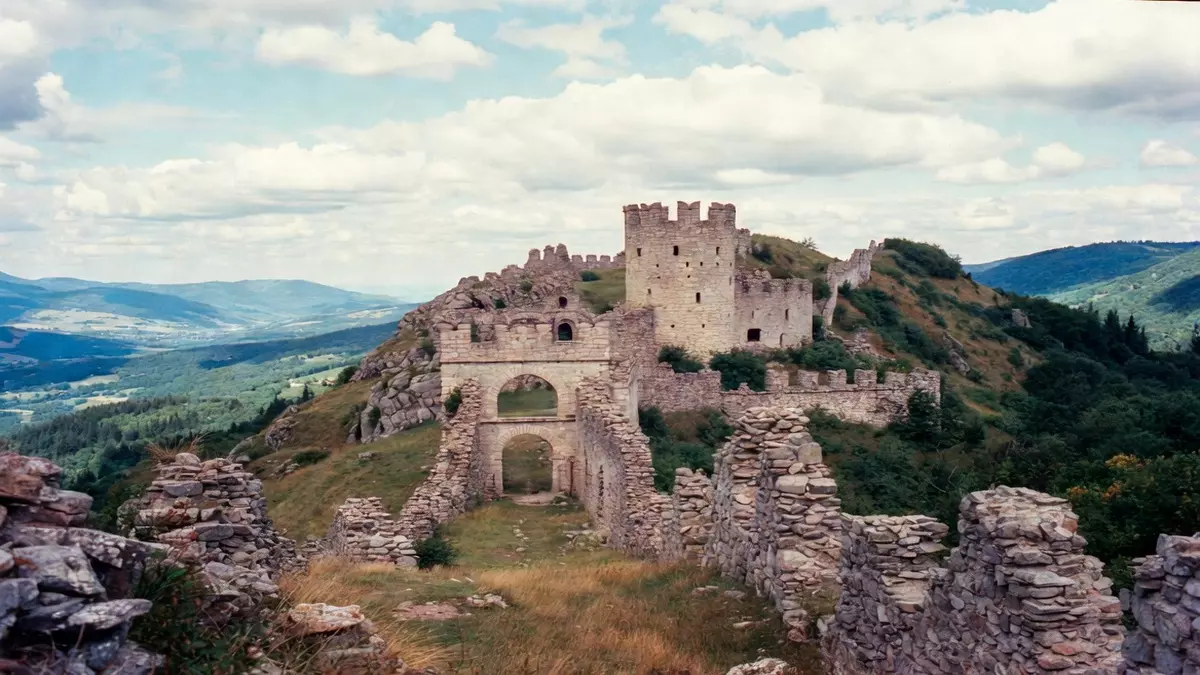
The fortress features two distinct fortified zones. One section protected the local settlement and parish church, while the other occupied an isolated hilltop separated by a natural gorge. Medieval defenses included directional towers and a strongly guarded entrance gate, showcasing advanced military engineering for the period.
### Breakthrough Radiocarbon Dating Resolves Long Debate
For decades, archaeologists uncovered medieval walls, weapons, ceramics, and church foundations at Feldioara, yet direct proof linking the earliest structures to the Teutonic Knights remained elusive. A new study published in *Archaeological and Anthropological Sciences* changes that.
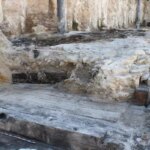
Romanian researchers collected thirteen mortar samples from the fortress walls and foundations. They isolated microscopic calcite particles formed as the lime mortar absorbed carbon dioxide from the air. Using advanced FT-Raman spectrometry to ensure sample purity, followed by accelerator mass spectrometry radiocarbon dating, the team generated precise chronological data.
Statistical analysis with the OxCal program aligned these dates with the narrow historical window of Teutonic occupation between 1211 and 1225. Multiple samples from the oldest defensive walls confirmed construction during exactly this period, providing definitive scientific proof that the Teutonic Knights erected the initial stone fortress.
This innovative approach overcomes traditional challenges in dating medieval mortar, which hardens gradually over years or even decades. By focusing on carefully screened microscopic particles, researchers achieved reliable results that complement existing archaeological evidence and historical records.
### Layers of History Uncovered at Feldioara
Excavations in the 1990s and major restoration work between 2013 and 2017 revealed human activity at the site spanning thousands of years. Neolithic, Bronze Age, and Hallstatt period remains demonstrate continuous importance as a strategic location long before the Middle Ages.
Beneath later additions, archaeologists identified a thick medieval wall constructed with dense lime mortar. This earlier structure became the primary focus of the recent dating project. Results show several building phases: the initial Teutonic construction in the early 13th century, followed by expansions in the 13th, 14th, and even 17th centuries.
One particularly interesting finding involves the church area. A mortar sample from beneath the apse suggests construction activity possibly predating the knights’ arrival, potentially linked to earlier Western European colonists. Another sample indicates parts of the church may date to the mid-13th century and could relate to the Cistercian Order, which received the site in 1240 after the Teutonic Knights departed.
These overlapping timelines paint a rich picture of cultural and religious transitions in medieval Transylvania, where different orders and settlers left their marks on the same strategic locations.
### Why This Discovery Matters for Medieval Studies
The confirmation of Teutonic construction at Feldioara strengthens our knowledge of how crusader military architecture spread into Eastern Europe. The knights adapted Western European fortress designs to local geography, creating strong defensive positions that influenced later Hungarian and Romanian fortifications.
Transylvania occupied a vital frontier position during the 13th century. Bordered by mountains and facing threats from nomadic groups like the Cumans, control of the region carried both military and economic importance. The Teutonic Knights’ brief rule represents an early attempt by Western powers to secure and develop these borderlands.
This study also demonstrates the growing value of archaeometric techniques in historical research. Traditional methods often struggle with precise dating of stone structures. Radiocarbon analysis of mortar, combined with chemical screening and statistical modeling, offers a powerful new tool for investigating medieval sites where written records remain incomplete or contradictory.
### The Restoration and Current Significance of Feldioara Fortress
Major restoration efforts from 2013 to 2017 transformed the ruins into a more accessible historical site. Visitors today can explore the impressive walls, towers, and strategic hilltop position that once served the Teutonic Order. The fortress stands as a popular destination for history enthusiasts interested in medieval military architecture and the complex history of Transylvania.
Feldioara’s story reflects broader patterns across Eastern Europe. The movement of military orders, shifting royal alliances, and cultural exchanges created a dynamic medieval landscape. Scientific confirmation of the Teutonic phase adds depth to this narrative and encourages further research into similar sites.
Modern technology continues to unlock secrets from the past. As more sites undergo similar archaeometric analysis, historians gain clearer timelines and stronger evidence for long-debated events. The Feldioara project sets a valuable example for future investigations throughout Romania and neighboring countries.
### Connections to Broader Teutonic Order History
The Teutonic Knights remain one of the most famous crusading orders, known for their disciplined organization and extensive building programs. While best remembered for activities in the Holy Land and later the Baltic region, their brief chapter in Transylvania represents an important but less-studied episode.
At Feldioara, they applied experience gained in other frontier zones, creating fortified settlements designed for both defense and colonization. The dual structure of the fortress — protecting both civilian and military elements — reflects sophisticated planning typical of the order.
The expulsion in 1225 did not erase their influence. Later rulers built upon the foundations they established, contributing to the distinctive architectural heritage of the region that attracts scholars and tourists today.
**Conclusion**
The radiocarbon dating confirmation that the Teutonic Knights constructed Feldioara Fortress in 13th-century Transylvania marks a major milestone in medieval archaeology. After centuries of debate, modern science has provided clear evidence linking this impressive Romanian site to the famous crusader order during their short but impactful presence in Eastern Europe.
This discovery enriches our understanding of frontier defense, military architecture, and cultural exchange in the medieval period. It also showcases how advanced laboratory techniques can solve historical mysteries when combined with careful excavation and historical research. As ongoing studies continue at Feldioara and similar sites, we can expect even deeper insights into the people and events that shaped Transylvania’s complex past.
For visitors and researchers alike, Feldioara now stands as more than impressive ruins. It represents proven evidence of the Teutonic Knights’ ambitious efforts to secure and develop a volatile frontier — a story finally confirmed through the precise language of science.
**FAQ**
**Q: When did the Teutonic Knights build Feldioara Fortress?**
A: Radiocarbon dating confirms the earliest stone fortifications were constructed between 1211 and 1225, during the order’s control of the Burzenland region in Transylvania.
**Q: How was the dating performed?**
A: Researchers analyzed microscopic calcite particles from lime mortar samples using advanced spectrometry and accelerator mass spectrometry radiocarbon dating, then aligned results with historical records.
**Q: What is the historical name of Feldioara Fortress?**
A: In medieval documents, the site was known as Marienburg and served as a key stronghold in the Tara Barsei area of present-day Romania.
**Q: Why were the Teutonic Knights expelled from Transylvania?**
A: The Hungarian crown expelled them in 1225 due to concerns about their growing power and independence in the region.
**Q: What other periods of construction were identified?**
A: The study revealed multiple building phases, including later expansions in the 13th, 14th, and 17th centuries, plus possible pre-Teutonic activity linked to earlier settlers.
**Q: Can visitors explore Feldioara Fortress today?**
A: Yes. The site underwent significant restoration between 2013 and 2017 and welcomes tourists interested in medieval history and Teutonic Order architecture.
**Q: Why is this discovery important?**
A: It provides the first direct scientific proof of Teutonic Knights’ construction in southeastern Europe, resolving a long historical debate and enhancing our knowledge of medieval military expansion.