
Table of Contents
**Justinian Plague Mass Grave Confirmed in Ancient Jordan**
Archaeologists have uncovered compelling new evidence of one of history’s deadliest pandemics through a mass grave in the ancient city of Jerash, Jordan. The discovery provides the first biomolecular confirmation of victims of the Plague of Justinian (also known as the First Pandemic) in the Eastern Mediterranean, revealing how this catastrophic outbreak struck urban populations in the Byzantine world between 541 and 750 CE.
This extraordinary find offers a rare, intimate look at the human impact of the plague. It shows not only the scale of death but also the diverse backgrounds of those who lived and died in a bustling Late Antique city under extreme pressure.
Justinian Plague Mass Grave Confirmed in Ancient Jordan
### The Discovery in Jerash’s Historic Hippodrome
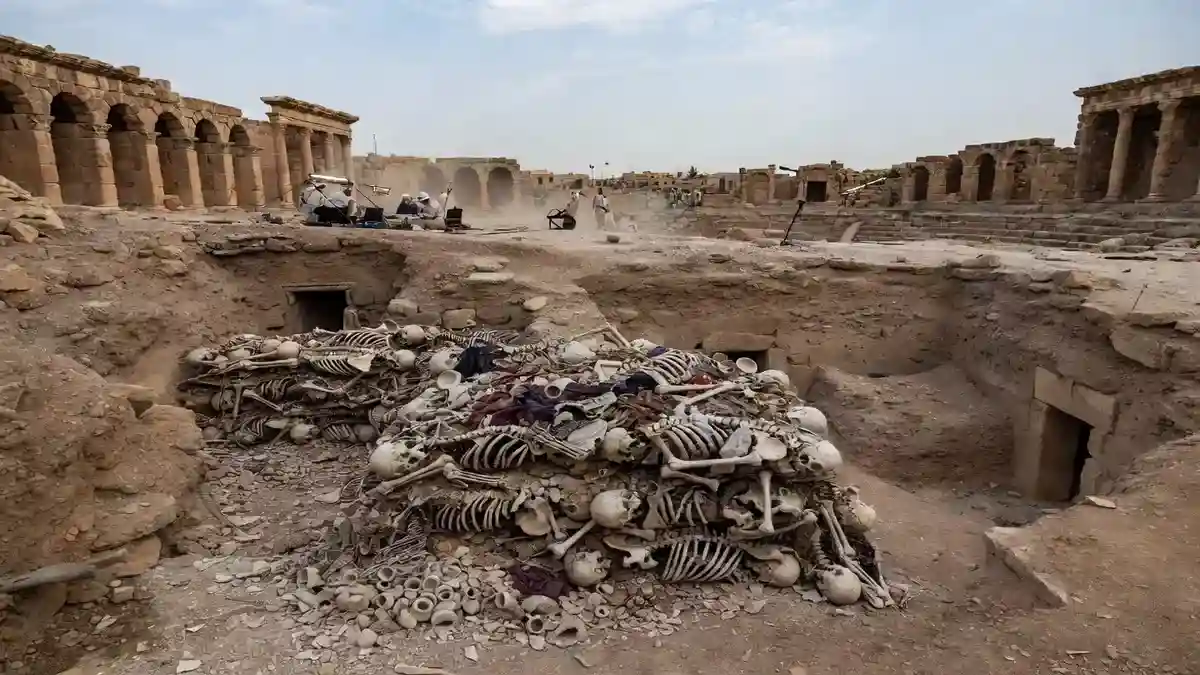
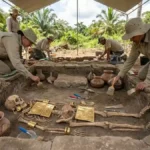
The mass grave was found in two chambers of Jerash’s famous hippodrome, once a grand public venue for chariot races and spectacles. Researchers documented around 230 individuals buried in tightly packed layers, with bodies stacked hastily over pottery debris. This rapid, disorderly burial pattern stands in stark contrast to normal cemetery practices of the period, which typically involved more careful, individualized interments over long periods.
The evidence points to a sudden, overwhelming mortality event lasting days or weeks. Bodies were placed with minimal regard for traditional funerary rites, suggesting the community was struggling to cope with an unprecedented crisis. Such emergency burials are reminiscent of later medieval plague pits in Europe, but this is the first time researchers have confirmed the Justinianic Plague through ancient DNA in this region.
### Who Were the Victims? Insights from Bioarchaeology
A multidisciplinary team from the University of South Florida led the investigation, combining archaeology, genetics, and isotope analysis. Ancient DNA extracted from the remains definitively identified *Yersinia pestis*, the bacterium responsible for plague. The genetic data showed a uniform strain across the individuals, supporting the idea of a single, intense outbreak rather than multiple separate events.
Stable isotope analysis provided deeper insights into the victims’ lives. Carbon and nitrogen values in bones and teeth indicated diets based primarily on local C3 crops, consistent with typical Levantine food systems of the time. However, oxygen isotope data from tooth enamel revealed greater variation than seen in other regional populations. This suggests many of the buried individuals spent their childhoods in different environments before moving to Jerash, pointing to a highly mobile and socially diverse urban population.
Mitochondrial DNA further confirmed maternal haplogroups (H13 and L3e) typical of Byzantine-era Levantine diversity. Together, these findings paint a picture of a cosmopolitan city where people from varied geographic and social backgrounds converged — a diversity that became dramatically visible only because of the plague’s sudden impact.
### Jerash: A Flourishing City Under Strain
In antiquity, Jerash (known as Gerasa) was one of the most important urban centers in the region. At its peak in the 3rd century CE, the city may have housed around 25,000 people. By the late 6th century, the population had declined to roughly 10,000 amid broader regional challenges. The plague struck during this already difficult period, likely exacerbating existing demographic and economic pressures.
The hippodrome, once a symbol of civic pride and entertainment, was repurposed as an emergency burial ground. This shift from public spectacle to mass grave underscores how profoundly the pandemic disrupted daily life and social norms in Late Antiquity.
### Historical Context of the Justinian Plague
The Plague of Justinian, named after Emperor Justinian I, swept across the Mediterranean starting in 541 CE. Historical accounts describe devastating mortality, economic collapse, and social upheaval. While written sources provide dramatic testimony, physical evidence like the Jerash grave offers concrete confirmation of the disease’s reach and impact far from Constantinople.
The uniform genetic strain and rapid burial style suggest a highly virulent outbreak that overwhelmed normal burial practices. In a time before modern medicine or public health systems, communities faced impossible choices when confronting such mass death. The Jerash findings align with descriptions in ancient texts of bodies piled in streets and emergency interments in public spaces.
### Broader Implications for Understanding Ancient Pandemics
This discovery stands out because it moves beyond simply identifying the pathogen. By examining diet, mobility, and burial practices, researchers gain a richer understanding of how pandemics affected real people from different walks of life. The mixed origins of the victims highlight how cities like Jerash served as hubs connecting wider regional networks — connections that also facilitated disease spread.
The grave provides one of the clearest snapshots yet of urban vulnerability in the Byzantine East. It shows how a single epidemic could bring together individuals from diverse backgrounds in death, creating a unique archaeological record that might not exist under normal circumstances.
### Scientific Methods Behind the Breakthrough
The study combined traditional archaeological excavation with cutting-edge laboratory techniques. Ancient DNA analysis required careful sampling to avoid contamination, while isotope studies offered independent lines of evidence about lifetime experiences. This integrated bioarchaeological approach sets a strong example for future pandemic research in historical contexts.
The publication in the *Journal of Archaeological Science* details rigorous methods that confirm both the presence of *Yersinia pestis* and the exceptional nature of the burial context.
### Lessons from Late Antiquity for Today
Pandemics have shaped human history repeatedly, from the Justinian Plague to the Black Death and modern outbreaks. The Jerash mass grave reminds us of the universal challenges societies face during health crises: overwhelmed infrastructure, disrupted social rituals, and the mixing of populations under duress.
Studying ancient responses helps contextualize our own experiences with disease and resilience. It also highlights the value of interdisciplinary research in uncovering hidden stories from the past.
### Why Jerash’s Mass Grave Is So Significant
Most evidence for the Justinian Plague comes from historical texts or scattered individual burials. The Jerash site is exceptional because of its scale, the clear emergency context, and the successful recovery of ancient DNA. It provides direct physical proof that the pandemic reached deep into the Eastern Mediterranean and affected ordinary urban residents.
The discovery enriches our understanding of how the plague contributed to broader transformations in Late Antiquity, including shifts in population, economy, and urban life that helped shape the medieval world.
### Ongoing Research and Future Discoveries
Researchers continue to analyze the Jerash remains for additional insights into health, nutrition, and genetics. Future work may compare this site with other potential plague-related burials across the Mediterranean, building a more complete picture of the pandemic’s reach and varying local impacts.
As archaeological techniques improve, more such finds may emerge, further illuminating one of history’s most consequential disease events.
### Conclusion: A Powerful Snapshot of Crisis and Resilience
The mass grave in Jerash’s hippodrome stands as a poignant testament to the human cost of the Justinian Plague. With around 230 individuals buried hastily together, it captures a moment of profound crisis in a once-thriving city. Through ancient DNA, isotopes, and careful excavation, researchers have revealed not just the presence of plague but the diverse lives it cut short.
This discovery deepens our appreciation for the complexities of urban life in Late Antiquity and the far-reaching consequences of pandemics. It reminds us that behind historical statistics and ancient texts were real people — migrants, families, and community members — whose stories are preserved in the ground.
As we confront modern health challenges, the Jerash findings offer valuable perspective on vulnerability, adaptation, and the enduring strength of human communities in the face of unimaginable loss. The ancient city of Gerasa continues to teach us about resilience, even centuries after its streets fell silent.
### FAQ: Justinian Plague Mass Grave in Jerash
**What is the Plague of Justinian?**
It was a major pandemic caused by *Yersinia pestis* that swept the Mediterranean from 541 to 750 CE, causing massive mortality during the reign of Emperor Justinian I.
**How many people were buried in the Jerash mass grave?**
Archaeologists documented around 230 individuals in a hasty, layered burial within the city’s former hippodrome.
**What evidence confirms it was the plague?**
Ancient DNA analysis identified *Yersinia pestis*. The uniform strain and rapid burial style support a single intense outbreak event.
**What do isotopes reveal about the victims?**
The data suggest a socially and geographically diverse population, with many individuals having grown up in different locations before moving to Jerash.
**Why is this discovery important?**
It is the first biomolecularly confirmed plague mass grave from the Justinian Pandemic in the Eastern Mediterranean, providing direct evidence of the disease’s impact on urban life.
**How does this relate to later plagues?**
The burial patterns closely resemble medieval European plague pits, showing continuity in how societies responded to mass mortality crises across centuries.