
Table of Contents
- 1. A Massive Trove of Iron Age History
- 2. The Mystery of the Four-Wheeled Wagons
- 3. Symbolic Destruction: The Ritual of the Hoard
- 4. Wealth and Power in Northern Britain
- 5. A Legacy Preserved
- 6. Frequently Asked Questions
- 6.1. What makes the Melsonby hoard different from other Iron Age finds?
- 6.2. Why were the items broken before being buried?
- 6.3. Does this find prove Britain had a wealthy Iron Age elite?
- 6.4. How do we know these were four-wheeled wagons?
- 6.5. What happened to the people who owned these items?
Iron Age Secrets: Ancient Wagons and Ritual Destruction Uncovered
In a discovery that is fundamentally rewriting our understanding of Iron Age Britain, archaeologists working near Melsonby in North Yorkshire have unearthed one of the most significant metal hoards in British history. This massive collection, dating to the first century CE, offers a rare, dramatic look at the wealth, elite social structures, and ritualistic behaviors of northern Britain on the precipice of the Roman conquest.
Iron Age Secrets Ancient Wagons and Ritual Destruction Uncovered
A Massive Trove of Iron Age History
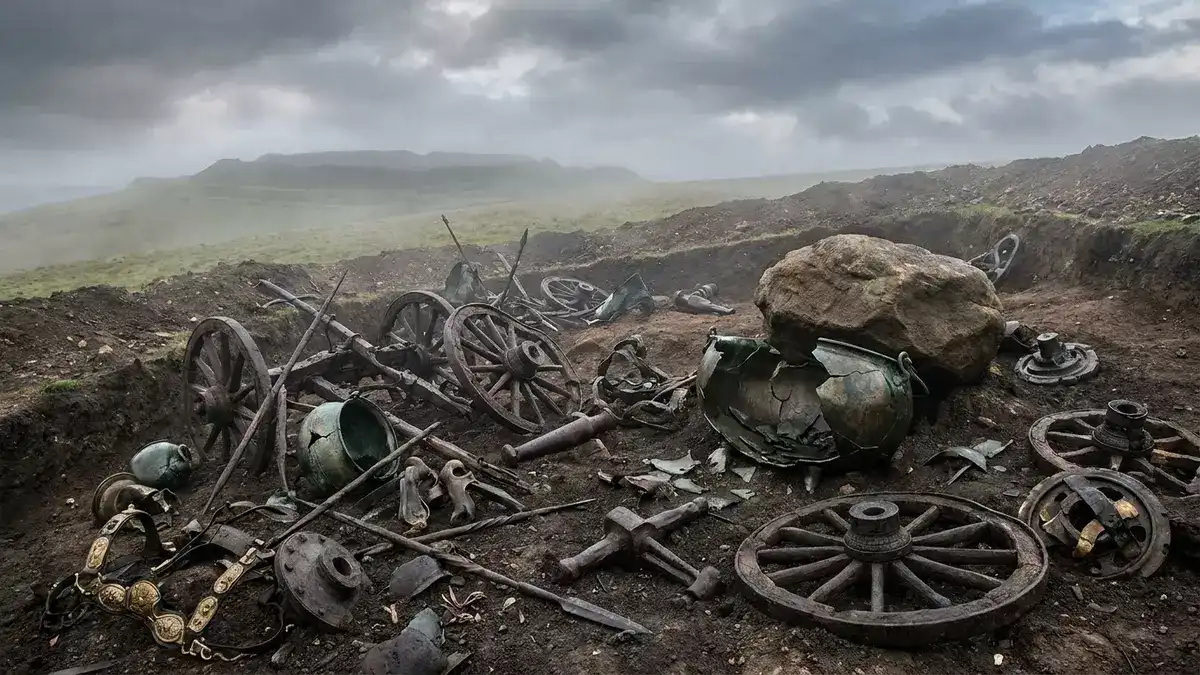
The excavation, published in the journal Antiquity, reveals nearly 950 metal fragments representing at least 300 individual objects. Buried within two distinct ditches near the major power center of Stanwick, the hoard is not merely a collection of scrap metal; it is a meticulously staged deposit of high-status items.
The range of artifacts is staggering, including:

Military Gear: Numerous spears and weapons.
Feasting Equipment: Large, ornate bronze cauldrons.
Horse Fittings: Highly decorative harnesses, indicating a society that prized equestrian status.
Ceremonial Items: An iron mirror and other decorative pieces.
The Mystery of the Four-Wheeled Wagons
While Iron Age Britain is famous for its two-wheeled chariots—often found in warrior graves across Yorkshire—the Melsonby discovery provides the first convincing evidence of something much larger: the four-wheeled wagon.
The research team identified several technical components that confirm the presence of these complex vehicles. Key evidence includes heavy iron kingpins (the pivot points required for steering a four-wheeled wagon), oversized iron wheel tires, massive hub fittings, and dozens of U-shaped iron brackets. These parts suggest that at least seven of these massive vehicles were dismantled and buried at the site. The sheer scale and engineering required for four-wheeled transport indicate a level of elite mobility and technological sophistication that scholars previously thought was largely absent in this region during the Late Iron Age.

Symbolic Destruction: The Ritual of the Hoard
Perhaps the most haunting aspect of the Melsonby find is that the objects were not buried as functioning wealth. Instead, they were the victims of a violent, symbolic event.
The artifacts were deliberately bent, crushed, burned, or broken before being interred. The 28 iron wheel tires were found stacked in deformed piles, and a large boulder had been dropped onto a bronze cauldron with enough force to shatter its base.
Archaeologists argue this was not a simple act of disposal or a metal-recycling effort. Because the hoard contains almost no everyday refuse—like broken pottery or common personal jewelry—and consists entirely of high-status items, the destruction was likely a carefully orchestrated ritual. By “killing” the objects, the elite community at Stanwick may have been performing a symbolic social act, perhaps signifying the end of a political era, the conclusion of a significant ceremony, or a strategic effort to consolidate and then “remove” the wealth of the community from the reach of rivals.
Wealth and Power in Northern Britain
The context of the find near the massive hillfort of Stanwick is crucial. This region was a major political and economic hub during the first century CE. The Melsonby hoard suggests that northern British elites were far from isolated. The decorative details on the metalwork show strong influences from continental Europe and signal a period of increasing interaction with the burgeoning Roman world.
The presence of multiple, expensive four-wheeled wagons reinforces the idea that transport was a primary vehicle for social display. These were not mere utility carts; they were the “luxury cars” of the Iron Age, designed to project power, facilitate movement, and command respect.
A Legacy Preserved
This discovery is unparalleled in British archaeology. Never before has a site yielded such a massive, deliberate concentration of vehicles, horse gear, and ritualistic destruction. For historians, Melsonby provides a crucial, high-resolution snapshot of how powerful communities in northern England asserted their identity and wealth just before the cultural tidal wave of the Roman Empire transformed their world forever.
Frequently Asked Questions
What makes the Melsonby hoard different from other Iron Age finds?
While many Iron Age burials contain two-wheeled chariots, the Melsonby hoard is the first to provide clear evidence for four-wheeled wagons. Furthermore, the sheer volume of high-status items and the evidence of intentional, ritualistic destruction make it a unique archaeological event.
Why were the items broken before being buried?
Archaeologists believe the destruction was symbolic. By systematically crushing, burning, and dismantling high-status objects like cauldrons and wagons, the community was likely performing a ritual that “decommissioned” the items, perhaps to honor the dead or to make a powerful political statement.
Does this find prove Britain had a wealthy Iron Age elite?
Absolutely. The presence of at least seven complex wagons and ornate horse harnesses indicates that northern British elites were wealthy, technologically capable, and well-connected to trade networks reaching into mainland Europe.
How do we know these were four-wheeled wagons?
The identification of kingpins—the specific steering mechanism necessary for four-wheeled vehicles—along with large hub fittings and oversized tires, allowed researchers to differentiate these larger wagons from the smaller two-wheeled chariots commonly found in other British Iron Age graves.
What happened to the people who owned these items?
The hoard dates to a period of massive political change. As the influence of the Roman Empire spread toward northern Britain, the power dynamics at sites like Stanwick shifted. The ritual destruction of this wealth may be directly linked to this turbulent transitional period.