
Table of Contents
- 1. Life in the Shadow of the Legion: The Canabae of Potaissa
- 1.1. The Might of Legio V Macedonica
- 2. Unearthing a High-Status Roman Domus
- 3. The Treasures of Daily Frontier Life
- 4. The Crown Jewel: The Temple-Façade Box
- 5. Conclusion
- 6. Frequently Asked Questions
- 6.1. Where is the ancient site of Potaissa located today?
- 6.2. What is a canabae legionis?
- 6.3. Who was Legio V Macedonica?
- 6.4. What was the purpose of the rare bronze temple box?
- 6.5. Why are there no direct parallels for this box in Roman Dacia?
Rare Roman Discovery Gives History Buffs New Look at Frontier Life
The frontiers of the ancient Roman Empire were far from quiet, isolated military outposts. Instead, they functioned as dynamic, bustling cultural melting pots where soldiers and civilians lived, worked, and traded side-by-side. A spectacular new archaeological excavation in Turda, Romania—known in antiquity as Potaissa—has vividly brought this frontier world back to life.
Among a treasure trove of uncovered artifacts, researchers have unearthed a remarkably rare, fully intact bronze box modeled after a classical temple façade. This unique object, alongside structural remains of high-status Roman homes, offers an unprecedented look at the daily lives, material wealth, and spiritual practices of civilians who thrived under the protective shadow of one of Rome’s most legendary military units: Legio V Macedonica.
Rare Roman Discovery Gives History Buffs New Look at Frontier Life
Life in the Shadow of the Legion: The Canabae of Potaissa
The recent discoveries were made within a specific archaeological zone known as the canabae legionis. When a Roman legion established a permanent stone fortress, a makeshift settlement of civilians almost always sprouted up directly outside its walls. Over time, these settlements transformed from disorganized clusters of taverns and markets into highly sophisticated, permanently constructed towns complete with paved streets, bathhouses, and administrative systems.
The canabae at Potaissa developed specifically to cater to the needs of Legio V Macedonica during the third century CE. This civilian population included the families of soldiers, local traders, traveling merchants, artisans, and retired veterans who chose to settle permanently on the Dacian frontier. The relationship between the fortress and the surrounding town created a vibrant regional economy, blending traditional Roman customs with provincial traditions.
The Might of Legio V Macedonica
To understand the significance of the civilian town, one must understand the elite military force that anchored it. Legio V Macedonica was one of the most long-standing and distinguished legions in Roman history. Formed around 43 BCE during the chaotic final years of the Roman Republic—likely by Gaius Octavius, who would later become Emperor Augustus—the legion participated in major campaigns across the vast empire.
The unit played a decisive, spearheading role in the famous Dacian Wars (101–106 CE) fought under Emperor Trajan. Following Rome’s victory and the subsequent annexation of Dacia, the legion was permanently stationed in the newly formed province to consolidate imperial control, secure trade routes, and protect the northern border from hostile migratory tribes. Their sprawling fortress at Potaissa served as the military powerhouse of the region for generations.
Unearthing a High-Status Roman Domus
The historic breakthrough was achieved during a highly coordinated five-week archaeological campaign led by experts from Babeș-Bolyai University of Cluj-Napoca, in close collaboration with specialists from the Turda History Museum. Excavating four distinct exploratory trenches within the civilian sector near the ancient fortress walls, the team struck a rich layer of structural remains.
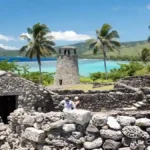
Beneath the soil, archaeologists exposed the clear stone foundations and collapsed masonry walls of a grand domus—a classic, Mediterranean-style Roman house. The architectural footprint revealed an affluent lifestyle that directly replicated the comforts of mainland Italy on the rugged provincial frontier.
Among the structural features documented were:
A Grand Portico: A covered, column-lined walkway that typically fronted high-status Roman homes, providing shade and an area for social interaction.
Two Large Masonry Ovens: Advanced heating or cooking installations whose precise domestic or commercial functions are currently undergoing micro-analytical research.
The presence of such permanent, high-investment stone architecture proves that the civilian elite in Potaissa were deeply rooted, wealthy individuals who spared no expense to bring classical Roman architecture to the edge of the empire.
The Treasures of Daily Frontier Life
Beyond the stone walls of the domus, the soil inside the trenches yielded an extensive assemblage of personal, domestic, and decorative items. These objects act as intimate, physical puzzle pieces that reconstruct the daily routines and aesthetic preferences of Potaissa’s residents.
Among the smaller personal items recovered were numerous official imperial coins, which provide crucial chronological markers for the site. Archaeologists also saved delicate personal adornments, including colorful glass jewelry, finely carved bone hairpins used by upper-class women, bronze finger rings, and heavy bronze belt fittings typically worn by officials or affluent citizens.
The interior decor of the home was equally impressive. Excavators uncovered fragments of luxurious decorative furniture components. The absolute highlight of the domestic assemblage was a beautifully cast bronze tripod leg decorated with zoomorphic (animal-shaped) artistic motifs. The discovery of such high-quality metallic craftsmanship underlines the domestic wealth flowing through this frontier economy, showing that the town’s elite had access to sophisticated artists and imported luxury goods.
The Crown Jewel: The Temple-Façade Box
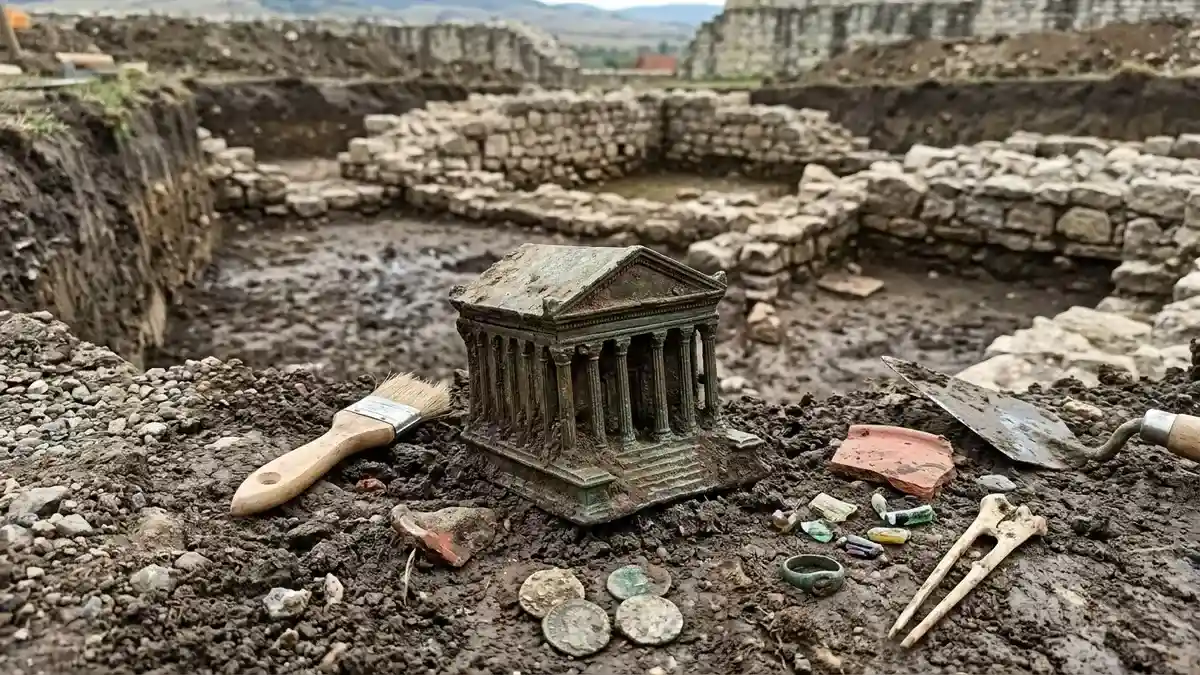
Of all the remarkable artifacts recovered during the five-week dig, one object stands completely alone in terms of its historical rarity and artistic merit: a small, fully intact bronze box meticulously crafted into the precise shape of a classical Roman temple.
The miniature repository features beautifully defined architectural elements, including structural columns and a distinct, sharp triangular pediment at the top, perfectly mimicking the monumental religious architecture of Rome itself. Because the box was found entirely intact, it represents an incredibly rare survival. Currently, there are no known direct parallels for an object of this exact design anywhere else in the entire archaeological record of Roman Dacia.
Scholars specializing in ancient religion believe the box operated exclusively within a sacred or ritual context. It was likely a portable personal shrine or a protective container used to store highly valuable devotional items, sacred amulets, or small offerings dedicated to domestic deities. In the ancient Roman world, maintaining a harmonious relationship with the gods was a daily duty, and this miniature temple allowed an affluent household to showcase both their deep religious piety and their cultural alignment with imperial Roman identity.
Conclusion
The recent discoveries at Turda offer a vivid reminder that the borders of Rome were places of profound cultural endurance, economic vitality, and human connection. The domestic buildings, high-end furnishings, and deeply personal religious artifacts all point to a flourishing civilian population that did not merely survive on the frontier, but actively thrived in lockstep with the legionary fortress. As researchers continue to analyze the artifacts and structural data at the Turda History Museum, the small temple box will undoubtedly shine as a brilliant symbol of the sophisticated, Romanized world that blossomed in the shadow of Legio V Macedonica.
Frequently Asked Questions
Where is the ancient site of Potaissa located today?
The ancient Roman fortress and civilian settlement of Potaissa are located within the modern city of Turda, situated in the Transylvania region of Romania.
What is a canabae legionis?
A canabae legionis was the official Latin term for the civilian town or settlement that naturally developed directly outside the walls of a permanent Roman legionary fortress. These areas served as commercial, social, and residential hubs for merchants, artisans, and soldiers’ families.
Who was Legio V Macedonica?
Legio V Macedonica was a famous, elite Roman military unit formed around 43 BCE. They played a critical role in Emperor Trajan’s conquest of Dacia and were later stationed permanently at Potaissa to maintain imperial law, protect trade, and guard the frontier.
What was the purpose of the rare bronze temple box?
While research is ongoing, archaeologists believe the miniature temple-façade box was used for religious or ritual purposes. It likely functioned as a personal household shrine or a secure container for holding sacred devotional items, protective amulets, or spiritual offerings.
Why are there no direct parallels for this box in Roman Dacia?
Dacia was a frontier province, and while many Roman artifacts have been found there, a fully intact bronze box engineered with such precise, miniature classical architectural details is extraordinarily rare. Its unique design and pristine preservation state make it completely unprecedented for the region.