
Table of Contents
- 1. The Frozen Mummies of Llullaillaco Volcano
- 1.1. Shifting Diets and Ritual Preparations
- 2. Solving a Chronological Mystery with Ancient Seeds
- 2.1. The Limits of Standard Radiocarbon Dating
- 2.2. Turning to the Botanical Evidence
- 3. Capacocha as a Tool of Imperial Conquest
- 3.1. Expanding Boundaries Under Topa Inca and Huayna Capac
- 3.2. Weaponizing the Sacred
- 4. The Broader Implications for Andean Archaeology
- 5. Frequently Asked Questions
- 5.1. What was the capacocha ritual in the Inca Empire?
- 5.2. Why did the Inca specifically choose children for these sacrifices?
- 5.3. How did the Llullaillaco Maiden remain so well-preserved for centuries?
- 5.4. How did analyzing ancient plants provide a more accurate date than human tissue?
- 5.5. What do these findings tell us about how the Inca ruled their empire?
New Study Links Inca Child Sacrifice to Imperial Expansion
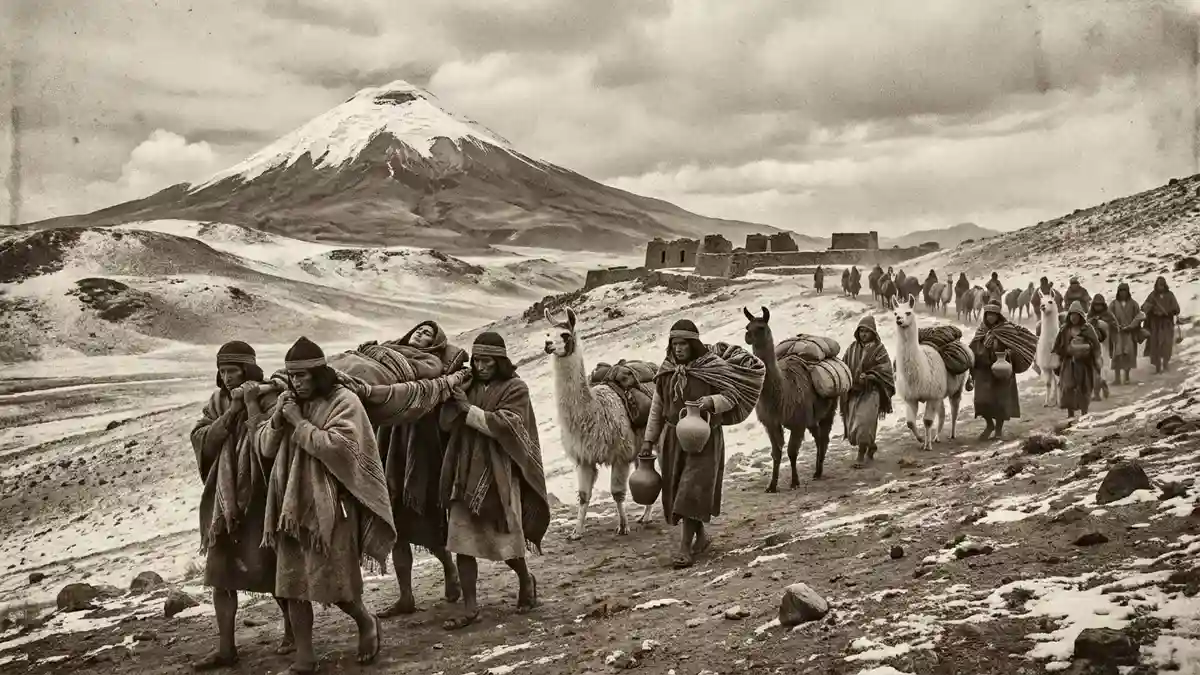
For over twenty years, the extraordinarily preserved remains of the “Llullaillaco Maiden” have provided archaeologists with an unprecedented window into the most sacred and terrifying rituals of the Inca Empire. Discovered near the freezing, windswept summit of a massive volcano, this teenage girl has long held secrets about the ancient Andean world. Now, a groundbreaking scientific analysis of the plant matter buried alongside her is finally solving a centuries-old mystery, pinpointing exactly when she died and revealing the calculated political motives behind her tragic sacrifice.
New Study Links Inca Child Sacrifice to Imperial Expansion
The Frozen Mummies of Llullaillaco Volcano
In 1999, an archaeological expedition scaling the heights of Mount Llullaillaco—a towering volcano rising more than 22,000 feet (6,700 meters) above sea level on the border of Argentina and Chile—made a stunning discovery. Near the peak, researchers unearthed the bodies of three young Inca children. Among them was a teenage girl, who came to be known as La Doncella (The Maiden), the oldest of the trio.
Thanks to the intensely cold, hyper-arid environment of the high-altitude summit, natural mummification occurred perfectly. The dry, freezing conditions prevented decay, leaving the children looking almost as though they had fallen asleep just days prior. This pristine preservation has allowed modern scientists to reconstruct the intimate details of their final months on Earth with astonishing accuracy.
Shifting Diets and Ritual Preparations
Previous biochemical investigations into the hair and tissues of the Llullaillaco mummies revealed that their lives changed dramatically roughly a year before their deaths. The children, who likely came from peasant backgrounds, suddenly experienced a massive upgrade in their standard of living. They began consuming highly prestigious foods reserved for the Inca elite, such as maize and protein-rich llama meat.
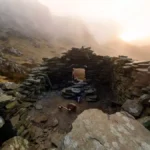
As the date of the ritual neared, their caretakers administered massive quantities of coca leaves and chicha (a potent alcohol brewed from fermented maize). These substances were not merely symbolic; they served to keep the children compliant, heavily sedated, and perhaps numbed to the terrifying reality of their situation. This elaborate preparation was all part of the capacocha, a highly structured, state-sponsored ritual that culminated in child sacrifice. Ultimately, the children were marched up the grueling slopes of the volcano to a specially constructed ceremonial shrine, where they succumbed to exposure and ingestion of intoxicants.
Solving a Chronological Mystery with Ancient Seeds
While researchers successfully mapped out the biological journey of the victims, establishing a precise historical timeline proved frustratingly elusive. For years, historians and archaeologists debated exactly when this specific ceremony took place, leaving a glaring gap in the narrative of the empire’s history.
The Limits of Standard Radiocarbon Dating
Initial attempts to date the mummies relied on radiocarbon analysis of human hair samples. While helpful, the technology yielded a frustratingly broad timeframe, suggesting the sacrifice occurred sometime between 1430 and 1520 CE.
In the grand scheme of the Inca civilization, a 90-year window is an eternity. It spans multiple imperial reigns, vast territorial shifts, and the eventual arrival of Spanish conquistadors. To understand the true socio-political context of the capacocha on Mount Llullaillaco, scientists needed a much tighter window.
Turning to the Botanical Evidence
To bridge this chronological gap, an international coalition of scientists shifted their focus away from the human remains and onto the artifacts buried within the tomb. Scattered around the Llullaillaco Maiden were various ritual offerings, including well-preserved samples of:
Maize kernels
Cassava roots
Fresh coca leaves
Because these agricultural items were seasonal crops, they would have been harvested fresh in the valleys below just months, or even weeks, before being carried up the mountain for the ceremony. Unlike human tissue, which accumulates carbon over a lifetime, these short-lived plants provided an incredibly sharp snapshot of a single moment in time.
By utilizing advanced radiocarbon dating techniques, isotopic analysis, and sophisticated chronological computer modeling, the research team successfully narrowed down the date of the sacrifice. The new data indicates that the ritual took place between 1462 and 1507 CE, with statistical models pointing strongly to a specific year: 1499 CE.
Capacocha as a Tool of Imperial Conquest
Pinpointing the sacrifice to the twilight of the 15th century changes how historians view the entire event. This was not just a isolated religious act of devotion to mountain spirits; it was a calculated display of imperial soft power and political intimidation.
       [ Imperial Capital: Cuzco ]
                    │
       (Commands Capacocha Ritual)
                    │
                    ▼
     [ Newly Conquered Territory ]
  (Mount Llullaillaco Boundary Zone)
                    │
         ┌──────────┴──────────┐
         ▼                     ▼
[Religious Pacification] [Political Dominance]
Expanding Boundaries Under Topa Inca and Huayna Capac
The year 1499 falls squarely within a chaotic and aggressive period of Inca imperial expansion. Under the fierce leadership of Emperor Topa Inca Yupanqui and his successor, Huayna Capac, the empire expanded its borders rapidly, conquering vast swathes of western South America.
Through brutal military campaigns and shrewd geopolitical consolidation, the Inca pushed their frontiers deep into modern-day Chile and Argentina. When the Llullaillaco Maiden was marched up the mountain, the surrounding region had only recently been forced into the imperial fold. The local indigenous populations were likely restless, traumatized by conquest, and resistant to their new rulers in distant Cuzco.
Weaponizing the Sacred
Historical accounts penned by Spanish chroniclers after the conquest describe how Huayna Capac personally traveled through the southern territories, ordering lavish offerings to local deities to secure the loyalty of the newly subjected peoples. While no surviving written document mentions the Llullaillaco children by name, the updated timeline places their deaths precisely within this historical window.
The capacocha served a dual purpose for the reigning Inca elite:
Spiritual Legitimacy: It paid homage to the apus (sacred mountain spirits), which the Inca believed controlled the weather, water, and agricultural success.
Political Dominance: By traveling thousands of miles, establishing high-altitude infrastructure, and sacrificing precious children from the provinces, the central government sent a clear message to local leaders. It demonstrated that the Emperor possessed absolute authority over life, death, and the cosmos itself.
By embedding imperial religious infrastructure into the highest peaks of newly conquered lands, the Inca effectively integrated the local geography into their state machinery, bonding the conquered communities to the religious destiny of the empire.
The Broader Implications for Andean Archaeology
The success of this botanical dating methodology marks a major turning point for the field of South American archaeology. For generations, researchers have struggled to contextualize the dozens of high-altitude sacrificial sites scattered across the Andes.
By applying these same advanced modeling techniques to plant matter found at other ritual burial grounds, scientists hope to construct a comprehensive, master timeline of the capacocha phenomenon. Understanding whether these sacrifices spiked during times of environmental crisis, such as droughts and volcanic eruptions, or during periods of military conquest will clarify the complex relationship between statecraft, religion, and human sacrifice in the ancient world.
The Llullaillaco Maiden was not merely a passive victim of ancient superstition. She was a central figure in a sophisticated geopolitical drama, her final resting place serving as a permanent monument to the unstoppable march of the Inca Empire.
Frequently Asked Questions
What was the capacocha ritual in the Inca Empire?
The capacocha (or qapak ucha) was an essential state-sanctioned ritual in the Inca Empire that involved the sacrifice of fine goods, animals, and children. These ceremonies were performed during significant events, such as the illness or death of an emperor, the birth of a royal heir, or to mark the successful expansion of imperial territories.
Why did the Inca specifically choose children for these sacrifices?
The Inca believed that children were the purest beings and, therefore, the most valuable gifts they could offer to the apus (mountain gods) and the sun god, Inti. Children selected for the ritual were chosen for their physical perfection and beauty, often sourced from provincial nobility to solidify political alliances between local elites and the imperial capital.
How did the Llullaillaco Maiden remain so well-preserved for centuries?
The preservation of the Llullaillaco Maiden and her young companions is due to the extreme climate near the summit of the volcano. At over 22,000 feet, the air is incredibly dry, oxygen levels are low, and temperatures remain consistently below freezing. These factors created a natural deep-freeze environment that halted the decomposition process completely.
How did analyzing ancient plants provide a more accurate date than human tissue?
Human tissues, like bone and hair, absorb carbon over many years, which can obscure radiocarbon dating accuracy. On the other hand, annual crops like maize, cassava, and coca leaves have short life cycles and absorb carbon from the atmosphere only during the year they are grown. Dating these items pinpointed the exact year of harvest, which coincided with the ritual.
What do these findings tell us about how the Inca ruled their empire?
The study shows that the Inca used religion as a direct tool for political control and territorial integration. By staging a massive, resource-heavy ritual on a prominent mountain in a newly conquered region, the imperial government effectively demonstrated its immense power, wealth, and spiritual authority to the local subjected populations.