
Table of Contents
Queen Elisenda’s 700-Year-Old Bones Reveal Medieval Secrets
Archaeologists in Barcelona have made a startling discovery while commemorating the 700th anniversary of a historic monastery. They opened eight 14th-century graves and found 25 skeletons, including the remains of Queen Elisenda of Montcada, one of medieval Europe’s most influential royal figures. Even more surprising were the unexplained stab wounds on several male skeletons and the remains of a pregnant woman, offering fresh insights into life, death, and power in 14th-century Spain.
This remarkable excavation at the Royal Monastery of Santa Maria Pedralbes shines new light on the early days of this important religious site and the people connected to its founding queen. The findings blend royal history with unexpected mysteries, revealing both the grandeur and harsh realities of medieval monastic life.
Queen Elisenda’s 700-Year-Old Bones Reveal Medieval Secrets
### The Historic Discovery at Pedralbes Monastery
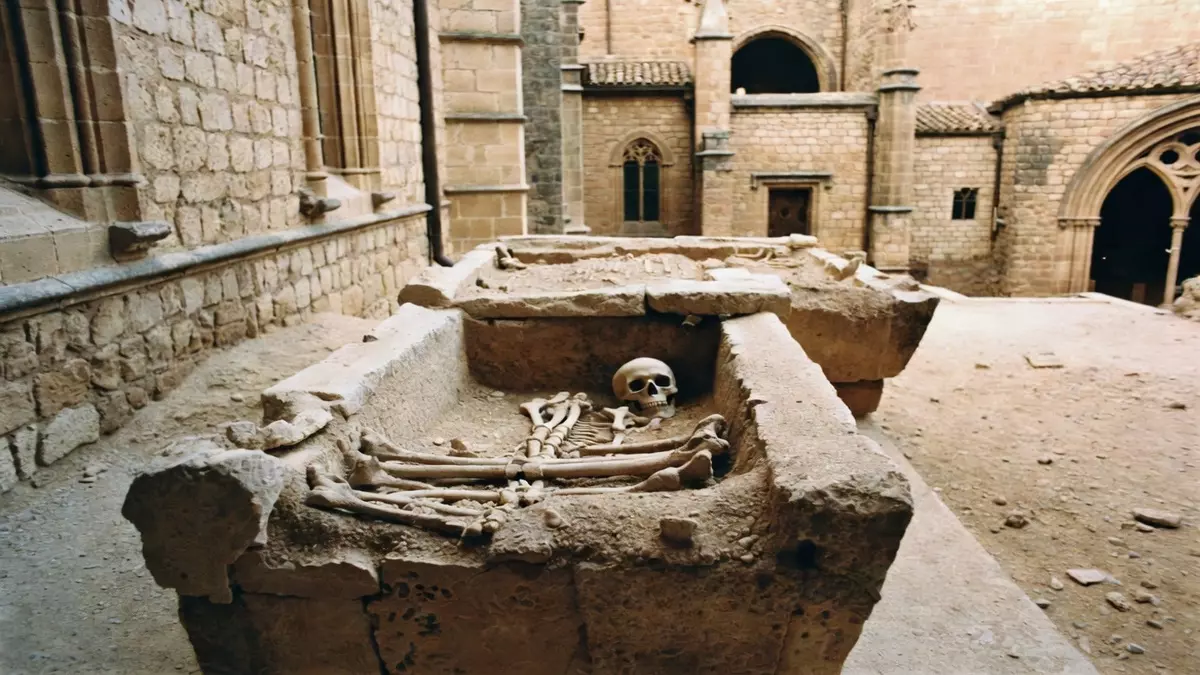
In late May, experts from the Culture Institute of Barcelona carefully examined tombs linked to the monastery’s earliest years. The Royal Monastery of Santa Maria Pedralbes, founded in 1326 by Queen Elisenda, served as a cloistered home for the Order of the Poor Clares. Opening these graves provided a rare chance to study the physical remains of high-status individuals from the 14th century.
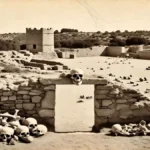
What they found exceeded expectations. Instead of single burials, some tombs held multiple people. Queen Elisenda’s sarcophagus contained her bones in a simple wooden box, placed in a specially designed space that symbolized her dual identity as both a powerful ruler and a devout penitent. The tomb’s location between the church and cloister, divided by a low wall, perfectly captured this balance of political authority and spiritual devotion.
The investigation highlights how archaeology continues to reshape our understanding of medieval European history, particularly in Catalonia, where royal patronage shaped religious institutions.
### Who Was Queen Elisenda of Montcada?
Queen Elisenda of Montcada lived a life defined by political strategy and religious commitment. At age 30, she married the 55-year-old King James II of Aragon and Valencia, becoming stepmother to his ten children just one month after his third wife’s death. James II, known as James the Just, ruled from 1291 until 1327.
As the king’s health declined, Elisenda founded the Pedralbes monastery for the Poor Clares nuns. After James II’s death, she lived in a modest palace attached to the monastery until her own passing in 1364 at around age 70. Her decision to establish this religious house reflected both personal faith and strategic influence in medieval Catalan society.
Initial bone analysis confirms she died in her early seventies, with signs of osteoarthritis typical of aging. Though buried in plain monastic clothing, traces of luxurious gold-embroidered silk and aromatic herbs like rosemary and myrtle suggest her royal status was quietly honored even in death.
### Shocking Finds in the Companion Tombs
The tombs of those closest to Queen Elisenda revealed unexpected stories. Researchers examined the graves of the monastery’s first two abbesses and other early burials.
In the tomb of Sobirana Olzet, the first abbess, scientists identified bones matching historical records. However, they also discovered a knife-like traumatic injury to her face that occurred around the time of death. This violent wound raises compelling questions about the circumstances surrounding her final days.
Another surprise came from a grave originally believed to belong to the knight Artau de Foces. Instead of one male skeleton, it contained remains of five individuals: two adult women and three children. No male bones were present. Remarkably, one woman’s long ponytail remained preserved and attached to her skull after more than 700 years.
The most dramatic discoveries appeared in the tomb thought to hold Francesca Saportella, the second abbess and Queen Elisenda’s niece. This single grave held at least nine people buried over different periods. Among them were four male skulls, each bearing clear stab wounds. Even more poignant was the partially mummified torso of a woman with a 20- to 23-week-old fetus still in the birth canal, indicating she died during pregnancy.
These findings paint a complex picture of the monastery’s early community, where high-status women lived alongside evidence of violence and tragedy.
### Life and Death in 14th-Century Barcelona
The Pedralbes discoveries offer valuable context about medieval living conditions. Most early burials belonged to elderly women showing signs of physical wear from long lives, consistent with the expected population of a wealthy nunnery. Many suffered from age-related conditions like osteoarthritis.
The presence of stab wounds on multiple male skeletons suggests possible connections to regional conflicts, personal disputes, or political tensions during a turbulent era in Catalan history. The pregnant woman’s remains provide rare evidence of maternal mortality risks in the 14th century, when childbirth carried significant dangers.
Papers and parchment recovered from the tombs, including sheet music, are now being carefully conserved. These artifacts may reveal more about daily religious and cultural practices within the monastery walls.
### Scientific Analysis Underway
Researchers have only begun unlocking the secrets held in these bones. Genetic sequencing has so far recovered just 6% of Queen Elisenda’s genome, but advanced DNA testing on bones and teeth is planned. This work aims to:
– Confirm identities of the individuals
– Map family relationships
– Detect ancient pathogens that might explain causes of death
– Provide deeper insights into diet, health, and mobility
Full results from the bone analysis, textiles, plant remains, and documents are expected by mid-2027. This methodical approach reflects the highest standards in modern archaeological science.
### Historical Importance of the Royal Monastery
The Royal Monastery of Santa Maria Pedralbes stands as a masterpiece of Gothic architecture and a testament to Queen Elisenda’s vision. Founded during a period of political consolidation in the Crown of Aragon, it became a center of female religious life and cultural influence.
The Poor Clares order emphasized poverty, prayer, and seclusion. Yet the monastery’s royal connections meant it maintained close ties to power structures. Queen Elisenda’s dual role as founder and resident perfectly embodied the intersection of medieval politics and spirituality.
This 700th-anniversary investigation helps modern audiences understand how such institutions shaped society, preserved knowledge, and provided spaces for women to exercise influence in an otherwise male-dominated world.
### Why These Findings Matter Today
Discoveries like the Pedralbes skeletons connect us directly to medieval Europeans who lived through wars, plagues, and political changes. They humanize historical figures, showing Queen Elisenda not just as a queen but as an elderly woman with arthritis who chose a life of relative simplicity after decades of royal duty.
The unexpected violence revealed in some tombs reminds us that life in 14th-century Barcelona was far from peaceful. Political intrigue, family conflicts, and social tensions affected even those connected to religious sanctuaries.
As genetic and chemical analyses continue, these remains will likely reveal even more about migration patterns, disease prevalence, and social networks in medieval Catalonia. The project demonstrates the enduring value of preserving and studying historical sites.
### Broader Context of Medieval Archaeology
Archaeological work at religious sites across Europe frequently yields surprises. From English monasteries to Italian convents, researchers often find discrepancies between written records and physical evidence. The Pedralbes project adds to this growing body of knowledge about female religious communities and royal patronage during the late Middle Ages.
The preservation of delicate materials like hair, textiles, and parchment in these tombs is particularly noteworthy, offering opportunities to study organic materials that rarely survive for centuries.
**Conclusion**
The unearthing of Queen Elisenda’s remains alongside 24 other individuals at the Royal Monastery of Santa Maria Pedralbes represents far more than a historical anniversary project. It opens a vivid window into the complex realities of 14th-century life in Barcelona, where royal power, religious devotion, personal tragedy, and unexpected violence coexisted.
As scientists continue their careful work through 2027, we can expect richer details about these individuals’ identities, relationships, and final days. Queen Elisenda’s story, preserved in her bones and the sacred ground she chose, reminds us of the enduring human experiences that bridge medieval and modern worlds. This discovery enriches our understanding of Catalonia’s royal and religious heritage while raising fascinating new questions about the past.
**FAQ**
**Q: Who was Queen Elisenda and why is she important?**
A: Queen Elisenda of Montcada was the fourth wife of King James II of Aragon. She founded the Royal Monastery of Santa Maria Pedralbes in 1326 and lived there after his death until 1364. Her influence helped shape religious and cultural life in medieval Catalonia.
**Q: What surprising discoveries were made in the tombs?**
A: Researchers found 25 skeletons across eight graves. Several male skulls had stab wounds, one tomb contained a pregnant woman with a fetus, and another held multiple women and children instead of the expected knight. One woman’s ponytail was remarkably well-preserved.
**Q: When was the Royal Monastery of Pedralbes founded?**
A: The monastery was established in 1326 by Queen Elisenda. The recent excavations were part of the 700th-anniversary celebrations in 2026.
**Q: What will DNA testing reveal about the remains?**
A: DNA analysis aims to confirm identities, establish family connections between Queen Elisenda and others, and identify possible diseases or pathogens present in 14th-century Barcelona.
**Q: Why were multiple people buried in single tombs?**
A: Medieval burial practices sometimes involved adding family members or important individuals to existing tombs over time, especially within prestigious religious sites like Pedralbes.
**Q: Where is the Pedralbes monastery located?**
A: The Royal Monastery of Santa Maria Pedralbes is located in Barcelona, Spain. It remains an active historic site and major tourist attraction showcasing Gothic architecture.
**Q: When will full research results be available?**
A: Complete analysis of the bones, artifacts, and documents is expected by mid-2027, though initial findings have already been released.