
Table of Contents
Prehistoric Time Capsule: Sealed Cave Discovered Near Haifa Unlocks Secrets of Human Evolution
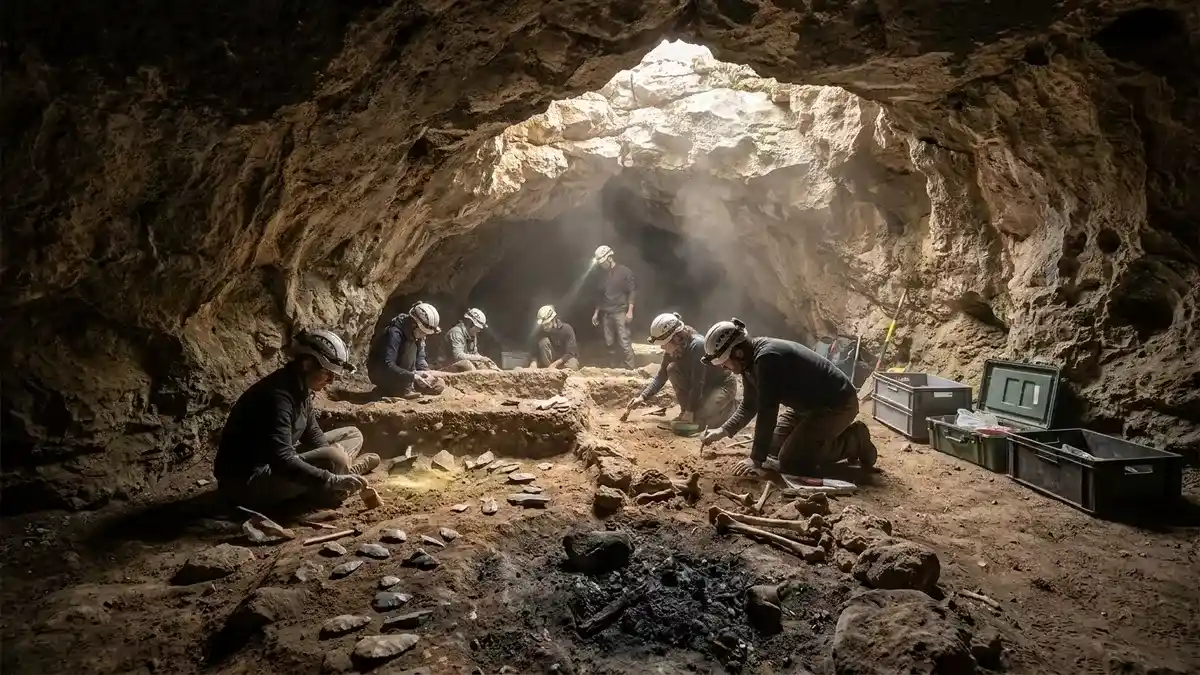
Deep beneath the rugged landscape south of Haifa, near the town of Fureidis, archaeologists have made a breathtaking discovery: a prehistoric cave that has remained completely sealed for hundreds of thousands of years. Dating back between 400,000 and 250,000 years ago, this pristine underground site offers an unprecedented look into the Lower Paleolithic period—a pivotal era in human history where archaeological evidence is notoriously scarce.
The remarkable discovery occurred during an excavation campaign near the Zikhron Ya’akov interchange, spearheaded by the Israel Antiquities Authority in joint collaboration with the University of Haifa. Because the cave was naturally sealed and protected from the elements shortly after its last inhabitants departed, its thick layers of ancient sediment and delicate artifact deposits have remained completely undisturbed. This extraordinary level of preservation provides modern science with a flawless window into the dawn of complex human behavior.
Prehistoric Time Capsule Sealed Cave Discovered Near Haifa Unlocks Secrets of Human Evolution
A Rare Window into the Acheulo-Yabrudian Culture
The newly uncovered cave dates specifically to the Acheulo-Yabrudian cultural complex, which thrived during the final stages of the Lower Paleolithic period. This was a critical transition epoch in the Middle Pleistocene, occurring just before Neanderthals and anatomically modern humans (Homo sapiens) expanded across Eurasia.

Finding intact sites from this era is an extreme rarity in the Levant. While a handful of locations have been identified in Israel over the last century, many were excavated using older, less precise methods that compromised the archaeological record. In other instances, poor environmental preservation eroded the delicate organic material.
The Fureidis cave completely breaks this trend. Because it became trapped in time, it allows researchers to study the daily routines, hunting strategies, and social structures of early hominins at a microscopic level of detail that was previously impossible.
The Birth of Social Cooperation and Fire Mastery
Evidence gathered from the site aligns with a massive behavioral shift that occurred during this specific prehistoric era. Before this period, early human ancestors were highly nomadic, moving constantly across landscapes in tiny, isolated groups. However, during the Acheulo-Yabrudian phase, hominins began settling down for longer stretches of time, adopting caves as permanent base camps and gathering in much larger communal groups.
A defining feature of this lifestyle shift was the frequent, controlled use of fire. Inside the Fureidis cave, archaeologists are finding clues that point toward regular fire management. This technological leap did more than just provide warmth and protection from predators—it fundamentally reshaped human society. Gathering around a central hearth encouraged:
Enhanced Social Bonding: Larger groups required more complex communication, leading to early language development and stronger community ties.
Knowledge Sharing: The fireside became a space where tool-making techniques, hunting strategies, and survival skills were systematically passed down to younger generations.
Nutritional Advancement: Cooking food made calories more accessible, fueling brain growth and driving physical evolution.
Advanced Flint Technology and Ancient Hunting Grounds
The excavation floor has already yielded an impressive treasure trove of stone tools that showcase sophisticated flint-working craftsmanship. Among the most significant finds are expertly knapped handaxes, sharp scrapers, and elongated blades.
Acheulo-Yabrudian Tool Kit Discovered at Fureidis
├── Handaxes (Multi-purpose butchering and heavy-duty chopping tools)
├── Scrapers (Precision tools used for cleaning animal hides and processing wood)
└── Blades (Advanced, elongated flakes indicating efficient material use)
These artifacts demonstrate that the cave’s ancient inhabitants possessed remarkable spatial reasoning and fine motor skills, moving away from crude rock-smashing toward highly standardized, intentional tool manufacturing.
A Paradise for Hunter-Gatherers
Beyond the stone tools, the sealed cave preserved a vast collection of ancient animal bones, which act as a direct menu of what these early humans were hunting. The faunal remains identified so far include:
Fallow Deer (Indicating nearby forested areas)
Gazelles (Suggesting open, grassy plains)
Ancient Horses (Highlighting the ability to track and take down large, fast game)
The presence of these diverse species, combined with geological evidence of reliable, nearby freshwater sources, explains exactly why this location was so popular. The Zikhron Ya’akov area was a prehistoric paradise, offering an abundance of water and game that drew hunter-gatherer groups back to this specific cave repeatedly over thousands of years.
Comparing Fureidis to Global Landmarks
The research team believes the Fureidis cave is equal in historical weight and scientific importance to the world-famous Nahal Me’arot caves—a nearby UNESCO World Heritage site known for chronicling human evolution. However, because Fureidis has the unique advantage of being completely untouched by modern development or early, destructive archaeological practices, it may ultimately provide even cleaner data.
In response to the site’s immense international value, the Israel Antiquities Authority and the University of Haifa are launching a multi-disciplinary research program. Experts will study everything from microscopic soil data to ancient pollen grains to reconstruct the exact climate, environment, and behavioral patterns that shaped the foundations of later human societies.
While scientific analysis remains the top priority, project leaders have announced plans to preserve and develop the site for the public once the research phase wraps up. In the future, local residents, students, and travelers will have the rare opportunity to step inside a deeply significant prehistoric sanctuary and walk the very floors where our ancestors learned to conquer the ancient world.
Frequently Asked Questions
Why is the discovery of the Fureidis cave considered so unique?
The cave is incredibly unique because it has remained completely sealed for hundreds of thousands of years. This protected its archaeological layers from weather, erosion, and modern human disturbance, creating a perfectly preserved time capsule from an era where historical evidence is normally heavily degraded or missing.
What was the Acheulo-Yabrudian culture?
The Acheulo-Yabrudian culture represents a crucial transitional phase at the end of the Lower Paleolithic period (between 400,000 and 250,000 years ago). It marks a time in human evolution just before modern humans and Neanderthals emerged, characterized by early cave living, the regular use of fire, and advanced stone tool manufacturing.
What kind of tools did archaeologists find inside the cave?
The excavation team uncovered an advanced prehistoric tool kit made entirely of flint. This includes classic Acheulo-Yabrudian handaxes used for heavy butchering, specialized scrapers for processing animal hides, and sharp stone blades crafted using sophisticated stone-knapping techniques.
What do the animal bones found at the site tell us about the past?
The bones of fallow deer, gazelles, and ancient wild horses prove that the cave’s inhabitants were highly skilled hunters capable of targeting both woodland and open-plain animals. The variety of wildlife also indicates that the ancient environment around Haifa was rich in natural resources and fresh water.
Will the public be allowed to visit the cave?
Yes. While the cave is currently closed to ensure archaeologists can carefully excavate and study the undisturbed layers, the long-term plan includes developing the site so that students, tourists, and prehistory enthusiasts can safely visit and explore this monumental piece of human history.