
Table of Contents
**Young Workers Hit Hardest by Basel’s 17th Century Plague**
A new archaeological study from Basel, Switzerland, reveals the devastating human cost of one of the city’s final plague outbreaks in the late 1600s. Researchers examining remains from a makeshift hospital cemetery found that young laborers suffered disproportionately high death rates, shedding light on how social class, hard work, and limited resources shaped survival during Europe’s recurring plague epidemics.
This discovery offers a deeply personal look at how ordinary people—many just teenagers—faced one of history’s most feared diseases. By combining skeletal analysis, ancient DNA, stable isotopes, and historical documents, the team has reconstructed the difficult lives and sudden deaths of 15 plague victims, highlighting patterns that echo across centuries, including in modern pandemics.
Young Workers Hit Hardest by Basel’s 17th Century Plague

### The Last Major Plague Outbreak in Basel
Between 1665 and 1670, plague returned to the Rhine River region, striking Basel with deadly force. The city, a bustling trade hub, struggled to contain the highly contagious bacterial disease caused by *Yersinia pestis*. While wealthier residents could sometimes isolate or flee, poorer workers faced grim realities: they needed daily wages for food and shelter, keeping them exposed to infection.
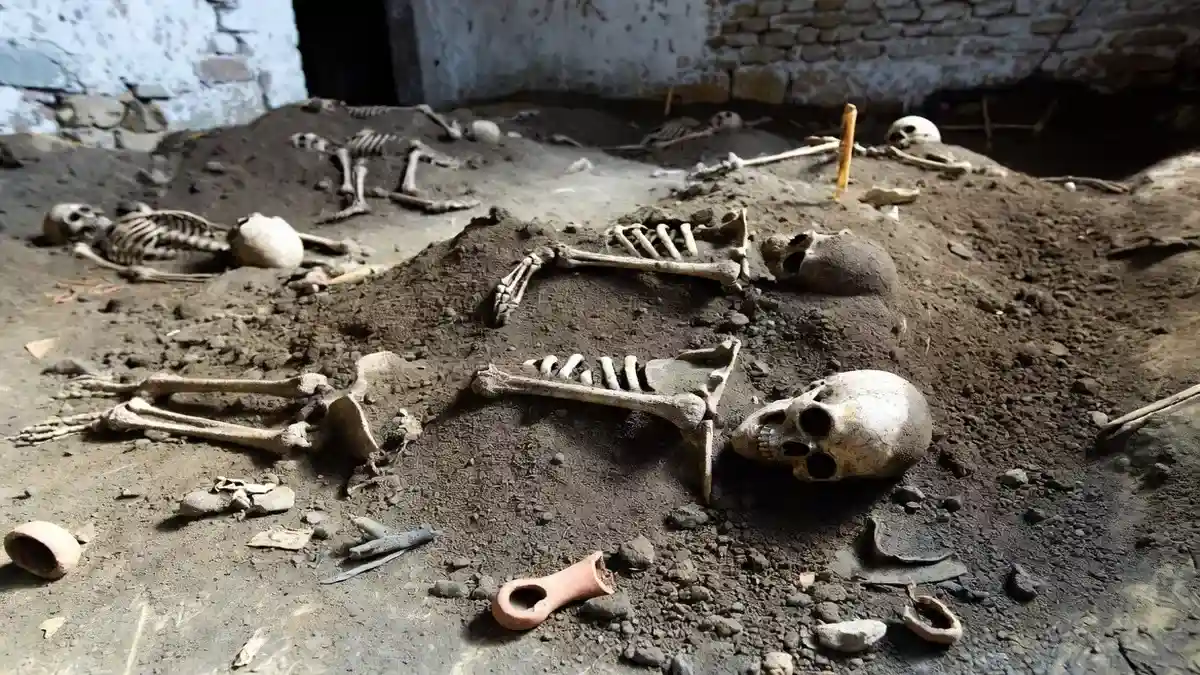
The burials come from a former monastery converted into a hospital during the crisis. Archaeologists uncovered 15 individuals in tightly packed graves within a short time frame. A stamped clay pipe found in one grave, traced to a maker in Mannheim, Germany, helped pinpoint the outbreak to around 1667 or 1668. Ancient DNA testing confirmed *Yersinia pestis* in several remains, providing clear scientific proof of the cause of death.

### Who Were the Victims? Young and Overworked
The most striking detail is the victims’ age. The average age at death was under 18, with many showing signs of intense physical labor starting at a young age. Skeletal markers—such as joint wear, bone remodeling, and stress indicators—reveal lives marked by heavy manual work, poor nutrition, and chronic strain.
These were not the elderly or infirm typically associated with high mortality in some outbreaks. Instead, they were young apprentices, day laborers, and service workers essential to Basel’s economy. Trade remained active despite the danger, as city authorities kept gates open to maintain commerce. This decision helped the disease spread while forcing lower-class residents to keep working in risky conditions.

### Life Histories Written in Bone and Teeth
Detailed osteological examination told researchers much about the victims’ daily hardships. Many skeletons displayed evidence of repetitive stress injuries consistent with lifting, carrying, and other demanding tasks. Some showed signs of earlier health problems, including nutritional deficiencies that would have weakened their immune systems.
Stable isotope analysis from bones and teeth provided further clues about diet and mobility. Results indicated uneven access to quality food, with several individuals experiencing periods of nutritional stress. A diet low in diverse nutrients likely made them more vulnerable once infected. Poor pre-existing health turned a contagious disease into a death sentence for many in this group.
The burials also revealed subtle social differences even within lower classes. Not everyone had equal access to care. Family connections, citizenship status, and local reputation could determine who received better treatment or support in the hospital. Those without strong networks faced higher risks, underscoring how social ties influenced outcomes during crises.
### A Former Monastery Turned Plague Hospital
The cemetery formed in a former monastery repurposed as a hospital when the outbreak overwhelmed normal medical facilities. Graves were dug closely together, reflecting the urgent need to manage a surge of bodies. Unlike formal churchyard burials with careful rituals, these interments were practical responses to mass mortality.
Indoor excavations in the music hall of Basel’s Stadtcasino uncovered the remains in multiple layers. The careful documentation of these graves, including their positions and associated artifacts like the clay pipe, allowed researchers to reconstruct the sequence of events and the hospital’s role in the community’s response.
### Connections to Broader Plague Patterns
This Basel study fits into a larger picture of European plague history. The disease, which first devastated the continent during the Black Death of 1347–1351, returned in waves for centuries. By the 17th century, cities had developed some containment strategies, yet outbreaks still exploited social inequalities.
Young workers in Basel bore a heavy burden because they formed the backbone of essential services—loading ships, working in markets, and supporting households. Their deaths disrupted families and the local economy, contributing to long-term social and demographic shifts. Similar patterns appear in other historical outbreaks and even in 20th- and 21st-century pandemics, where socioeconomic status consistently predicts higher risk and worse outcomes.
### How Archaeology and History Reveal Hidden Stories
The Basel research exemplifies the power of interdisciplinary methods. Ancient DNA provided definitive disease identification, while skeletal biology and isotopes illuminated lived experiences. Historical records from city archives and hospital logs added context about policies, such as keeping trade routes open, that influenced the epidemic’s course.
A clay pipe with a maker’s stamp was particularly valuable. Such small personal items humanize the victims, reminding us they were individuals with habits and possessions who smoked during their final days, perhaps seeking small comfort amid suffering.
This integrated approach moves beyond simply confirming plague presence. It reconstructs life histories—childhood conditions, occupational hazards, social standing, and final days—offering a richer understanding of how epidemics affect real people rather than abstract populations.
### Lessons for Modern Times
The findings resonate strongly today. Recent global health crises have shown how essential workers, often from disadvantaged backgrounds, face elevated risks. In 17th-century Basel, young laborers had no choice but to continue working. Today, debates about worker protections, paid sick leave, and equitable healthcare echo these historical realities.
Nutritional stress and pre-existing health conditions amplified the plague’s impact then, just as comorbidities increase severity in modern diseases. The role of social networks in care and recovery also parallels contemporary discussions about community support during emergencies.
By studying past pandemics, archaeologists and historians provide valuable data for public health planning. Understanding who was most vulnerable and why helps societies build more resilient systems for future threats.
### The Broader Impact on Basel and European History
Basel, strategically located on the Rhine, was a center of trade, scholarship, and printing during the early modern period. The plague outbreak disrupted this prosperity, claiming lives and straining resources. The deaths of so many young workers likely created labor shortages that affected local industries for years afterward.
The monastery-hospital site itself reflects adaptive responses to crisis. Religious institutions often stepped in when civic systems were overwhelmed, providing care while also serving as burial grounds. The transition from sacred space to emergency facility illustrates the profound societal adjustments required during epidemics.
Future research may expand on these finds by comparing them with other Swiss or European sites from the same period. Additional genetic studies could trace the specific strain of *Yersinia pestis* and its relationship to earlier and later outbreaks, contributing to evolutionary histories of the bacterium.
### Archaeology’s Role in Understanding Inequality
This study highlights archaeology’s unique ability to recover voices of the marginalized. Written histories from the 17th century often focus on elites, officials, and dramatic events. Graves like those in Basel preserve the stories of forgotten workers whose labor sustained society but whose suffering receives less attention in traditional records.
Through careful excavation and scientific analysis, researchers give these individuals dignity and recognition. The young people buried in Basel’s hospital cemetery are no longer anonymous statistics—they emerge as resilient individuals who worked hard, faced hardship, and ultimately fell victim to forces beyond their control.
**Conclusion**
The Basel plague burials offer a sobering window into the lives of young workers who paid the highest price during a 17th-century epidemic. Their remains tell a story of physical toil, nutritional challenges, social inequality, and tragic loss that feels strikingly familiar across time. By confirming the presence of *Yersinia pestis* and reconstructing individual life histories, the study deepens our understanding of how disease intersects with class, labor, and community support.
As we confront ongoing global health challenges, these ancient graves remind us that pandemics are never purely biological events. They expose and amplify existing vulnerabilities while testing societal values around care, equity, and resilience. The young victims in Basel deserve to be remembered not just as plague statistics, but as representatives of countless unsung workers whose contributions and sacrifices shaped history.
This research, published in the journal *Antiquity*, stands as a model for how modern science and historical inquiry can collaborate to illuminate the past—and inform the future.
### FAQ
**What caused the plague outbreak in 17th century Basel?**
The bacterial disease *Yersinia pestis*, confirmed through ancient DNA from the remains. It was part of recurring European epidemics following the Black Death.
**Why were so many victims young workers?**
Economic necessity forced lower-class individuals, including teenagers, to continue working and moving through the city, increasing their exposure to the highly contagious disease.
**How did researchers date and confirm the burials?**
A stamped clay pipe linked the graves to 1667–1668, while DNA testing identified the plague bacterium. Skeletal analysis provided age and health details.
**What do the bones reveal about the victims’ lives?**
Signs of heavy physical labor from a young age, nutritional stress, and pre-existing health issues that likely worsened plague outcomes.
**Did social status affect survival chances?**
Yes. Family networks, citizenship, and reputation influenced access to hospital care and support, creating differences even among lower social classes.
**Where were the burials discovered?**
In a former monastery used as a hospital, now beneath the music hall of Basel’s Stadtcasino. Fifteen individuals were found in closely spaced graves.
**How does this study relate to modern pandemics?**
It shows how socioeconomic factors, occupation, and inequality consistently drive higher mortality rates, offering lessons for protecting vulnerable workers today.