
Table of Contents
**AI Brings Pompeii Victim’s Face Back to Life**
Archaeologists have used artificial intelligence to recreate the face and final desperate moments of a man who died during the catastrophic eruption of Mount Vesuvius in 79 CE. This powerful digital reconstruction offers a hauntingly human glimpse into one of history’s most famous natural disasters, transforming dry excavation data into a vivid story of survival and tragedy in ancient Pompeii.
The project highlights how modern technology is revolutionizing our understanding of the past. By combining precise archaeological measurements with AI tools and photo editing, researchers have visualized not just what the victim looked like, but how he fought for his life as volcanic fury engulfed his world.
AI Brings Pompeii Victim’s Face Back to Life
### The Deadly Eruption That Frozen Pompeii in Time
Mount Vesuvius’s eruption in 79 CE ranks among the most dramatic events of the ancient world. The volcano, long dormant, suddenly unleashed a deadly sequence of pumice falls, pyroclastic surges, and toxic gases that buried the prosperous Roman city of Pompeii and nearby settlements under meters of ash and debris. Thousands perished, their bodies preserved in remarkable detail by the very material that killed them.
For centuries, Pompeii has captivated the public imagination. Its streets, homes, bakeries, and forums provide an unparalleled window into everyday Roman life—from frescoes depicting banquets to tools of tradespeople. Recent excavations continue to yield new insights, including the tragic story of two men who attempted to flee toward the coast near the Porta Stabia necropolis.
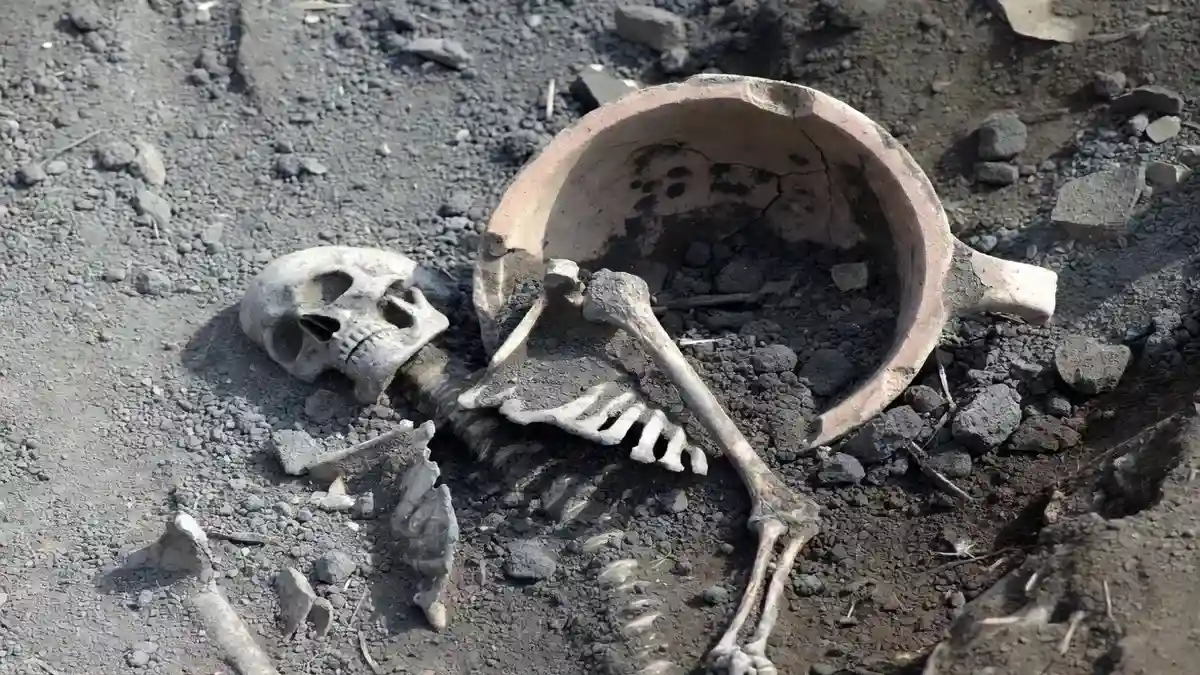
The older victim, the focus of this AI reconstruction, was found lying beside a terracotta mortar he apparently used as a makeshift shield against falling lapilli—small volcanic stones that rained down like hail during the early phases of the eruption. Pliny the Younger, who witnessed the disaster from across the Bay of Naples, described similar frantic efforts by people to protect themselves from the deadly downpour.
### A Man’s Final Struggle Captured in the Ashes
Archaeological evidence paints a poignant picture of the man’s last actions. He carried a ceramic oil lamp, likely hoping its light would guide him through the choking darkness of falling ash. A small iron ring remained on his finger, and a purse containing ten bronze coins lay nearby—items he chose to grab while escaping, perhaps representing his life savings or practical needs during flight.
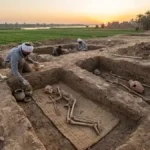
His position and injuries suggest he died during the initial stages of the eruption as volcanic debris accumulated. Nearby, a younger man appears to have been overtaken later by a fast-moving pyroclastic flow of superheated gas and ash. Their different fates along the same escape route provide a rare chronological record of how the disaster unfolded in real time for those trying to outrun it.
The Porta Stabia area, just outside Pompeii’s ancient walls, served as a burial ground in normal times. During the crisis, it became a desperate corridor for escape. The two men’s remains add emotional depth to our knowledge of the human cost, showing ordinary citizens caught in an extraordinary catastrophe.
### How AI and Archaeology Created the Reconstruction
The digital portrait is no artistic fantasy. Researchers from the Archaeological Park of Pompeii started with detailed measurements of the skeleton, including skull structure, estimated age, and body proportions. They layered this data with AI algorithms and traditional photo editing techniques to generate a realistic likeness.
The resulting image shows the man mid-struggle: moving along a rough path, lifting the heavy terracotta mortar above his head as volcanic stones fall around him. His expression and posture convey urgency and determination. Importantly, the team emphasizes that this is a model grounded in evidence rather than a definitive photograph. AI serves as a supportive tool, enhancing rather than replacing rigorous archaeological analysis.
This approach reflects broader trends in the field. As Pompeii generates massive amounts of data from ongoing excavations, digital technologies help manage, visualize, and share findings with both specialists and the public. The reconstruction humanizes the victim, turning an anonymous set of bones into a relatable individual whose story resonates across millennia.
### Life in Pompeii Before the Disaster
To fully appreciate the reconstruction, it helps to understand the vibrant world the victim left behind. Pompeii was a bustling coastal town with an estimated population of around 11,000. Residents enjoyed public baths, amphitheaters, shops selling garum (fermented fish sauce), and homes adorned with elaborate mosaics and frescoes.
Many were merchants, farmers, or craftspeople benefiting from the region’s fertile volcanic soils and strategic port location. The man in question, possibly in his later years based on skeletal analysis, likely belonged to the working or middle class. The coins and personal items suggest he had some means but was not among the elite who might have had better escape options or earlier warnings.
Daily life mixed routine with celebration. The eruption struck on August 24 (or possibly October, according to some recent studies), catching many during ordinary activities. Some residents fled immediately, while others sheltered in place, only to be overwhelmed later.
### The Science Behind Vesuvius’s Fury
Vesuvius’s eruption unfolded in distinct phases. Initial explosions sent a towering column of ash and pumice high into the sky. Lapilli and larger rocks pelted the area, damaging roofs and injuring those outdoors. Pyroclastic surges—fast, deadly currents of hot gas—followed, causing instant death through heat and asphyxiation.
The two men near Porta Stabia experienced different stages. The older man’s attempt to shield himself with the mortar aligns with the early pumice fall phase. The younger victim’s remains reflect the later, more lethal surges. Such details, preserved in the stratigraphic record, allow scientists to refine eruption timelines and better understand hazards for modern populations living near active volcanoes.
### AI’s Growing Role in Archaeology
This Pompeii project exemplifies how artificial intelligence is transforming historical research. Machine learning can analyze skeletal remains for age, sex, and health indicators faster than traditional methods. It also assists in facial approximation, filling gaps with probabilistic modeling based on population data from the Roman era.
Critics sometimes worry about over-reliance on technology, but experts stress integration with established practices. Every step of the reconstruction was cross-checked against excavation records, osteological analysis, and historical context. The result educates visitors and sparks public interest while advancing scholarly knowledge.
Similar techniques have been used on other famous remains, including Ötzi the Iceman and various Egyptian mummies. In Pompeii, the approach adds emotional storytelling to scientific data, making the past more accessible.
### Why These Discoveries Still Matter Today
Nearly 2,000 years later, Pompeii continues to teach valuable lessons. The victim’s story reminds us of human vulnerability in the face of natural forces. It also highlights resilience—people grabbing lamps, coins, and improvised shields in a bid to survive.
For modern Italy, Vesuvius remains a threat. Around 700,000 people live in its shadow, making detailed study of ancient eruptions crucial for disaster preparedness. The Pompeii excavations inform evacuation plans and risk assessment models.
Culturally, these finds connect us to our shared humanity. The man with the mortar was a father, husband, or neighbor much like people today. Seeing his reconstructed face bridges time, evoking empathy and curiosity about Roman lives interrupted so abruptly.
### Ongoing Work at the Archaeological Park
The Park of Pompeii maintains an active research program, combining traditional digs with cutting-edge science. Recent years have seen discoveries of new frescoes, skeletons, and even a preserved horse. The E-journal of Pompeii Excavations shares technical details of projects like this reconstruction, promoting transparency and collaboration.
Future efforts may expand AI applications to other victims or entire scenes, creating immersive virtual experiences for global audiences. As technology improves, so does our ability to honor the dead by telling their stories accurately and respectfully.
**Conclusion**
The AI reconstruction of the Pompeii victim brings one man’s final moments into sharp focus, reminding us of the eruption’s human toll while celebrating ingenuity in how we study the past. From the desperate grip on a terracotta mortar to the small comforts of a lamp and coins, his story embodies the universal struggle against overwhelming odds.
As archaeologists continue excavating and innovating, Pompeii yields fresh insights into Roman society and the power of nature. This digital portrait does more than show a face—it revives a life, fostering deeper connection to history and appreciation for the fragile beauty of human existence. In an age of advanced technology, we’re reminded that some truths about who we are emerge most clearly from the ashes of the past.
### FAQ
**Who was the Pompeii victim reconstructed with AI?**
An older man found near Porta Stabia who died during the early stages of the 79 CE Vesuvius eruption while trying to shield himself with a terracotta mortar.
**How did archaeologists create the facial reconstruction?**
They combined skeletal measurements, AI algorithms, and photo editing tools grounded in archaeological evidence to generate a realistic model of his appearance and actions.
**What items were found with the victim?**
A ceramic oil lamp, an iron ring on his finger, a purse with ten bronze coins, and the terracotta mortar he used for protection.
**What caused the deaths near Porta Stabia?**
The older man likely died from falling lapilli and debris; the younger man was overtaken by a later pyroclastic flow of hot gas and ash.
**Why is this reconstruction important?**
It humanizes the victims of Vesuvius, demonstrates AI’s value in archaeology, and helps visualize the eruption’s impact on ordinary Romans.
**Can visitors see the original remains in Pompeii?**
Many casts and remains are displayed in the Archaeological Park. Check current exhibits for details on this specific discovery.
**How accurate are AI reconstructions of ancient people?**
They provide educated approximations based on skeletal data and population statistics, not exact portraits, and are always verified through traditional archaeological methods.