
Table of Contents
- 1. The Holzman Site: An Ice Age Sanctuary
- 2. Level One: The 14,000-Year-Old Mammoth Cache
- 3. Level Two: The Continent’s Oldest Ivory Factory
- 4. Weapons of the First Americans: The Clovis Connection
- 5. Interior Alaska: An Ancient Homeland
- 6. Frequently Asked Questions
- 6.1. What makes the Holzman archaeological site so important?
- 6.2. What were the carved ivory rods used for?
- 6.3. How did early humans make tools out of ivory without metal saws?
- 6.4. Does this discovery prove that humans hunted woolly mammoths?
- 6.5. How does this site change our understanding of human migration into America?
Ice Age Alaska Campsite Unlocks Secret Origins of North America’s First People
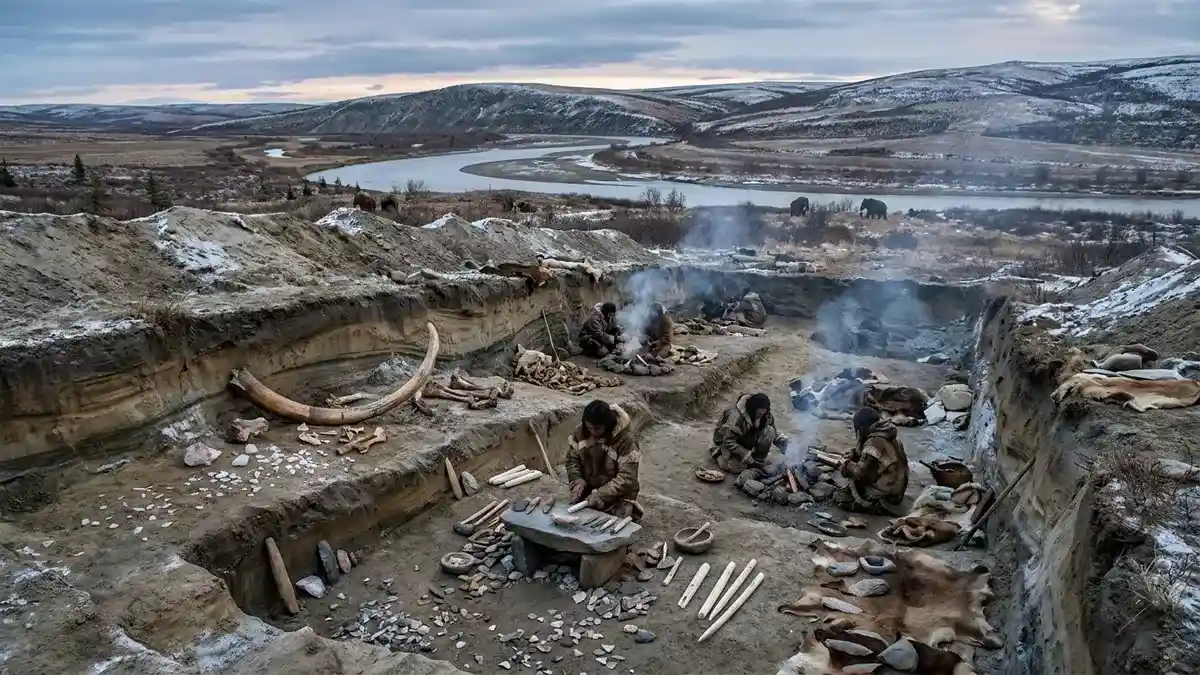
Deep within Alaska’s middle Tanana Valley, a newly excavated prehistoric campsite is rewriting the opening chapters of human history in the Americas. High-precision dating at the Holzman archaeological site has exposed repeated human occupations dating back 14,000 years, providing the missing technological link between the first nomadic Ice Age pioneers and the famous Clovis hunting cultures that later dominated the entire North American continent.
Ice Age Alaska Campsite Unlocks Secret Origins of North America’s First People
The Holzman Site: An Ice Age Sanctuary
Situated strategically near the junction of Shaw Creek and the Tanana River, the Holzman site was an ideal oasis for early humans. The ancient river valley offered a reliable combination of fresh water, abundant tool-making stone, and a steady migration corridor for big game.
Over the millennia, thick layers of windblown glacial silt and frozen soil sealed the landscape, acting as a perfect geological vault. This deep freezing preserved fragile animal bones, campfires, and ivory tools that would have otherwise rotted away.

       [ LOWER LAYER: ~14,000 YEARS AGO ]
       • Quartz stone flakes & campfires
       • Burned waterfowl & mammal bones
       • Intact cached Woolly Mammoth tusk
                         │
                         ▼
       [ UPPER LAYER: ~13,700 YEARS AGO ]
       • Dense quartz tool-shaping debris
       • Advanced ivory-carving workstations
       • Earliest carved ivory rods in the Americas
By peeling back these frozen layers, archaeologists isolated two distinct, closely related eras of human occupation that showcase a rapidly evolving Stone Age economy.
Level One: The 14,000-Year-Old Mammoth Cache
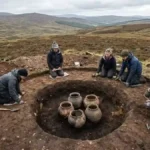
The deepest layer of human presence at Holzman dates straight back to 14,000 years ago, a tumultuous era marked by wild climate shifts at the end of the last Ice Age. Here, scientists uncovered the remains of ancient hearths surrounded by the bones of butchered birds and large mammals, alongside sharp stone flakes struck from local quartz blocks.
Resting directly inside this campsite matrix was an incredible find: a nearly complete tusk from a female woolly mammoth. The close association of the tusk with cooking fires and butchered bones proves that these early Alaskans were actively harvesting mammoth resources—either through targeted hunting or strategic scavenging of fresh carcasses—to fuel their survival.
Level Two: The Continent’s Oldest Ivory Factory
Just a few centuries later, around 13,700 years ago, a new group of hunters returned to the exact same creek bank, but their industrial focus had drastically shifted. The younger layer revealed a specialized, high-density ivory workstation centered around a flat stone anvil.
+-------------------------------------------------------------------------+
|                    HOLZMAN SITE TOOL-MAKING TOOLKIT                     |
+------------------------------------+------------------------------------+
| Discovered Artifact                | Industrial Tool Function           |
+------------------------------------+------------------------------------+
| Large Quartz Bifacial Chopper      | Heavy butchering and bone breaking |
| Flat Anvil Manuport Stone          | Heavy workbench for ivory cracking |
| Quartz Scrapers and Flake Tools    | Scraping and shaping ivory blanks  |
| Elongated Carved Ivory Rods        | Weapon foreshafts for spear tips   |
+------------------------------------+------------------------------------+
Using quartz scrapers and heavy bifacial stone choppers, these ancient craftsmen split mammoth tusks into manageable blanks, meticulously carving them into long, straight ivory rods.
Microscopic analysis of the cut marks and shaving debris confirms a highly organized, focused manufacturing sequence. These artifacts represent the earliest known examples of carved ivory rods anywhere in the Americas.
Weapons of the First Americans: The Clovis Connection
The discovery of these 13,700-year-old ivory rods has ignited intense excitement because they provide a direct technological ancestor to the Clovis culture. Appearing roughly 13,000 years ago farther south in the mid-continental United States, Clovis people are famous for their iconic fluted stone spear points. However, organic weapons made of bone and ivory were just as critical to their hunting success.
 [Holzman Site, Alaska — 13,700 Years Ago]
  Early hunters invent curved ivory-splitting & straight-rod carving methods.
                     │
                     ▼  (Migration South Through Ice-Free Corridors)
                     │
 [Clovis Sites, Continental US — 13,000 Years Ago]
  Descendant hunters use identical ivory rods as shock-absorbing foreshafts.
In Clovis technology, straight ivory rods were bound to the ends of wooden spears to act as “foreshafts”—shock-absorbing segments that held the stone projectile points in place during impact with massive prey.
The pristine evidence from Holzman proves that this sophisticated ivory-carving tradition was not invented in the American heartland. Instead, it was fully engineered and perfected in the frozen north of Eastern Beringia (Alaska) by mammoth hunters long before their descendants migrated south past the great retreating continental ice sheets.
Interior Alaska: An Ancient Homeland
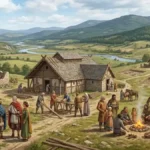
For decades, alternative migration models argued that the first Americans merely rushed through interior Alaska, treating it as a brief, hostile highway as they hurried south toward warmer climates. The multi-layered discoveries at Holzman, alongside neighboring ancient sites in the Tanana Valley, completely dismantle this “stopover” theory.
The repeated, organized return to the exact same creek bank over hundreds of years shows that these early groups possessed an intimate, multi-generational familiarity with local seasonal game, water systems, and stone quarries. Interior Alaska wasn’t a transient corridor; it was a permanent, highly successful homeland where the technological roots of the first Americans took firm hold.
Frequently Asked Questions
What makes the Holzman archaeological site so important?
Dating back 14,000 years, the Holzman site preserves the earliest physical evidence of advanced mammoth ivory rod manufacturing in the Americas, proving that key Clovis hunting technologies originated in Alaska.
What were the carved ivory rods used for?
Archaeologists believe these straight ivory rods served as weapon foreshafts. They were bound tightly to the tips of wooden spear shafts to securely hold stone projectile points, absorbing the intense shock when striking large game like mammoths.
How did early humans make tools out of ivory without metal saws?
Artisans used heavy quartz choppers to split the dense tusks along their natural grain. They then used sharp quartz scrapers and flake tools against a flat stone anvil to meticulously shave, smooth, and straighten the ivory into blanks.
Does this discovery prove that humans hunted woolly mammoths?
Yes. The presence of a cached female mammoth tusk alongside active campfires, butchered animal bones, and specialized ivory-shaping debris proves that humans systematically processed mammoth parts at this campsite.
How does this site change our understanding of human migration into America?
It proves that rather than treating Alaska as a quick transit route to the south, early Ice Age hunters lived in the interior Tanana Valley for generations, developing the advanced organic tool traditions that would later define Paleoindian cultures across the continent.