
Table of Contents
- 1. The Technology: Scent Analysis Over Destruction
- 2. Decoding the 81-Molecule Recipe Book
- 3. The Evolution of Luxury and Regional Recipes
- 4. A New Era of Non-Destructive Conservation
- 5. Frequently Asked Questions
- 5.1. What causes the distinct smell surrounding ancient Egyptian mummies?
- 5.2. How did scientists analyze the smell without touching the mummies?
- 5.3. What is bitumen, and why was it found in the air samples?
- 5.4. Did mummification recipes change over time?
- 5.5. Why did the head and torso smell different?
Catching the Scents of Ancient Egypt: Scientists Decode Mummy Embalming Recipes from Thin Air
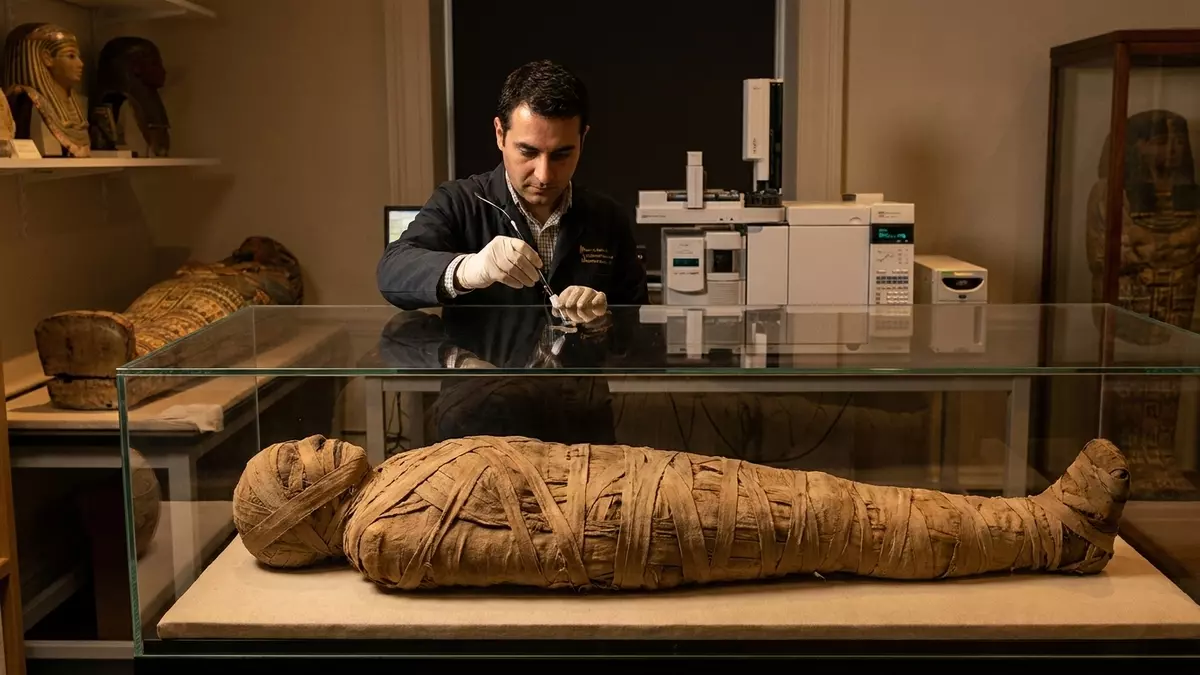
Anyone standing near an ancient Egyptian mummy in a museum quickly notices a distinct, heavy, and musty aroma. For centuries, people chalked this up to the general smell of advanced age and organic decay. However, a revolutionary study has proved that this persistent odor is actually a highly complex, chemically engineered time capsule.
By analyzing the microscopic air molecules floating directly around mummies, scientists have successfully mapped out the exact, secret recipes used by ancient embalmers—all without shaving off a single fiber of ancient cloth or damaging a single piece of fragile skin.
Catching the Scents of Ancient Egypt Scientists Decode Mummy Embalming Recipes from Thin Air
The Technology: Scent Analysis Over Destruction
Historically, figuring out what went into an ancient Egyptian mummification balm was an inherently destructive process. Chemists had to physically slice away precious linen bandages, scrap off solid residues, or dissolve bits of ancient tissue in harsh chemicals.
To bypass this problem, a research team from the University of Bristol developed a totally non-invasive technique published in the Journal of Archaeological Science. They turned their attention away from the solid body and focused entirely on the headspace—the pocket of air hovering immediately above the mummified remains and inside their storage containers.
       ┌──────────────────────────────────────────────────┐
       │             THE HEADSPACE SAMPLING PIPELINE       │
       └────────────────────────┬─────────────────────────┘
                                │
                                ▼
         [ Microscopic Volatile Gases Escaping Mummy ]
                                │
                                ▼
         [ Headspace Solid-Phase Microextraction (HS-SPME) ]
         (A delicate chemical trap captures floating molecules)
                                │
                                ▼
         [ Gas Chromatography + Mass Spectrometry ]
         (The chemical mixture is separated and identified)
Using a technique called Headspace Solid-Phase Microextraction (HS-SPME), scientists inserted a ultra-fine, chemically coated fiber into the air surrounding the mummies. This fiber acted as a microscopic trap, binding to floating Volatile Organic Compounds (VOCs). The trapped gases were then injected into high-resolution gas chromatography and mass spectrometry instruments, separating the scent profile into individual, identifiable molecules.
Decoding the 81-Molecule Recipe Book
The Bristol team tested 35 distinct samples of balms and bandages taken from 19 different mummies, spanning more than 2,000 years of ancient Egyptian history. The air analysis successfully isolated 81 distinct volatile organic compounds, which scientists neatly categorized into four signature raw industrial ingredients:
 DNA analysis reveals dynastic succession and maternal inheritance among early Celtic elites
Fats and Oils: Produced sharp, short-chain fatty acids and distinctive aromatic compounds, forming the moisturizing base of most early mixtures.
Beeswax: Contributed unique mono-carboxylic fatty acids and cinnamic compounds, acting as a waterproofing and sealing agent.
Plant Resins: Released rich sesquiterpenoids and deep aromatic signatures, prized for their strong antimicrobial properties and heavy fragrance.
Bitumen (Natural Asphalt): Produced highly specific naphthenic compounds. Remarkably, the air analysis was so sensitive it easily flagged bitumen markers even when they were present at microscopic fractions that traditional liquid testing missed.

The Evolution of Luxury and Regional Recipes
By arranging their air data chronologically, the researchers discovered that the scent of a mummy directly reflected the economic wealth and historical era of Egypt.
+-------------------------------------------------------------------------+
|                    CHRONOLOGICAL EVOLUTION OF MUMMY SCENTS              |
+------------------------------------+------------------------------------+
| Era of Mummification               | Volatile Chemical Scent Profile    |
+------------------------------------+------------------------------------+
| Early Dynastic / Old Kingdom       | Simple, localized profiles;        |
|                                    | heavily dominated by fats & oils   |
| New Kingdom / Ptolemaic Period     | Highly complex; rich in expensive  |
|                                    | imported resins and exotic bitumen |
+------------------------------------+------------------------------------+
Earlier mummies had relatively simple, straightforward chemical odors dominated almost entirely by local animal fats and plant oils. However, as Egypt’s empire expanded and international trade routes blossomed, later mummies displayed highly complex, layered scent profiles. These later recipes incorporated rare, expensive imported tree resins from the Mediterranean and thick black bitumen hauled in from distant natural asphalt seeps.
Fascinatingly, the scent profile also shifted depending on which part of the body was being sniffed. Air samples collected near the heads of the mummies displayed completely different compound patterns than air samples pulled from around the torsos. This indicates that ancient embalmers were master chemists who applied completely separate, specialized chemical recipes to different regions of the human anatomy to optimize preservation.
A New Era of Non-Destructive Conservation
The successful deployment of headspace air analysis marks a massive victory for global museum curators. Because this screening tool is incredibly rapid and completely non-destructive, conservationists can now screen thousands of fragile mummies across global collections, gathering critical data on their chemical health and exact ingredient makeup while preserving their physical integrity perfectly. Science has finally proven that the air around these ancient figures is just as historically valuable as the artifacts themselves.
Frequently Asked Questions
What causes the distinct smell surrounding ancient Egyptian mummies?
The smell is caused by a complex cocktail of Volatile Organic Compounds (VOCs) evaporating from the original embalming materials—such as animal fats, beeswax, exotic tree resins, and natural bitumen asphalt.
How did scientists analyze the smell without touching the mummies?
They used a method called Headspace Solid-Phase Microextraction (HS-SPME). This technique involves using a specialized chemical fiber to capture floating gas molecules directly out of the air inside the mummy’s display or storage case.
What is bitumen, and why was it found in the air samples?
Bitumen is a naturally occurring, tar-like petroleum substance. Ancient Egyptian embalmers used it in later periods to seal and blacken mummies. The air analysis was sensitive enough to detect its specific naphthenic compounds in the air.
Did mummification recipes change over time?
Yes. Early mummies show simple chemical scent profiles dominated by basic fats and oils. Over time, the recipes became highly complex, introducing expensive imported resins, waxes, and bitumen as trade networks expanded.
Why did the head and torso smell different?
The air data revealed distinct chemical mixtures around different body parts, proving that ancient embalmers strategically customized their recipes—using different preservation compounds for the brain cavity and head than they did for the torso.