
Table of Contents
**Roman Cup in Spain Links to Hadrian’s Wall Soldiers**
Archaeologists have uncovered compelling new evidence of personal connections between distant corners of the Roman Empire. A beautifully decorated bronze cup discovered in central Spain reveals direct ties to Hadrian’s Wall in northern Britain, shedding fresh light on the lives, travels, and memories of Roman soldiers who served on the empire’s northern frontier nearly 2,000 years ago.
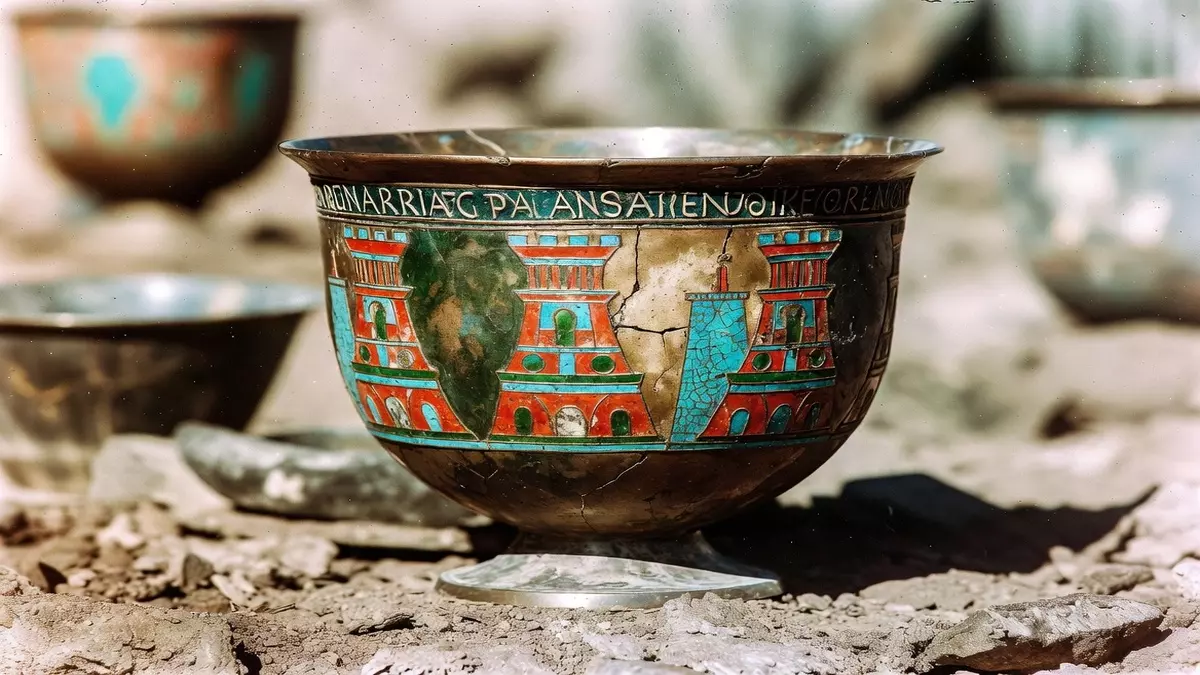
Known as the Berlanga Cup, this rare artifact belongs to a small group of vessels called Hadrian’s Wall pans. These inscribed cups listed names of Roman forts along the famous defensive barrier. The Spanish find stands out because it highlights the eastern section of the Wall, offering new insights into Roman military culture, long-distance mobility, and how soldiers carried souvenirs from their service.
Roman Cup in Spain Links to Hadrian’s Wall Soldiers
### What Makes the Berlanga Cup So Special
The vessel was found in fragments near Berlanga de Duero in Spain’s Soria province. About 90 percent of it survives, allowing experts to reconstruct its original form through advanced 3D modeling. The cup measures roughly 11 centimeters wide and 8 centimeters tall, with thin bronze walls adorned in vibrant colored enamel—red, green, blue, and turquoise. Geometric patterns, tower motifs, and decorative bands show it was a finely crafted piece, far from ordinary tableware.
Around the rim runs a Latin inscription naming four forts from the eastern part of Hadrian’s Wall: Cilurnum (modern Chesters), Onno, Vindobala (Rudchester), and Condercum (Benwell). This is the first known example focusing specifically on the eastern sector. Previous vessels, like the famous Rudge Cup, mostly referenced central and western forts. The new discovery challenges ideas that these pans formed neat geographical series, suggesting instead that they were custom-made for individual owners with personal connections to specific sites.
**H3: Scientific Analysis Confirms British Origins**
Laboratory tests reveal the cup was made from a leaded copper alloy typical of second-century Roman metalwork. Lead isotope analysis points to sources in northern Britain, while the enamel technique matches traditions from Roman workshops in that region. This confirms the vessel was likely produced near Hadrian’s Wall rather than in Spain, making its journey across the empire even more remarkable.
Dating places the cup between approximately 124 and 150 CE, or slightly later in the second century, aligning with the active period of the named forts and the height of Hadrian’s ambitious building project.
### Hadrian’s Wall: Rome’s Northern Frontier
Constructed around 122 CE under Emperor Hadrian, the Wall stretched 73 miles (118 kilometers) across northern Britain from the River Tyne to the Solway Firth. It served as a formidable barrier, customs checkpoint, and symbol of Roman power. Forts, milecastles, and turrets housed thousands of soldiers from across the empire, including auxiliary units recruited from provinces like Hispania.
Life on the Wall was demanding yet structured. Soldiers patrolled, collected taxes, and interacted with local Britons. Many formed families or retired nearby, but others returned home after service. The Berlanga Cup illustrates how personal items tied to this frontier experience traveled vast distances, connecting remote outposts to hometowns far away.
### The Soldier’s Story Behind the Cup
Researchers believe the cup reached Spain through military movement. A strong candidate is the Cohors I Celtiberorum, an auxiliary cohort raised from Celtiberian communities in Hispania. This unit served on Hadrian’s Wall, and a veteran may have carried the vessel home as a keepsake, retirement gift, or personal memento of his time stationed at the eastern forts.
Such objects likely held deep sentimental value. They commemorated comrades, specific postings, or proud moments of service. The selective inscription suggests the owner had direct experience with those named locations rather than a generic souvenir.
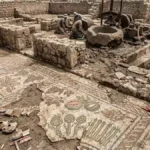
The discovery site at La Cerrada de Arroyo adds context. Surface surveys and ground-penetrating radar revealed Roman structures, including rectangular buildings and possible floors. Associated pottery indicates occupation from the first to fourth centuries CE, pointing to a settled rural community with ties to the broader empire.
**H3: Artistic and Cultural Significance**
The cup’s colorful enamel inlay technique highlights advanced Roman craftsmanship. Artisans cut small cells into the bronze and filled them with powdered glass paste, then fired the piece to create durable, vibrant designs. This style was popular in Britain and reflects cultural exchange along the frontiers, where soldiers and artisans blended traditions from different regions.
Beyond its beauty, the vessel represents identity and memory in the Roman world. Soldiers from Spain serving in Britain—and returning with souvenirs—embodied the empire’s vast scale and the personal stories within it.
### Broader Implications for Roman Military History
The Berlanga Cup is only the second object of its type found in Spain and the clearest example so far. It strengthens evidence of movement between Hispania and Britain, two provinces linked through military recruitment and administration. Auxiliary units like the Celtiberians played crucial roles in defending distant borders, often forming the backbone of frontier garrisons.
This find challenges older views of the Roman Empire as rigidly divided. Instead, it shows fluid connections maintained through people, objects, and shared experiences. Similar artifacts found in Britain and France suggest these cups circulated among veterans and their networks, preserving memories of service long after discharge.
**H3: Life on Hadrian’s Wall and Daily Realities**
Soldiers at forts like Cilurnum and Vindobala lived in barracks, trained regularly, and maintained the Wall’s infrastructure. Archaeological evidence from the Wall includes altars, personal items, and letters revealing family life, religion, and routines. The Berlanga Cup fits into this world as a portable symbol of pride and belonging.
For veterans returning to Spain, such items may have served as status symbols or conversation pieces, reminding communities of their contributions to the empire. Rural sites like La Cerrada de Arroyo show how Roman influence extended beyond cities into the countryside, with veterans potentially settling and integrating local economies.
### Modern Technology Reveals Hidden Details
Advanced digital tools played a key role in this discovery. After finding the fragments, archaeologists used 3D virtualization to reconstruct the cup’s shape, correct warpage from burial, and clarify the inscription. Non-invasive surveys at the site helped contextualize the find without extensive digging, demonstrating how modern methods enhance heritage research.
Ongoing analysis of the cup and surrounding area may yield more clues. Further isotope studies or comparisons with other vessels could refine its story and identify additional connections.
### Why This Discovery Matters Today
The Berlanga Cup humanizes Roman history. It moves beyond grand narratives of emperors and conquests to focus on individual soldiers who traveled thousands of kilometers, served in harsh conditions, and carried memories home. For people interested in military history, archaeology, or ancestry, it offers a tangible link to the past.
In Spain and Britain alike, Hadrian’s Wall and Roman heritage attract visitors fascinated by engineering marvels and cultural legacies. This cup bridges those sites, reminding us of shared imperial history that still influences European identity.
Climate, development, and time threaten many archaeological remains. Discoveries like this underscore the importance of careful excavation, documentation, and public sharing of findings. They also inspire new research questions: How many other veteran souvenirs remain undiscovered? What other personal stories connect distant provinces?
**H3: Expanding Our View of the Roman Empire**
The Roman world was vast and interconnected. From North Africa to the British Isles, people, goods, and ideas flowed constantly. The Berlanga Cup exemplifies this mobility, showing how a single object can illuminate complex networks of service, loyalty, and return.
As more artifacts emerge and technology improves, our understanding of Roman daily life grows richer. The cup encourages re-examination of museum collections and excavation reports for similar overlooked items.
This remarkable find transforms a damaged bronze vessel into a window on ancient lives. It connects the windswept ramparts of Hadrian’s Wall to quiet rural fields in Spain, reminding us that history lives through personal stories preserved across centuries.
## FAQ: Berlanga Cup and Hadrian’s Wall Connections
**Q: What is the Berlanga Cup?**
A: A decorated bronze vessel inscribed with names of four eastern Hadrian’s Wall forts, discovered in Spain. It belongs to a rare group of Roman souvenir-style cups.
**Q: Why is the cup significant for Roman history?**
A: It provides the first evidence of eastern Wall forts on these vessels and shows personal military links between Britain and Spain through a soldier’s keepsake.
**Q: How was the cup dated?**
A: Through material analysis, stylistic comparison, and historical context of the forts, placing it in the mid-second century CE.
**Q: Who might have owned the cup?**
A: Likely a veteran of the Cohors I Celtiberorum, a Spanish auxiliary unit that served on Hadrian’s Wall, who brought it home after service.
**Q: What does it reveal about Roman soldiers?**
A: Soldiers traveled vast distances, formed personal attachments to postings, and carried meaningful souvenirs that reflected identity and experiences.
**Q: Where exactly was the cup found?**
A: At La Cerrada de Arroyo near Berlanga de Duero in Soria province, Spain, in an area with evidence of Roman rural settlement.
**Q: Are there other similar cups?**
A: Yes, several have been found in Britain and France, but the Berlanga example is unique for its eastern focus and Spanish context.
The Berlanga Cup continues to captivate researchers and history enthusiasts. As studies progress, this small vessel promises even deeper understanding of how ordinary Romans navigated the empire’s immense geography while maintaining ties to distant homes and comrades. Its story enriches our appreciation for the human side of Roman military life and the enduring connections that bound the ancient world together.