
Table of Contents
- 1. Unlocking the Genomes of Europe’s Final Clans
- 2. Overturning the Inbreeding Myth
- 2.1. Higher Genetic Diversity
- 2.2. No Accumulated Genetic Burden
- 3. A Sophisticated, Long-Distance Social Network
- 4. The Conundrum of the Coexisting Species
- 5. Rethinking the Causes of Extinction
- 6. Frequently Asked Questions
- 6.1. What did the new study discover about Western European Neanderthals?
- 6.2. How did scientists gather this new genetic data?
- 6.3. Did late Neanderthals in Europe interbreed with modern humans?
- 6.4. Why did scientists previously think Neanderthals lacked genetic diversity?
- 6.5. If their genetics were healthy, why did Neanderthals go extinct?
New Genetic Study Completely Overturns How We View the Last Neanderthals
For generations, the dominant story surrounding the extinction of Western Europe’s last Neanderthals has been one of tragic isolation. The common narrative painted a bleak picture: small, lonely clans scattered across a harsh ice-age landscape, gradually succumbing to severe inbreeding and genetic degeneration before finally fading into history. It was widely viewed as a species in a slow biological decline.
However, a groundbreaking genetic study has completely shattered this theory. By analyzing ancient DNA from dozens of individuals, an international team of scientists has uncovered a vibrant, highly connected network of communities that thrived across Western Europe up until their final millennia. Rather than a fragmented population suffering from genetic collapse, Europe’s final Neanderthals were surprisingly diverse, socially active, and deeply interconnected.
The study, published in the journal Nature, fundamentally changes our understanding of human evolution. It forces researchers to look past old assumptions and find new explanations for why our closest evolutionary cousins vanished while modern humans survived.
New Genetic Study Completely Overturns How We View the Last Neanderthals

Unlocking the Genomes of Europe’s Final Clans
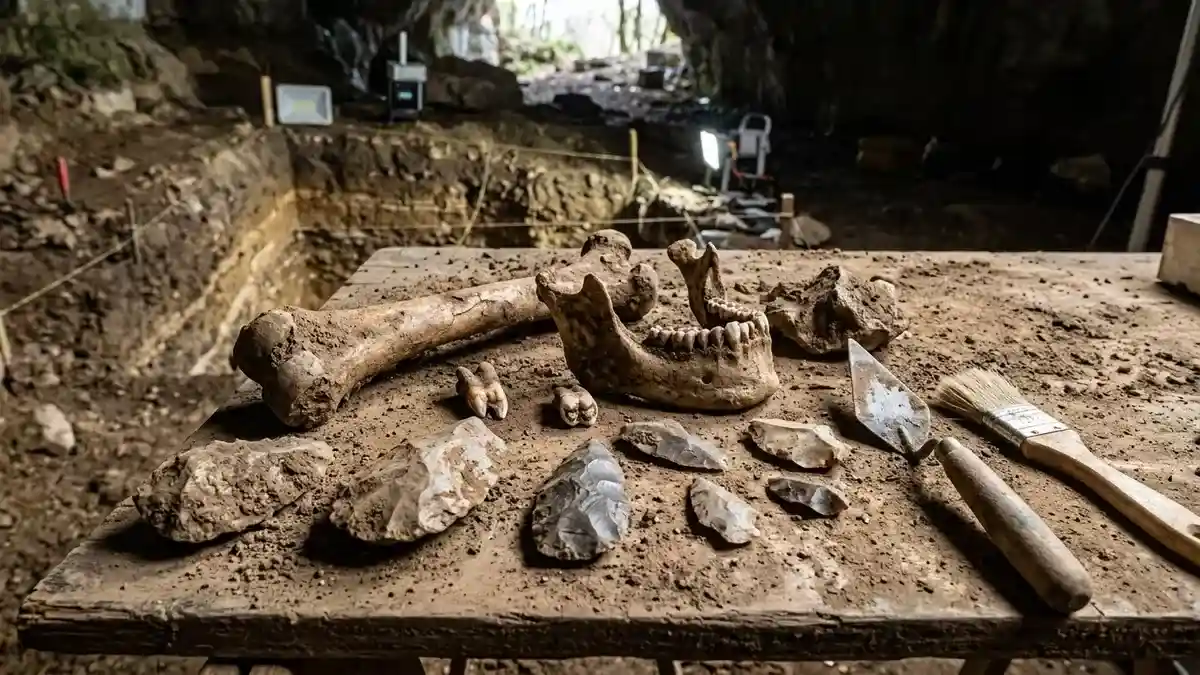
To map the genetic reality of these ancient humans, researchers isolated and sequenced DNA from 27 Neanderthal individuals discovered across ten separate archaeological sites in modern-day Belgium and France. The study specifically narrowed its focus to individuals who lived less than 52,500 years ago, capturing a critical snapshot of the species during its twilight years on Earth.
Among the most significant breakthroughs was the recovery of an exceptionally high-quality genome from a specimen designated as “GN1.” This individual lived approximately 45,000 years ago in the region of Goyet, Belgium. Because the DNA was remarkably well-preserved, it gave scientists an unprecedented look into the genetic health of late Western European populations.
Historically, anthropologists knew that Neanderthals tended to live and forage in small family groups. What remained a mystery was whether these local bands were completely cut off from one another by vast distances or if they maintained broader regional ties. The genetic signatures left behind in the teeth and bones of GN1 and others have finally provided a definitive answer.
Overturning the Inbreeding Myth
One of the most persistent theories regarding the fall of the Neanderthals stemmed from earlier genetic research conducted in Siberia’s Altai Mountains. Those eastern specimens revealed high levels of parental relatedness, leading scientists to assume that all Neanderthals suffered from low genetic variation and extreme isolation.
The new European data tells an entirely different story. The individuals studied from France and Belgium showed absolutely no signs of the close-relative mating that plagued their distant eastern counterparts.
Higher Genetic Diversity
The genetic variation observed among the Western European remains was remarkably high. This suggests that the overall population size in the region was either much larger than previously estimated, or that individual clans were incredibly proficient at maintaining open social pathways with neighboring groups.

No Accumulated Genetic Burden
If a population is dying out due to biological decline, scientists expect to see a clear buildup of harmful genetic mutations over generations. The research team meticulously looked for this “genetic burden” across the timelines of the 27 individuals. The evidence showed no such increase. Genetically speaking, Western Europe’s final Neanderthals were remarkably healthy.
A Sophisticated, Long-Distance Social Network
Instead of living in absolute isolation, the late Neanderthals of Belgium and France belonged to a dynamic regional network. Genetic differences between individuals separated by hundreds of miles were surprisingly minuscule. This lack of sharp genetic divergence indicates that these groups were in regular, long-distance contact, likely exchanging members and maintaining cultural ties across vast geographic areas.
Furthermore, the team discovered deep ancestral layers within the population. Several individuals carried unmistakable genetic traces of an older, distinct Neanderthal lineage that predated the rise of the late Western European groups. The persistent presence of this ancient DNA proves that different ancestral lineages did not just vanish; they continued to mix, migrate, and intermingle throughout the species’ history.
A fossil specimen discovered at the Les Cottés site in France played a vital role in decoding this complex family tree. Previous studies had shown that the Les Cottés individual carried a distinct genetic profile linked to populations living far outside Western Europe. In this latest study, that specific genome acted as a vital reference point, helping scientists piece together how these mobile populations interacted with distant groups over millennia.
The Conundrum of the Coexisting Species
One of the most intriguing revelations of the study involves the relationship—or lack thereof—between Neanderthals and early modern humans. Archaeological records show that Homo sapiens arrived in northwestern Europe around 47,000 years ago, meaning the two distinct hominin species shared the same valleys and hunting grounds for several thousand years.
Given this chronological overlap, scientists expected to find signs of recent interbreeding written directly into the genomes of the late European Neanderthals. Surprisingly, not a single one of the 27 individuals tested showed any evidence of recent genetic mixing with modern humans.
Key Takeaway: While we know that modern humans of non-African descent carry roughly 2% Neanderthal DNA today, this new evidence indicates that the vast majority of that gene flow occurred outside of northwestern Europe, long before these specific clans established their regional network.
Rethinking the Causes of Extinction
If genetic deterioration, severe inbreeding, and population isolation did not cause the downfall of Western Europe’s last Neanderthals, science must pivot toward other explanations. The image of a diseased, evolutionary failure fading quietly into the night is no longer scientifically accurate.
Instead, researchers are looking closer at complex environmental shifts, intense competition for resources, or subtle differences in cultural and technological adaptation between Neanderthals and the newly arrived Homo sapiens. What is now certain is that whatever forced the Neanderthals off the evolutionary stage, they faced it as a resilient, connected, and genetically healthy society until the very end.
Frequently Asked Questions
What did the new study discover about Western European Neanderthals?
The study revealed that late Neanderthals living in present-day France and Belgium were far more genetically diverse and interconnected than previously assumed. They did not show signs of severe inbreeding or genetic decline, which completely challenges old extinction theories.
How did scientists gather this new genetic data?
An international research team extracted and sequenced ancient DNA from 27 Neanderthal individuals found across ten different archaeological sites. This included a remarkably well-preserved, high-quality genome from an individual known as GN1, who lived in Belgium roughly 45,000 years ago.
Did late Neanderthals in Europe interbreed with modern humans?
Although early Homo sapiens and late Neanderthals lived in northwestern Europe at the same time (starting around 47,000 years ago), none of the European Neanderthal genomes in this study showed signs of recent interbreeding. Most historic interbreeding likely happened much earlier and in different geographical regions.
Why did scientists previously think Neanderthals lacked genetic diversity?
Previous genetic studies focused heavily on Neanderthal remains found in Siberia’s Altai Mountains. Those specific eastern populations lived in extreme isolation and showed clear signs of mating between close relatives. Scientists mistakenly generalized those isolated findings to all Neanderthals globally.
If their genetics were healthy, why did Neanderthals go extinct?
Since the study rules out genetic collapse and severe inbreeding as primary causes for their disappearance in Western Europe, scientists believe external factors played a bigger role. These likely include rapid climate shifts during the last ice age, competition with modern humans for food, or differences in social organization.