
Table of Contents
**Malaria Shaped Ancient Human Migration Patterns Across Africa**
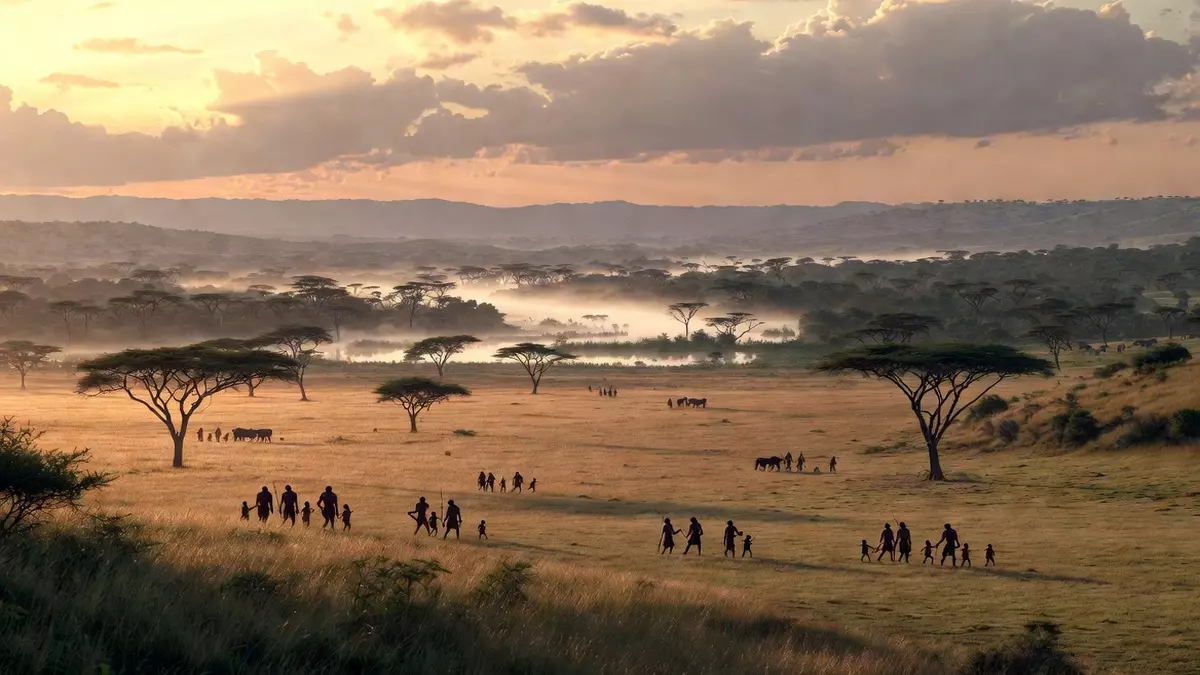
A groundbreaking new study reveals that malaria played a far more powerful role in early human history than previously thought. Long before the rise of farming or permanent villages, the deadly disease influenced where prehistoric people could live, how they moved across the continent, and even how populations stayed connected or grew isolated. This research pushes back the timeline of malaria’s impact on humanity by tens of thousands of years and challenges traditional ideas about what drove our ancestors’ decisions in Africa.
For decades, scientists assumed infectious diseases only became major factors in human life after agriculture created dense settlements. The new findings turn that assumption upside down, showing malaria was already steering human behavior as far back as 74,000 years ago.
Malaria Shaped Ancient Human Migration Patterns Across Africa
### Understanding Malaria’s Ancient Grip on Africa
Malaria, transmitted primarily by female Anopheles mosquitoes carrying the Plasmodium falciparum parasite, has long tormented human populations. Today it remains a major health challenge in many parts of sub-Saharan Africa. But according to this research, the disease’s influence stretches deep into prehistory, shaping settlement patterns during critical phases of Homo sapiens expansion.
Researchers built a detailed picture by combining paleoclimate data, mosquito distribution models, and archaeological evidence of early human habitats. They reconstructed environmental conditions at regular intervals between 74,000 and 5,000 years ago, creating a “malaria stability index” that highlighted regions where conditions favored long-term transmission of the parasite.

The results were striking: early hunter-gatherer groups consistently avoided or struggled to maintain presence in areas with high, stable malaria risk. This pattern held true across vast stretches of time, suggesting the disease acted as a powerful environmental filter long before humans began domesticating plants or animals.
### How the Research Team Built Their Case
The international team integrated multiple lines of evidence. They used climate reconstructions spaced 1,000 to 2,000 years apart to model suitable habitats for malaria-carrying mosquitoes. These models were then compared with independent data on where early humans are known to have lived, based on archaeological sites and genetic studies.
Key findings include:
– Clear avoidance of high-risk malaria zones by prehistoric populations
– Evidence that disease pressure influenced population fragmentation and connectivity
– Strong correlation between malaria hotspots and gaps in the archaeological record
Central West Africa stands out as a persistent high-risk area, a pattern that continues today with some of the world’s highest malaria rates. While archaeological evidence from this region remains limited, what does exist suggests smaller, more fragmented groups—exactly what the malaria risk model would predict.
### Challenging Old Ideas About Human Dispersal in Africa
Traditional views of human evolution in Africa often emphasized climate as the primary driver of migration and settlement. Wetter or drier periods, expanding forests or savannas, and access to resources were seen as the main factors determining where people thrived.
This study adds disease as a crucial additional force. It supports a growing consensus that Homo sapiens did not emerge from a single small population but rather from multiple groups spread across diverse African landscapes. These groups sometimes mixed and sometimes remained isolated for long periods, partly due to environmental barriers—including malaria.
Genetic clues have hinted at this deep history. Protective mutations, such as those associated with sickle cell trait, appear in African populations dating back roughly 25,000 to 22,000 years. Archaeological finds also show early humans using insect-repelling plants in bedding and shelters, suggesting they actively tried to manage mosquito exposure.
### The Pre-Farming Reality: Disease Before Agriculture
One of the study’s most important contributions is reframing when major infectious diseases began affecting human societies. The shift to farming around 3000 to 1000 BCE in Africa was long considered the turning point that enabled diseases to spread widely due to larger populations and closer contact with animals.
Instead, the evidence now shows malaria was already a dominant ecological factor during the Middle Stone Age and later periods when humans lived as mobile hunter-gatherers. By at least 13,000 years ago, malaria risk appears to have significantly affected settlement choices and population structure.
This has big implications for understanding human evolution. High malaria areas may have created natural barriers that limited gene flow between groups, potentially accelerating genetic and cultural differentiation. In lower-risk zones, larger or more connected populations could develop and share innovations more easily.
### Methods: Modeling the Invisible Past
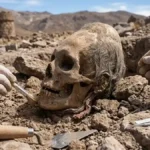
Direct evidence of ancient malaria is extremely difficult to obtain. Soft tissue and DNA from these early periods rarely survive in Africa’s warm climate. To overcome this, researchers used an innovative approach: modeling the environmental requirements of Anopheles mosquitoes and projecting their likely ranges under past climate conditions.
This “hindcasting” method allowed them to estimate malaria transmission potential without needing ancient parasite DNA. The approach provides a powerful new tool for studying other ancient diseases and their effects on human history.
The study, published in *Science Advances*, represents the first time researchers have directly linked prehistoric human settlement decisions in Africa with varying levels of malaria risk. Its authors recommend that future models of human migration and demographic change should routinely include disease distribution alongside climate and landscape factors.
### What This Means for Our Understanding of Human History
These findings enrich the story of human resilience and adaptation. Early Homo sapiens demonstrated remarkable flexibility, adjusting their movements and lifestyles to avoid or minimize exposure to one of nature’s most persistent threats.
The research also highlights continuity between deep prehistory and the present. Regions that posed severe malaria challenges to ancient hunter-gatherers remain difficult environments today, despite modern medicine and interventions. This long-term perspective could inform current public health strategies and conservation efforts.
Furthermore, the study underscores Africa’s central role in human history. As the continent where our species evolved and spent the vast majority of its existence, Africa’s environmental pressures—including disease—helped shape the genetic diversity and adaptive capabilities that allowed humans to eventually spread across the entire globe.
### Broader Implications for Archaeology and Genetics
Archaeologists may now re-examine gaps in the African record through a disease lens. Areas previously considered marginal due to poor soil or climate might instead reflect ancient health risks. Geneticists can look for additional signatures of malaria selection pressure in modern and ancient DNA samples.
The research also opens new questions: How did different human groups develop cultural or technological adaptations to malaria? Did certain tools, mobility patterns, or social structures emerge partly in response to this pressure? Future interdisciplinary projects combining genetics, archaeology, and climate science will likely provide even richer answers.
### Looking Forward: Disease and Human Adaptation
Understanding malaria’s ancient role helps us appreciate the complex relationship between humans and their environments. It reminds us that health challenges have always been part of the human story, driving innovation, migration, and even evolutionary change.
As scientists continue to uncover more about our past, studies like this one demonstrate the value of creative approaches to fill gaps in the fossil and archaeological records. They also highlight how modern health issues connect to deep historical patterns.
For anyone fascinated by human origins, this research adds compelling new chapters to the African story of our species. It shows that even in the distant past, invisible forces like parasites helped write the script of where humans could thrive—and ultimately, who we would become.
**Conclusion**
This pioneering study confirms that malaria significantly influenced early human migration and settlement choices across Africa for tens of thousands of years before the dawn of agriculture. By integrating climate science, epidemiology, and archaeology, researchers have revealed disease as a key driver of prehistoric population patterns. The findings reshape our understanding of human history on the continent, emphasizing the need to consider health and environmental risks alongside traditional factors like climate and resources. As we continue exploring our deep past, malaria’s long shadow reminds us of the enduring connections between environment, disease, and human destiny. This research not only enriches academic knowledge but also provides valuable context for addressing present-day challenges in the same landscapes where our ancestors once walked.
### FAQ: Key Questions About Malaria and Early Human History in Africa
**Q: How far back did malaria influence human settlement in Africa?**
A: The study shows malaria shaped where people lived from at least 74,000 years ago until around 5,000 years ago, long before farming began.
**Q: What evidence did researchers use since ancient DNA is rare?**
A: Scientists combined paleoclimate data, mosquito habitat models, and archaeological settlement records to create malaria risk maps for different time periods.
**Q: Which region of Africa showed the strongest malaria impact?**
A: Central West Africa consistently emerged as a high-risk zone, a pattern that continues with high malaria rates in the region today.
**Q: Did early humans know about malaria or try to avoid it?**
A: While they wouldn’t have understood the parasite, archaeological evidence suggests people used insect-repelling plants and chose settlement locations that reduced exposure.
**Q: How does this change views about human evolution in Africa?**
A: It supports the idea of multiple dispersed populations rather than a single origin point, with disease acting as a barrier that influenced genetic mixing and isolation.
**Q: When did protective genetic traits against malaria appear?**
A: Mutations like sickle cell trait, which offer some protection, date back approximately 25,000 to 22,000 years in African populations.
**Q: Why is this study important for modern malaria efforts?**
A: Understanding the disease’s ancient roots in specific environments can help inform long-term public health strategies and highlight regions needing sustained attention.