

Table of Contents
**Hiker Discovers Rare 1,500-Year-Old Gold Sword Fitting in Norway**
A casual morning stroll in southwest Norway turned into an extraordinary archaeological breakthrough when a local resident uncovered a stunning gold artifact linked to a powerful warrior from 1,500 years ago. This rare find in the Austrått district of Sandnes highlights the rich, often hidden history of Scandinavia’s Migration Period and offers fresh insights into the lives of the region’s ancient elite.
The beautifully crafted gold sword scabbard fitting, dating to the sixth century, was found near the hill Riaren—an area already known for significant ancient discoveries. What started as simple curiosity about disturbed soil beneath an old fallen tree has now given experts a remarkable window into Norway’s pre-Viking past.

Hiker Discovers Rare 1,500-Year-Old Gold Sword Fitting in Norway

### The Moment of Discovery
While walking his usual route, the hiker noticed an uprooted tree from a past storm. A small mound of earth caught his attention, so he gently probed it with a stick. Something metallic gleamed back at him. At first, he thought it might be a modern trinket, but closer inspection revealed an intricately decorated gold object unlike anything commonly found today.
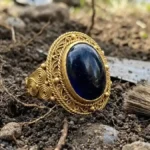
Archaeologists from the Archaeological Museum at the University of Stavanger quickly confirmed its importance. The piece, measuring about 6 centimeters long and weighing 33 grams, once adorned the scabbard of a high-status sword. Its surface features exquisite filigree work made from triple-beaded gold threads and stylized animal motifs typical of early sixth-century Scandinavian design.

This marks the first discovery of its kind in Rogaland county, adding to only 17 similar examples recorded across Northern Europe. The find’s excellent condition and deliberate placement make it especially valuable for understanding ancient rituals and social structures.
### What the Gold Sword Fitting Reveals About Its Owner
Researchers believe this ornate fitting belonged to a ceremonial yet functional sword carried by a member of the ruling elite. Unlike many comparable artifacts that appear purely decorative, this piece shows clear signs of wear, suggesting its owner used it regularly—both as a weapon and a powerful status symbol.
The sword’s owner was likely connected to a prominent power center at nearby Hove, which served as a significant political and economic hub during the Migration Period (roughly 400–550 CE). Previous excavations in the area have uncovered large farm complexes and other gold items, pointing to wealthy families who controlled trade, resources, and local governance.
Hege Hollund, a researcher and conservator at the University of Stavanger, has been carefully cleaning and studying the artifact. Her work is helping reveal finer details of the craftsmanship that went into creating such elite objects.
### Life During Norway’s Migration Period
The sixth century was a turbulent time across Scandinavia. Southern Norway faced major challenges, including climate shifts triggered by distant volcanic eruptions. These events caused colder temperatures, failed harvests, and widespread famine. At the same time, plague outbreaks swept through parts of Europe, adding to the hardship.
In response to these crises, communities may have turned more frequently to ritual practices. Valuable items like weapons and jewelry were sometimes deliberately deposited as offerings to gods or ancestral spirits, seeking protection or favor during uncertain times.
The newly found gold fitting appears to have been intentionally placed in a rock crevice rather than accidentally lost. This intentional deposition aligns with other ritual finds in the region and suggests the object played a role in sacred ceremonies meant to ensure stability or victory amid difficult conditions.
### Artistic Mastery and Symbolism
The artifact’s decoration showcases the sophisticated artistry of Migration Period goldsmiths. At first glance, the patterns look like flowing curves, but closer examination reveals intertwined serpentine animal figures facing each other. Some experts interpret possible human-animal hybrid features, a common motif in Scandinavian art of the era that likely carried deep symbolic meaning related to power, transformation, or protection.
Such intricate filigree work required exceptional skill and access to precious materials. Gold objects like this were not mass-produced—they represented wealth, craftsmanship, and connections to wider trade networks that brought luxury goods from across Europe.
The presence of similar high-quality items in the Riaren area, including silver neck rings with gold accents and a large Roman bronze cauldron from around 300 CE, indicates that this landscape held special ritual and cultural importance for centuries. Ancient inhabitants viewed these locations as spiritually significant places for offerings and ceremonies.
### Connection to a Regional Center of Power
The discovery strengthens evidence of a thriving elite center at Hove between approximately 200 and 550 CE. This area supported large agricultural estates and likely served as a gathering point for political alliances, trade, and religious activities.
During the Migration Period, Scandinavia saw movements of peoples, the rise and fall of local chieftains, and increasing contacts with the declining Roman Empire. Elite warriors and rulers used lavish objects like decorated swords to display their status, forge alliances, and legitimize their authority.
This gold scabbard fitting adds another important piece to that puzzle. It demonstrates that even in times of environmental stress and social upheaval, certain families maintained significant wealth and influence, using impressive material culture to reinforce their position.
### Preservation, Study, and Public Access
The artifact is currently undergoing detailed analysis at the Archaeological Museum at the University of Stavanger. Conservators are using advanced techniques to clean, document, and preserve it for future generations. Once studies are complete, the gold sword fitting will go on public display, allowing visitors to admire this tangible link to Norway’s ancient past.
This find also highlights the value of amateur involvement in archaeology. Many important discoveries in Norway and across Europe come from attentive locals, hikers, and metal detectorists who report finds responsibly. Such partnerships between the public and professional archaeologists continue to reshape our understanding of history.
### Why This Discovery Matters Today
In an age when climate change and development threaten archaeological sites worldwide, finds like this one remind us of the importance of protecting cultural heritage. The gold fitting not only tells a story about a distant past but also connects modern Norwegians—and history enthusiasts globally—to their ancestral roots.
For Americans and international travelers interested in Viking and pre-Viking history, this discovery offers exciting new context. It bridges the gap between the Roman era and the later Viking Age, showing cultural continuity and evolution in Scandinavian society.
The artistic techniques, ritual practices, and social hierarchies revealed here influenced later Norse culture that eventually reached across the Atlantic to North America. Understanding these earlier periods helps paint a fuller picture of how medieval Scandinavian societies developed.
**Conclusion**
What began as an ordinary morning walk in Sandnes, Norway, has delivered a rare treasure that enriches our knowledge of the Migration Period. This 1,500-year-old gold sword fitting provides valuable evidence about elite warriors, ritual practices, and resilience during challenging times in early Norwegian history. As researchers continue their work, the artifact promises to reveal even more secrets about life in ancient Scandinavia. Soon available for public viewing, it stands as a powerful reminder of how the past still emerges from the soil to captivate and educate us today. Discoveries like this fuel ongoing interest in archaeology and strengthen our connection to the remarkable people who shaped Northern Europe long before the Viking Age began.
### FAQ: Everything You Want to Know About the Norway Gold Sword Finding
**Q: How old is the gold sword fitting discovered in Norway?**
A: The artifact dates to the sixth century, making it approximately 1,500 years old. It belongs to Norway’s Migration Period.
**Q: Who found the gold sword scabbard fitting?**
A: A local resident discovered it during a routine morning walk near Riaren hill in the Austrått district of Sandnes after noticing disturbed soil under a fallen tree.
**Q: What makes this gold artifact so rare?**
A: Only 17 similar examples exist across Northern Europe, and this is the first found in Rogaland county. Its detailed filigree work, animal motifs, and signs of actual use make it exceptionally significant.
**Q: Was the sword used in battle or just for show?**
A: Evidence of wear suggests the owner used it regularly, likely as both a practical weapon and a visible symbol of high social status and authority.
**Q: Why was the gold fitting placed in a rock crevice?**
A: Archaeologists believe it was deliberately deposited as a ritual offering to the gods, a common practice during times of crisis such as famine and plague in the sixth century.
**Q: Where is the artifact now and can people see it?**
A: It is being studied and conserved at the Archaeological Museum at the University of Stavanger. Once examination is complete, it will be placed on public display.
**Q: What was happening in Norway when this sword was made?**
A: The Migration Period featured climate cooling, crop failures, possible plague outbreaks, and the consolidation of local power centers. Elite families used luxury items like this to display status amid social and environmental challenges.
**Q: How does this discovery connect to later Viking history?**
A: It provides important background on the social structures, artistic traditions, and ritual practices that later characterized the Viking Age, showing cultural developments that eventually influenced medieval Scandinavia and beyond.