
Table of Contents
**Mass Grave in Jordan Confirms Justinian Plague Victims**
Archaeologists have uncovered powerful new evidence of one of history’s deadliest pandemics through a mass grave in ancient Jerash, Jordan. The discovery provides the first biomolecular confirmation of victims from the Plague of Justinian in the Eastern Mediterranean, revealing how this catastrophic outbreak overwhelmed communities and exposed the vulnerabilities of urban life in the Byzantine era.
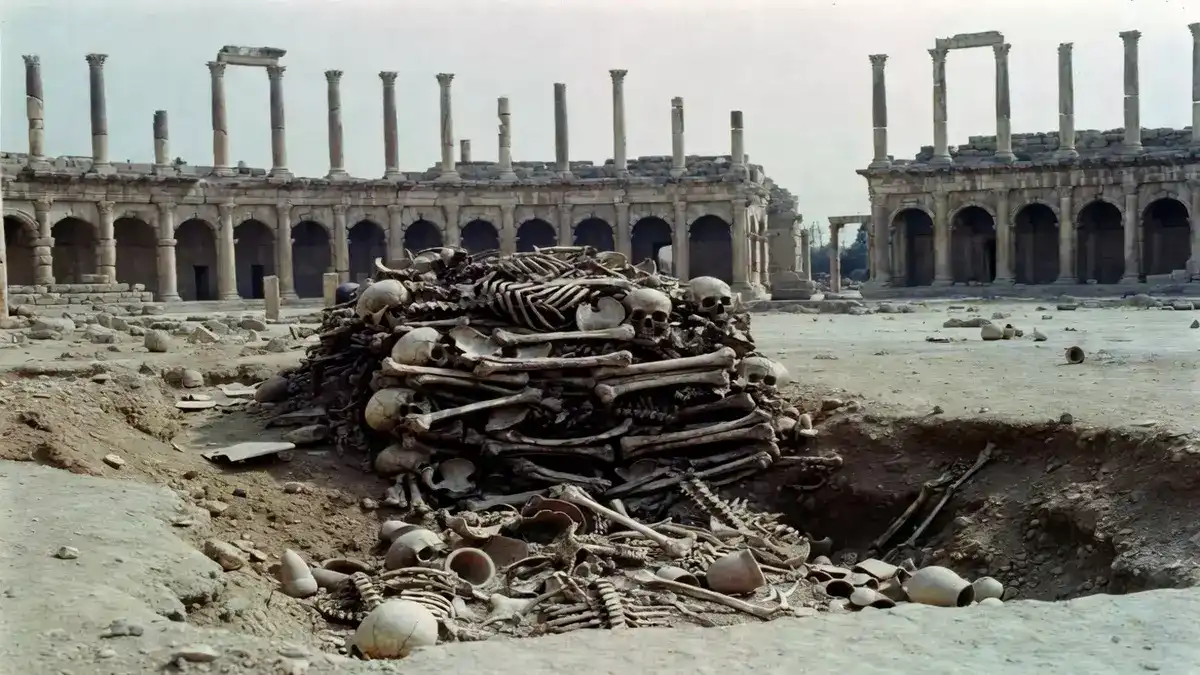
Dating to the 6th century CE, the grave contains remains of around 230 individuals buried in haste during a sudden surge of deaths. This find offers a rare, intimate look at how ancient societies responded to mass mortality and highlights the human impact of the First Pandemic that swept across the Mediterranean world between 541 and 750 CE.
Mass Grave in Jordan Confirms Justinian Plague Victims
### The Justinian Plague: A Turning Point in Late Antiquity
The Plague of Justinian, named after the Byzantine Emperor who ruled during its initial outbreak, ranks among the most devastating pandemics in recorded history. Caused by the bacterium *Yersinia pestis*, it spread rapidly through trade routes, killing millions and contributing to major social, economic, and political shifts that helped usher in the early Middle Ages.
Jerash, known in antiquity as Gerasa, was a thriving urban center in the Levant. At its peak in the 3rd century CE, the city boasted an estimated population of 25,000. By the late 6th century, however, numbers had dropped to around 10,000 amid broader regional challenges. The newly analyzed mass grave captures the city at a moment of acute crisis, when the plague struck with full force.
### Inside the Jerash Hippodrome Mass Grave
Researchers from the University of South Florida discovered the burial in two chambers of Jerash’s famous hippodrome, a once-grand public space for chariot races and events. Bodies were stacked in tightly packed layers over debris from broken pottery, with little regard for traditional funerary practices. This chaotic arrangement indicates rapid burial over just days or weeks, typical of emergency responses during overwhelming epidemics.
Unlike standard cemeteries that accumulated gradually over generations, this grave represents a single catastrophic event. The pattern closely resembles later medieval plague pits in Europe, providing direct physical evidence of how the Justinian Plague affected everyday people in the Byzantine East.

Ancient DNA analysis extracted from the remains definitively identified *Yersinia pestis*, confirming the victims died from plague. Genetic sequencing revealed a uniform strain, pointing to a single intense outbreak rather than multiple separate waves.
**H3: Who Were the Victims? Insights from Isotopes and DNA**
Beyond confirming the disease, the team used stable isotope analysis on bones and teeth to reconstruct the victims’ lives. Carbon and nitrogen isotopes show diets based primarily on local C3 crops and regional food systems, consistent with Levantine practices of the time.
Oxygen isotopes from tooth enamel, however, told a more complex story. The values showed greater variation than in long-term local populations from nearby sites like Tell Dothan, Pella, and Faynan. This suggests many individuals had spent their childhoods in different environments with distinct water sources, indicating they were migrants or came from diverse regional backgrounds.
Mitochondrial DNA further supported this diversity, identifying haplogroups such as H13 and L3e that align with expected maternal lineages in Byzantine Levantine populations. Together, the evidence paints a picture of a socially and geographically mixed urban community—people drawn to Jerash from wider networks who found themselves united in death during the crisis.
Under normal circumstances, such diversity might fade over generations in burial records. The plague created a unique snapshot, capturing a cross-section of the city’s population at a moment of extreme stress.
### Jerash: A Flourishing City Overwhelmed by Pandemic
Jerash stood as one of the great cities of the Decapolis, featuring impressive Roman and Byzantine architecture including the Cardo colonnaded street, temples, theaters, and the hippodrome itself. Its location along trade routes made it prosperous but also vulnerable to incoming diseases.
By the time the plague arrived, the city was already facing population decline and resource pressures. The hasty use of the hippodrome—a former entertainment venue—for mass burials underscores the breakdown of normal social and religious practices. Public spaces were repurposed out of necessity as traditional cemeteries and rituals struggled to cope with the sheer volume of deaths.
This emergency response mirrors accounts from historical texts describing overwhelmed cities during the Justinian Plague. The Jerash grave now provides tangible archaeological corroboration of those written records.
**H3: Broader Lessons from the First Pandemic**
The Plague of Justinian is estimated to have killed between 15 and 100 million people across the Mediterranean and beyond. Its effects extended far beyond immediate mortality, disrupting agriculture, trade, military campaigns, and urban life. Some historians link it to the weakening of the Byzantine and Sassanian empires, creating conditions that later facilitated the rise of Islam and other transformations.
The Jerash findings add crucial detail to this narrative. They show how pandemics amplified existing vulnerabilities—migration, urban density, and strained infrastructure—while revealing the resilience of communities that continued functioning amid chaos. The mixed origins of victims highlight how cities like Jerash served as melting pots, drawing people from rural areas and other regions seeking opportunity or refuge.
### Scientific Methods Transforming Ancient Disease Research
This study stands out for its holistic bioarchaeological approach. Rather than stopping at pathogen identification, researchers integrated ancient DNA, stable isotopes, and detailed contextual analysis of the burial. This multi-layered method provides richer insights into the social dimensions of plague outbreaks.
Advances in biomolecular archaeology continue to revolutionize our understanding of past pandemics. The ability to confirm *Yersinia pestis* in 6th-century remains and trace victims’ life histories demonstrates how science can breathe life into ancient bones, turning them into windows on human experiences during crises.
**H3: Comparisons with Later Plagues**
The Jerash mass grave offers a valuable point of comparison with Black Death burials from 14th-century Europe. Similar patterns of hasty, layered interments appear across centuries, suggesting recurring challenges in managing mass mortality. However, differences in context—such as the diverse migrant profile in Jerash—highlight unique local impacts of the Justinian Plague in the Eastern Mediterranean.
Ongoing research may reveal more such graves, helping map the pandemic’s spread and varying effects across regions.
### Implications for Understanding Late Antique Society
The discovery underscores plague as not just a biological event but a profound social crisis. It exposed inequalities, strained community resources, and forced rapid adaptations in burial practices. At the same time, it reflects the interconnectedness of the Byzantine world, where people from varied backgrounds shared fates in urban centers.
For modern audiences, the story resonates strongly. In an era still shaped by recent pandemics, the Jerash grave reminds us of humanity’s long struggle with infectious disease. It illustrates how societies mobilize in response to crisis and how demographic shifts can reshape cities and cultures over time.
The findings also contribute to heritage preservation in Jordan. Jerash remains a major archaeological site and tourist destination, with its well-preserved ruins offering visitors a tangible connection to the past. Discoveries like this enhance public understanding and support ongoing conservation efforts.
### Why This Matters for History and Science Today
Mass graves from ancient pandemics are rare due to the challenges of preservation and excavation. The Jerash example is exceptional because of its scale, context, and the quality of scientific data it has yielded. It provides one of the strongest physical records yet of the Justinian Plague’s toll in the Levant, filling important gaps in historical knowledge.
As climate change, globalization, and other factors influence disease dynamics today, studying past outbreaks offers valuable lessons. The resilience, vulnerabilities, and adaptive strategies of ancient populations can inform contemporary public health and disaster response planning.
Researchers continue to analyze samples from the site, with potential for further genetic and isotopic studies. Future work may compare these remains with other Byzantine-era burials to build a fuller picture of health, nutrition, and mobility in the region.
This remarkable discovery at Jerash transforms a tragic burial into a powerful testament to human endurance. It connects us across centuries to people who faced unimaginable loss yet left traces that continue to teach and inspire. As archaeologists and scientists peel back more layers, the full story of the Justinian Plague and its lasting impact on our world grows clearer.
## FAQ: Justinian Plague Mass Grave in Jerash, Jordan
**Q: What is the Plague of Justinian?**
A: A devastating pandemic caused by *Yersinia pestis* that spread across the Mediterranean from 541 to 750 CE, killing millions and reshaping Late Antique societies.
**Q: How many people were buried in the Jerash mass grave?**
A: Approximately 230 individuals, placed in two chambers of the ancient hippodrome in hasty, layered deposits during a short period.
**Q: How was the plague confirmed in the remains?**
A: Ancient DNA analysis identified the bacterium *Yersinia pestis*, providing the first biomolecular verification of Justinian Plague victims in the Eastern Mediterranean.
**Q: What do isotope studies reveal about the victims?**
A: Many individuals had diverse childhood origins, suggesting Jerash had a socially and geographically mixed population drawn from wider regional networks.
**Q: Why was the hippodrome used for burials?**
A: The sudden crisis overwhelmed normal funerary systems, leading to rapid use of available public space for emergency interments.
**Q: How does this discovery change our understanding of the plague?**
A: It shows the pandemic’s impact on urban life, including effects on migration patterns, social mixing, and community responses during extreme mortality events.
**Q: What was daily life like in ancient Jerash?**
A: As a major Byzantine city, it featured impressive architecture and served as a trade hub, but faced population decline and pressures even before the plague struck.
**Q: Are there other confirmed Justinian Plague graves?**
A: This is the first biomolecularly verified mass grave from the First Pandemic in the region, though historical texts describe similar outbreaks elsewhere.
The Jerash mass grave stands as a somber yet enlightening monument to the human cost of ancient pandemics. Through cutting-edge science, it brings us closer to the real people who lived, suffered, and died during one of history’s greatest health crises, offering timeless lessons about resilience in the face of uncertainty.