

Table of Contents
**Young Workers Hit Hardest in 17th Century Basel Plague Outbreak**
A powerful new study from Basel, Switzerland, reveals the human cost of one of the city’s final plague epidemics in striking detail. By examining remains from a 17th-century hospital cemetery, researchers have uncovered how age, social status, and daily hardships shaped survival during the deadly outbreak around 1667–1668. The findings highlight that young laborers faced the greatest risks, offering sobering lessons about inequality in historical pandemics.
This research combines cutting-edge archaeological science with historical records, painting a vivid picture of life and death in a bustling European trade city during the tail end of the Second Plague Pandemic.

Young Workers Hit Hardest in 17th Century Basel Plague Outbreak
 Harriet and Leon Pomerance Fellowship
### Unearthing a Forgotten Hospital Cemetery
During renovations at Basel’s Stadtcasino music hall, archaeologists uncovered a small but densely packed cemetery linked to a former monastery turned emergency hospital. Fifteen individuals were buried in closely spaced graves over a short period, suggesting they died during the height of the local epidemic between 1665 and 1670.
Confirmation came through ancient DNA analysis, which detected *Yersinia pestis*—the bacterium responsible for plague—in several skeletons. A stamped clay pipe found in one grave provided a precise chronological anchor, tying the burials directly to a documented outbreak in 1667 or 1668. This multidisciplinary approach, detailed in the journal *Antiquity*, demonstrates how modern techniques can bring long-lost stories back to life.
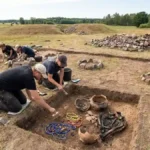
**Indoor excavation view inside the music hall.** The careful work revealed tightly grouped graves from the plague period.
### Who Were the Victims? Young and Overworked
One of the most striking revelations is the youth of those buried. The average age at death was under 18, with many skeletons belonging to adolescents and young adults. Far from random victims, these individuals showed clear evidence of physically demanding lives starting at an early age.
Skeletal analysis uncovered markers of joint wear, bone stress, and muscle strain consistent with heavy manual labor. Some remains also displayed signs of chronic nutritional stress and prior health challenges, indicating lives marked by hardship even before the plague struck. These patterns strongly suggest the group belonged to Basel’s lower social classes—servants, apprentices, day laborers, and migrants who kept the city running.
### Daily Life and Risk in a Trading Hub
Basel in the 17th century was a prosperous center of commerce along the Rhine River. Despite the plague’s return, city leaders kept trade routes open to protect the economy. Goods and people continued moving, inadvertently fueling the disease’s spread. For the working poor, there was little choice but to keep working for daily wages needed for food and shelter.
This increased exposure turned everyday routines into mortal risks. Historical documents from city archives and hospital records align perfectly with the skeletal evidence. Young workers, often lacking strong local family support or citizenship privileges, faced compounded dangers. Those with weaker social networks had less access to care, isolation, or extra resources during the crisis.
### What Bone and Isotope Analysis Revealed
Beyond DNA confirmation of plague, the team conducted detailed osteological examinations. Many skeletons displayed entheseal changes—places where tendons and ligaments attach to bone—that develop from repetitive heavy labor. Dental and bone stress markers pointed to periods of malnutrition or illness during growth years.
Stable isotope analysis of teeth and bones provided further insights into diet and mobility. Results showed uneven access to quality food, with some individuals experiencing long-term nutritional deficiencies. A poor diet not only weakened immune systems but likely made plague infections more lethal. These biological clues add depth to historical accounts, showing how social inequality translated into physical vulnerability.
**Multiple graves exposed during excavation.** The layout indicates rapid, organized burial during the height of the outbreak.
### Social Inequality in the Face of Disease
The study challenges the idea that plague struck everyone equally. While the disease is often described as a great leveler, evidence from Basel shows clear disparities even among the lower classes. Family connections, reputation, and local ties influenced who received hospital care or community support.
Young migrants or those without established roots appear particularly vulnerable. In an era before modern public health systems, personal networks determined access to help. This dynamic echoes patterns seen in more recent pandemics, where socioeconomic status heavily influences outcomes.
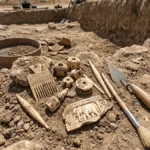
The presence of a clay pipe with a specific maker’s stamp from Mannheim, Germany, in one grave suggests the victim may have been a traveler or recent arrival—further illustrating how mobility and trade shaped the epidemic’s impact.
### Broader Context of the Second Plague Pandemic
The Basel outbreak was part of larger waves of plague that periodically swept Europe from the 14th to 18th centuries. By the 1660s, communities had developed some responses, including quarantine measures and makeshift hospitals in monasteries. Yet without understanding of germ theory, controlling the disease remained incredibly difficult.
This particular event ranks among the last major plague episodes in the region. Studying it helps researchers understand why certain groups suffered more and how societies responded under pressure. The integration of archaeological, genetic, and documentary evidence sets a high standard for historical epidemiology.
### Modern Relevance and Lessons Learned
Today, as we reflect on COVID-19 and other health crises, the Basel findings feel remarkably relevant. Vulnerable populations—often young essential workers in low-paying jobs—frequently bear disproportionate burdens during outbreaks. Factors like workplace exposure, preexisting health conditions, and limited social safety nets continue to shape pandemic experiences.
The research underscores the value of bioarchaeology in revealing these human stories. By examining bones and DNA, scientists reconstruct not just causes of death but entire life histories. This approach bridges the gap between macro-level historical events and individual lived experiences.
**Clay pipe with maker’s stamp** found with one of the victims, helping date the graves precisely.
### Archaeological Methods Driving New Discoveries
The Basel project exemplifies best practices in contemporary archaeology. Indoor excavation required precision and care, especially within an active cultural venue. Advanced laboratory techniques, including ancient pathogen DNA extraction and isotopic studies, turned fragmentary remains into rich data sources.
Such methods are transforming our understanding of past diseases. Confirming *Yersinia pestis* through genetic testing eliminates guesswork and allows direct comparison with modern strains. Future studies may explore genetic susceptibility factors or bacterial evolution using similar techniques.
### The Human Stories Behind the Graves
Each of the 15 individuals represents a life cut short. The young laborers buried here likely contributed to Basel’s economy through demanding physical work—loading ships, construction, or domestic service. Their remains tell of resilience amid hardship, only to be overwhelmed by a relentless disease.
Anthropological analysis continues on the skeletons, promising even more details about their origins, health histories, and possible relationships. These ongoing efforts ensure their stories endure beyond the tragedy of their deaths.
### Why This Research Strengthens Historical Understanding
By focusing on a single, well-documented outbreak, the study provides a focused case example with broader implications. It demonstrates how local conditions—economic priorities, urban infrastructure, and social hierarchies—interacted with a biological threat. Such granular insights complement larger-scale plague research across Europe.
The publication by researchers including L. Rindlisbacher, E. Flatscher, C. Gerling, B. Krause-Kyora, and S. L. Pichler in *Antiquity* (2026) adds authoritative weight to these interpretations. Their careful integration of multiple evidence lines exemplifies excellence in the field.
**Conclusion**
The Basel plague study brings to light the disproportionate impact on young workers during a 17th-century outbreak, revealing lives shaped by labor, limited resources, and social position. Through skeletal markers, ancient DNA, and historical context, researchers have reconstructed a poignant chapter of urban vulnerability in early modern Europe.
These findings do more than document a past epidemic—they illuminate enduring patterns of inequality during health crises. As societies continue grappling with infectious diseases, understanding how past communities experienced them offers valuable perspective and empathy. The young victims in Basel remind us that behind every historical statistic are real people whose stories deserve to be told.
**FAQ**
**Q: What caused the plague outbreak in 17th century Basel?**
A: The disease was caused by the bacterium *Yersinia pestis*, confirmed through ancient DNA extracted from the skeletal remains. It spread in the city around 1667–1668 during a period of continued trade and movement.
**Q: Why did young workers suffer the highest death rates?**
A: Many were engaged in essential physical labor that increased exposure to infected fleas or people. Poor nutrition, crowded living conditions, and limited access to care made them especially vulnerable.
**Q: How did researchers confirm the cause of death?**
A: Ancient DNA testing identified plague bacteria in multiple individuals. A dated clay pipe and historical records further linked the graves to the known epidemic.
**Q: What do the skeletal findings tell us about their lives?**
A: Signs of heavy joint wear and bone stress indicate years of demanding manual work starting in childhood. Isotope analysis also revealed periods of nutritional deficiency.
**Q: Did social status affect survival chances during the plague?**
A: Yes. Family networks, citizenship, and local reputation influenced access to hospital care and support. Those without strong ties faced greater risks.
**Q: How does this study compare to modern pandemics?**
A: It shows similar patterns where socioeconomic conditions shape exposure and outcomes, with essential workers often bearing the heaviest burden.
This important archaeological discovery continues to inform our understanding of past public health crises and their lasting human impact.