
Table of Contents
**3,000 Years of Ancient Diets Revealed in Poland**
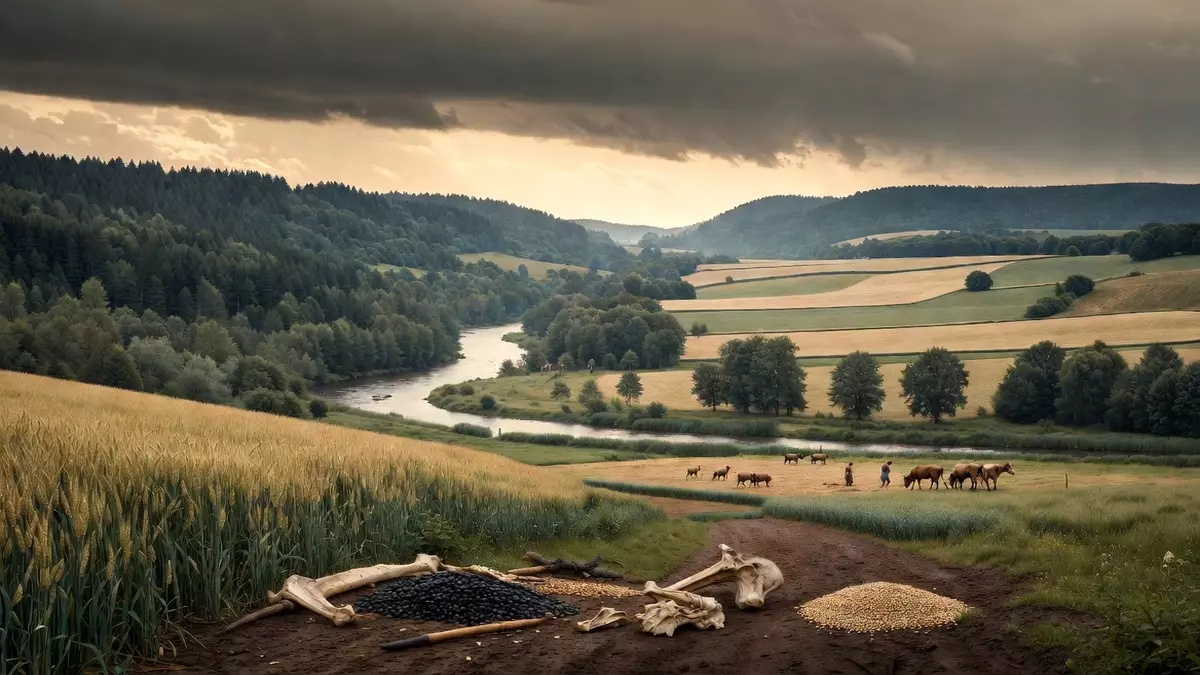
Ancient communities in north-central Poland demonstrated remarkable resilience and adaptability in their food systems over three millennia, according to a groundbreaking new study. Researchers have reconstructed detailed dietary habits and farming practices in the Kuyavia region from about 4100 to 1230 BCE, spanning the Middle Neolithic through the Middle Bronze Age. By analyzing bones from 84 individuals alongside animal remains and plant materials, the team uncovered how local groups navigated cultural shifts, environmental challenges, and new technologies while maintaining core mixed-farming traditions.
This research highlights the power of scientific techniques to reveal hidden stories in regions where traditional archaeological evidence is scarce, offering fresh insights into prehistoric life in Europe.
3,000 Years of Ancient Diets Revealed in Poland
 Seizure of Carthaginian Bronze Coins Highlights Ancient Economy and Illicit Antiquities Trade
### The Challenges of Studying Prehistoric Kuyavia
Kuyavia, located in north-central Poland, features landscapes shaped by forests, river valleys, and fertile soils. However, it presents difficulties for archaeologists: wooden structures from ancient settlements rarely survive, and acidic soils degrade many organic materials. Rich graves or monumental sites are uncommon, leaving gaps in our understanding of daily life.
To overcome these obstacles, scientists turned to bioarchaeological methods. They radiocarbon-dated each of the 84 human remains for precise timelines and examined stable carbon and nitrogen isotopes in bone collagen. These isotopes act like chemical fingerprints, revealing what people ate and how their food was produced. Complementary analysis of animal bones and charred cereal grains provided context about local herding and crop cultivation systems.
The result is one of the most comprehensive pictures of long-term dietary and economic change in prehistoric Central Europe, tracking adaptations across major cultural transitions.
### Middle and Late Neolithic Farming Practices
During the Middle and Late Neolithic periods, communities in Kuyavia built their economies around cereal crops and cattle herding. Isotope data from charred grains indicate intensive agricultural techniques, including heavy manuring of fields. This practice boosts nitrogen levels in crops, which then shows up in the bones of people who consumed them.

Previous studies may have overestimated the importance of meat in these diets because they didn’t fully account for manured fields elevating plant nitrogen signatures. In reality, plant-based foods formed a substantial part of daily meals, supplemented by animal products.
Cattle herding followed a strategic pattern adapted to the local environment. Isotope analysis of livestock bones points to grazing in woodlands and wet valley areas rather than open pastures. This dispersed herding across varied ecological zones helped maximize resources while minimizing competition with prime farmland. Such strategies reflect deep knowledge of the landscape and sustainable land management practices developed over generations.
### Arrival of Corded Ware Communities and Cultural Integration
Around 2800 BCE, new groups associated with the Corded Ware culture arrived in the region. Their initial practices differed notably from established Neolithic farmers. Livestock isotopes suggest these newcomers used forest edges and river valleys for grazing—areas outside the intensively cultivated zones favored by earlier inhabitants.
This spatial separation hints at distinct economic strategies in the early phases. Over subsequent centuries, however, dietary patterns began to align more closely with neighboring groups. Later Corded Ware generations show isotope values indicating shared herding practices and increased interaction. This gradual convergence points to social exchange, intermarriage, and cultural blending rather than outright replacement.
The flexibility shown by these communities underscores a key theme in prehistoric Poland: adaptation through learning and cooperation amid population movements.
### Millet Revolution in the Middle Bronze Age
One of the most significant dietary innovations appeared around 1200 BCE with the introduction of broomcorn millet. As a C4 plant, millet produces a distinct carbon isotope signal that stands out clearly in human bone chemistry. Its arrival marked a shift toward greater dietary diversity and resilience.
Uptake was uneven across communities. Some Middle Bronze Age groups incorporated millet heavily into their meals, likely valuing its quick growth, drought resistance, and suitability for poorer soils. Others continued with more traditional crops, consuming little millet. This variation suggests differences in access, preference, or cultural acceptance of the new grain.
Burial practices evolved alongside these food choices, reflecting social boundaries. Certain groups reused communal tombs over multiple generations, emphasizing collective identity. Others adopted individual or paired burials in elongated pits, sometimes placing bodies foot-to-foot in distinctive arrangements. These parallel changes in diet and ritual highlight how food became intertwined with social expression and group affiliation in prehistoric Poland.
**Bronze Age woman from Karczyn-Witowy**, one of the early millet consumers identified through isotope analysis.
### Evidence of Social Differences in Food Access
Stable isotope results also reveal inequalities within communities. Nitrogen variation among individuals indicates unequal access to animal protein, particularly during the Early Bronze Age. Wider spreads in values suggest some people enjoyed diets richer in meat or dairy, while others relied more heavily on plant foods.
Interestingly, these dietary distinctions appear despite relatively modest material differences in graves. Few elaborate grave goods signal clear status hierarchies, yet the chemical evidence points to subtle social differentiations. Such findings demonstrate how bioarchaeology can detect inequalities invisible in the artifact record alone.
### Continuity Amid Change in Mixed Farming Systems
Throughout the three-thousand-year span, a mixed farming system based on cereals and cattle remained the foundation of life in Kuyavia. Within this continuity, communities showed impressive adaptability:
– Shifting herding zones to match available landscapes
– Adopting new crops like millet for resilience
– Adjusting social and economic practices in response to cultural influences
Unlike more central European regions with stronger signals of rapid transformation, peripheral Kuyavia followed its own path. Local groups selectively incorporated innovations while preserving core traditions suited to their forested, riverine environment.
This regional distinctiveness enriches our broader understanding of European prehistory, showing that ancient societies were not uniform but responded creatively to local conditions and external contacts.
### The Scientific Methods Behind the Discoveries
Stable isotope analysis has revolutionized the study of ancient diets. Carbon isotopes help distinguish between different plant types (C3 vs. C4) and aquatic resources, while nitrogen isotopes track the position in the food chain and agricultural intensity. When combined with precise radiocarbon dating, these tools create high-resolution chronologies of change.
The inclusion of animal and plant remains provides essential context, preventing overinterpretation of human data. For instance, knowing cattle grazed in specific environments helps explain human isotope patterns more accurately.
Such multidisciplinary approaches are especially valuable in areas with poor preservation. In Kuyavia, where wooden houses and many organic artifacts have vanished, bones and charred seeds become primary storytellers.
### Implications for Understanding Prehistoric Adaptation
This study illuminates how ancient communities managed risk and opportunity. Intensive manuring sustained soil fertility in a world without synthetic fertilizers. Strategic herding maximized limited open land. The adoption of millet offered a hardy backup crop during times of climate fluctuation or population pressure.
Socially, varying access to preferred foods may have reinforced or reflected emerging hierarchies. Yet the overall persistence of mixed farming suggests stable, adaptable communities capable of weathering cultural shifts like the arrival of Corded Ware groups.
These insights contribute to larger conversations about human-environment interactions, the spread of agriculture, and the roots of social complexity in Europe. They also demonstrate that prehistoric Poland was far from isolated but actively participated in wider continental developments on its own terms.
### Why This Research Matters Today
Understanding long-term dietary adaptation offers valuable perspective in our era of climate change and food security challenges. Ancient strategies like diversified cropping, landscape-sensitive herding, and flexible social systems hold lessons for sustainable agriculture.
Moreover, the research underscores the importance of scientific archaeology in regions traditionally underrepresented in global narratives. By focusing on everyday subsistence rather than elite artifacts, it brings ordinary people’s lives into sharper focus.
Ongoing work at sites like Karczyn-Witowy continues to build on these findings, promising even richer details through future analyses such as ancient DNA or dental calculus studies.
**Conclusion**
The three-thousand-year record from Kuyavia reveals ancient communities in prehistoric Poland as skilled adapters who balanced tradition with innovation. From manured cereal fields and woodland herding to the selective embrace of millet and evolving burial customs, local groups crafted resilient food systems tailored to their environment and social needs.
This detailed isotopic study not only fills important gaps in regional archaeology but also enriches our appreciation for the ingenuity of our ancestors. As modern societies face similar pressures of environmental change and cultural exchange, these prehistoric stories offer inspiration and perspective on human adaptability across deep time.
**FAQ**
**Q: What time period does the Kuyavia diet study cover?**
A: The research examines diets and farming from the Middle Neolithic around 4100 BCE to the Middle Bronze Age around 1230 BCE, spanning approximately 3,000 years.
**Q: How did researchers determine ancient diets in Poland?**
A: Through stable carbon and nitrogen isotope analysis of bone collagen from 84 individuals, combined with radiocarbon dating, animal bone studies, and examination of charred cereal grains.
**Q: What role did millet play in prehistoric Polish diets?**
A: Broomcorn millet was introduced around 1200 BCE and adopted unevenly. It provided a drought-resistant C4 crop that supplemented traditional cereals, with some communities relying on it heavily.
**Q: Did social status affect food access in prehistoric Kuyavia?**
A: Yes. Isotope data show variation in animal protein consumption, indicating unequal access even when grave goods showed little obvious hierarchy.
**Q: How did Corded Ware groups influence local farming?**
A: Early Corded Ware communities used different herding areas, but over time integrated with existing practices, showing gradual cultural and economic blending.
**Q: Why is this study important for understanding European prehistory?**
A: It demonstrates local adaptations in a peripheral region, highlighting continuity in mixed farming alongside selective adoption of new crops and practices, using advanced scientific methods.
**Q: What challenges did archaeologists face in Kuyavia?**
A: Poor preservation of settlements and organic materials due to wooden architecture and soil conditions, making isotope analysis crucial for reconstructing subsistence strategies.