100,000-year-old Homo sapiens bones from Ethiopia may preserve earliest evidence of human cremation

Researchers studying Ethiopia’s Afar Rift have reported what could be the oldest known evidence of human cremation. The finding comes from sediments about 100,000 years old in the Middle Awash region, an area with one of Africa’s richest records of early Homo sapiens life. Surveying, sieving, and fossil recovery at the research site. Credit: Ferhat … Read more

‘Patchwork families’ lived in Europe over 5,000 years ago, Neolithic DNA study finds

More than 5,000 years ago, communities in Central Europe built massive stone tombs that still dominate parts of the landscape. These megalithic monuments from the Late Neolithic period have long been linked with ancestry, family identity, and tightly connected kin groups. A new genetic study suggests a more complicated picture. People buried together in these … Read more

Svalbard whalers show scurvy and extreme labor stress in “corpse point” cemetery

Climate change is rapidly erasing evidence from one of the Arctic’s largest early modern whaling cemeteries, where archaeologists have uncovered signs of harsh labor, poor nutrition, and declining health among the men who worked Europe’s northern whale fisheries. The graves of three whalers buried on Svalbard in the 17th century. Credit: Loktu, L., & Brødholt, … Read more

Greek theatrical mask found in Croatian cave points to ancient Illyrian sanctuary rituals

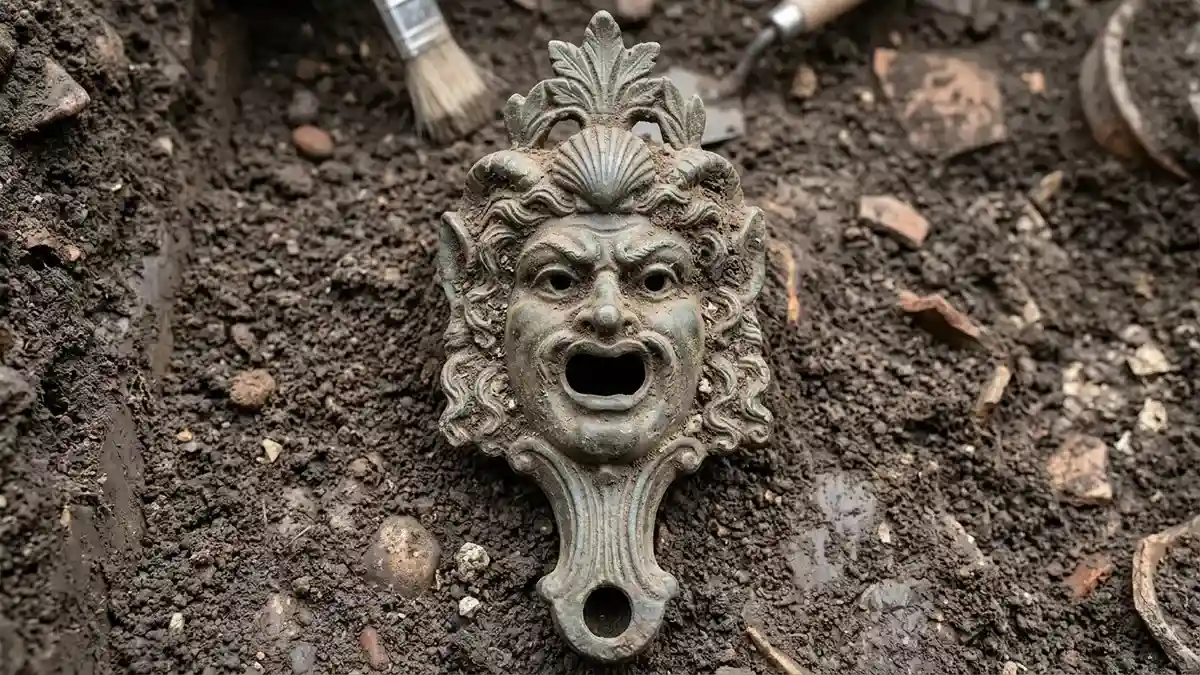
Archaeologists working inside Crno Jezero Cave on Croatia’s Pelješac Peninsula have uncovered an intact terracotta head shaped as a Greek theatrical mask, a rare find linked to ritual activity in the ancient Adriatic world. The object dates to the 4th to 3rd centuries BCE and offers new clues about religious life among local Illyrian communities … Read more

Payre fossil teeth reveal regional diversity among Europe’s earliest Neanderthals

A team led by the Centro Nacional de Investigación sobre la Evolución Humana studied fossil teeth from the Payre site in southeastern France. The material comes from nine teeth found in layers linked to the Middle Pleistocene, around 250,000 years ago. The research focuses on how early Neanderthal populations in Europe changed over time and … Read more

Sasanian military helmets reveal advanced brass technology across the Persian Empire

Ancient Persian metalworkers worked with brass far earlier and in far more varied ways than researchers once thought. A new study of metal artifacts from the Sasanian Empire shows brass in jewelry, fittings, and military helmets between the 4th and 7th centuries CE. The findings point to skilled metalworkers who understood how different copper alloys … Read more

A large hidden hydraulic system mapped around the Urartian fortress of Argishtikhinili in Armenia

Archaeologists studying the ancient fortress of Argishtikhinili in Armenia’s Araks Valley have identified more than 1,000 kilometers of water-management features across the landscape, including over 134 kilometers of channels that could trace back to the kingdom of Urartu. The findings offer a new look at how one of the ancient Near East’s lesser-known states transformed … Read more