Unlocking Ancient Egypt: Decoding Mummy Scents for Science

Unlocking Ancient Egypt: Decoding Mummy Scents for Science For centuries, the faint, musty odor emanating from ancient Egyptian mummies was dismissed as a simple byproduct of age and inevitable decay. However, a groundbreaking study from the University of Bristol is transforming that assumption. By analyzing the volatile organic compounds (VOCs) trapped in the air surrounding … Read more

4,000-Year-Old Grave Unveils Life in Ancient Nubia’s Desert

4,000-Year-Old Grave Unveils Life in Ancient Nubia’s Desert Deep within the arid expanse of Sudan’s Bayuda Desert, a team of Polish archaeologists has unearthed a perfectly preserved time capsule from the Kerma period. Dating back 4,000 years, this ancient grave offers a rare, high-resolution look at the life and death of a man who lived … Read more

3,000 Years of Survival: Prehistoric Diet and Farming in Poland

3,000 Years of Survival: Prehistoric Diet and Farming in Poland For three millennia, the ancient communities of Kuyavia, north-central Poland, navigated a world of shifting climates, incoming migrations, and evolving social structures. While the region’s archaeological record is often faint—thanks to wooden homes that rotted away and acidic soil that eroded organic remains—a new study … Read more

Iron Age Secrets: Ancient Wagons and Ritual Destruction Uncovered

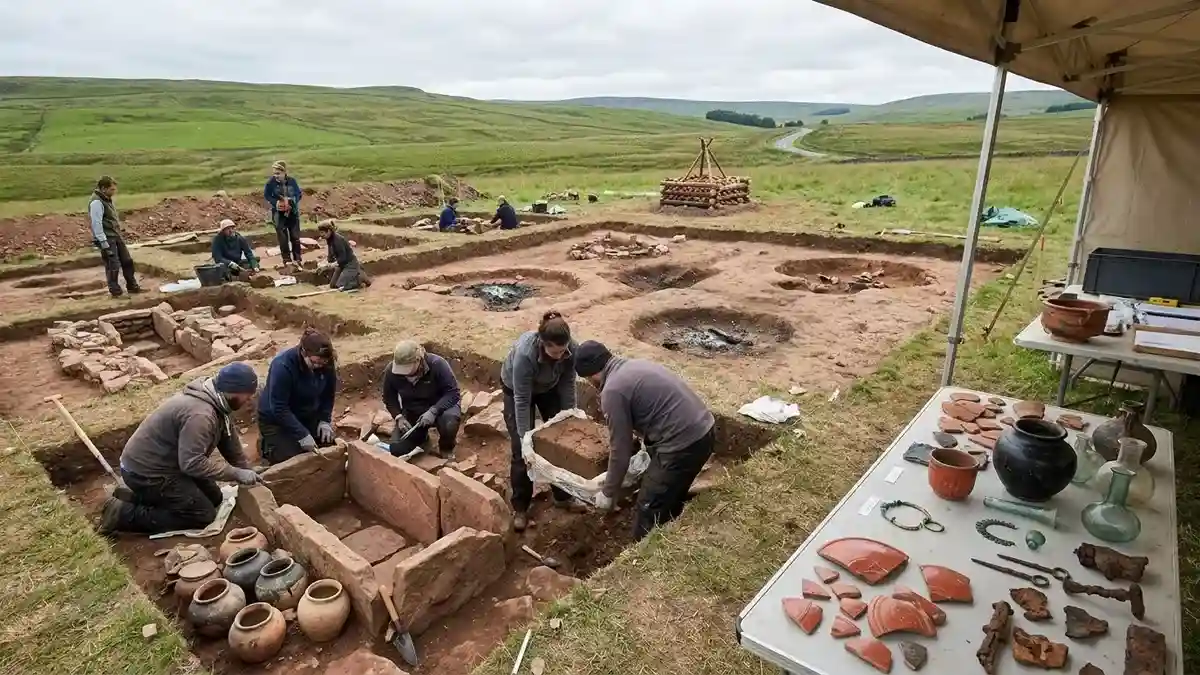
Iron Age Secrets: Ancient Wagons and Ritual Destruction Uncovered In a discovery that is fundamentally rewriting our understanding of Iron Age Britain, archaeologists working near Melsonby in North Yorkshire have unearthed one of the most significant metal hoards in British history. This massive collection, dating to the first century CE, offers a rare, dramatic look … Read more

Prehistoric High-Altitude Life: 6,000 Years of Occupation in the Pyrenees

Prehistoric High-Altitude Life: 6,000 Years of Occupation in the Pyrenees For decades, the conventional wisdom in archaeology was that prehistoric humans viewed the high-altitude regions of the Pyrenees as hostile, marginal zones, visited only by chance or in extreme circumstances. A groundbreaking discovery at “Cova 338” in Spain’s Núria Valley is now completely overturning that … Read more

Elite Anglo-Saxon Burials and Sacrificed Horse Found Near Sizewell

**Elite Anglo-Saxon Burials and Sacrificed Horse Found Near Sizewell** Archaeologists have uncovered a remarkable early medieval cemetery in Suffolk, eastern England, revealing high-status burial practices from the sixth and seventh centuries. The discovery, made during surveys for the Sizewell C nuclear power project, includes at least 11 burial mounds and a range of graves that … Read more

Ancient Finnish Ochre Trade Reveals Prehistoric Social Networks

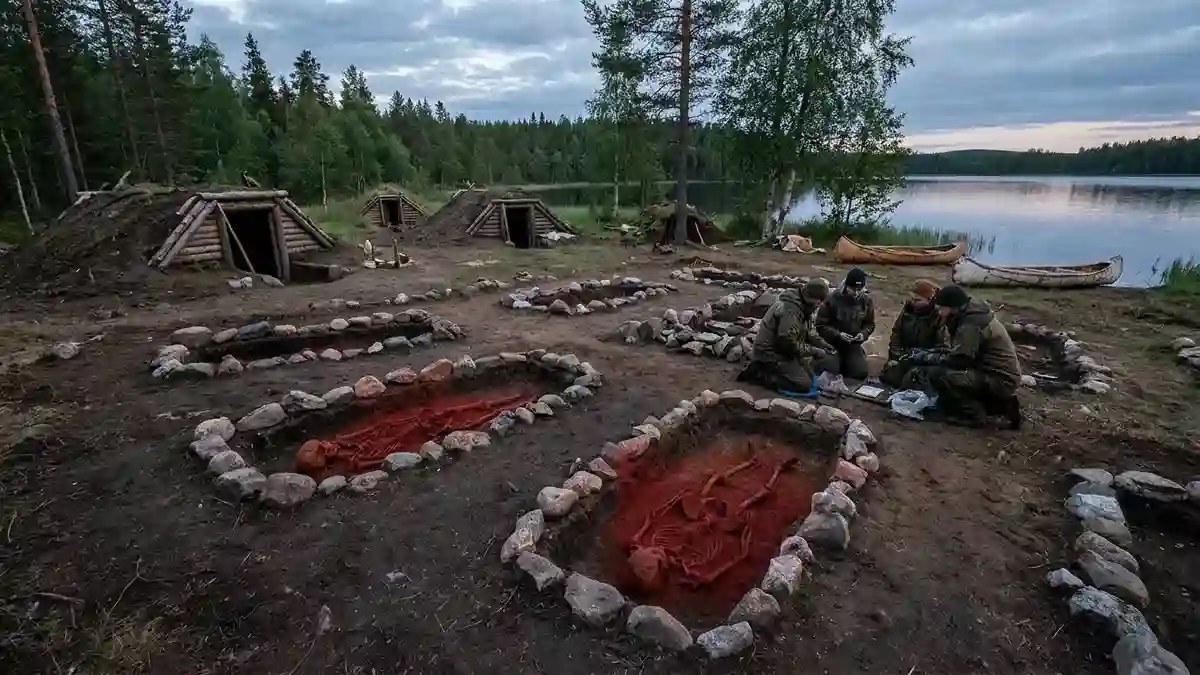
**Ancient Finnish Ochre Trade Reveals Prehistoric Social Networks** Archaeologists have uncovered compelling evidence of sophisticated social connections among ancient hunter-gatherers in Finland through the chemical analysis of red ochre. Between 6,000 and 5,500 years ago, members of the Typical Comb Ware culture used this vibrant iron-rich pigment not just for decoration, but as a powerful … Read more

First Deliberate Mummification Found in Inca Child Sacrifices

**First Deliberate Mummification Found in Inca Child Sacrifices** Archaeologists have made a startling discovery that reshapes our understanding of Inca religious rituals. Using advanced CT scans, researchers have identified the first clear evidence of deliberate mummification performed on a child victim of the capacocha sacrifice. This practice, long known from Spanish colonial accounts, involved offering … Read more

Severe Droughts Forced Ancient Bison Hunters to Abandon Montana Site

**Severe Droughts Forced Ancient Bison Hunters to Abandon Montana Site** Around 1,100 years ago, Indigenous bison hunters in central Montana suddenly stopped using a reliable kill and processing site they had returned to for roughly 700 years. New archaeological and paleoecological research reveals that severe droughts played a major role in this abandonment, even though … Read more

7,000-Year-Old Beaver Bones Reveal Neolithic Fur Hunting

**7,000-Year-Old Beaver Bones Reveal Neolithic Fur Hunting** Archaeologists in Germany have made a fascinating discovery that sheds new light on the daily lives and resource strategies of Europe’s earliest farmers. Near the town of Alsleben in Saxony-Anhalt, researchers uncovered a small pit filled with the remains of at least 12 beavers, dating back approximately 7,000 … Read more