
Table of Contents
- 1. Layers of Debris: Waves of Arctic Settlement
- 2. Reconstructing the Ancient Microbiome
- 2.1. Isolating Pathogens and Antibiotic Resistance
- 3. Assessing the Thaw Risk to Public Health
- 4. Frequently Asked Questions
- 4.1. What is an archaeological midden?
- 4.2. Can ancient diseases wake up and spread from melting permafrost?
- 4.3. How did researchers know which bacteria came from humans?
- 4.4. Did ancient people cause modern antibiotic resistance?
- 4.5. Why are the oldest Paleo-Inuit middens fading?
Thawing Greenland Middens Preserve 4,500-Year-Old Human Microbial DNA
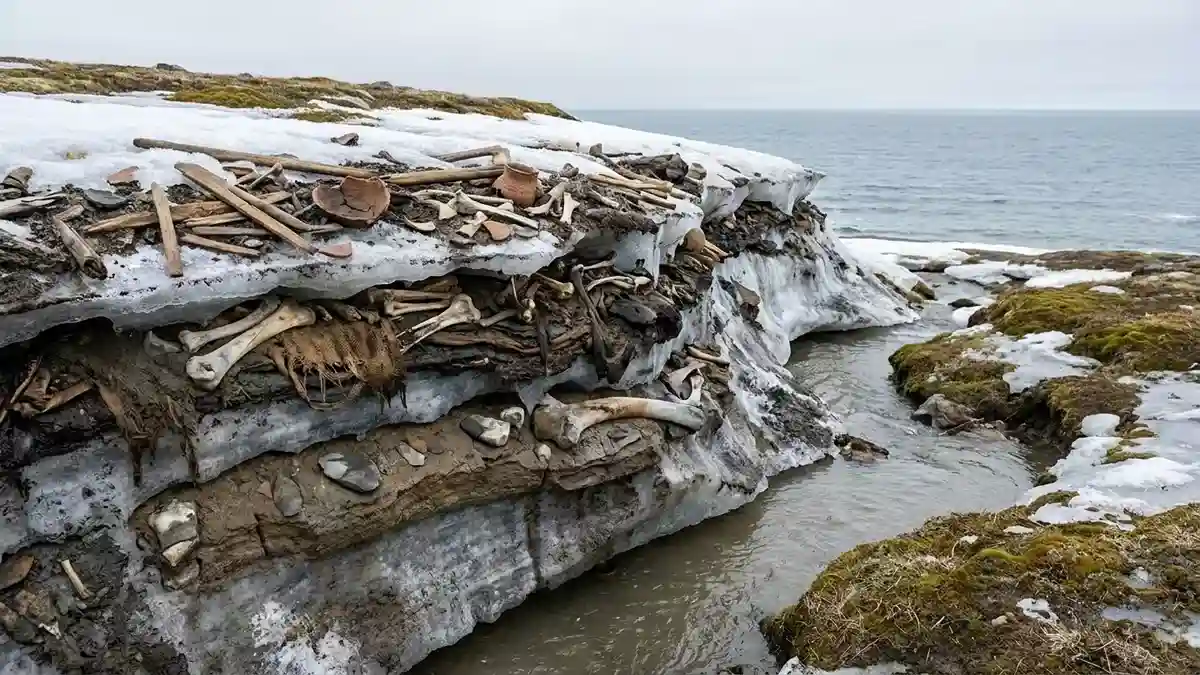
Ancient garbage dumps frozen across the Arctic are acting as unexpected biological time capsules, allowing scientists to map the hidden microbial footprints of Greenland’s earliest pioneers. These prehistoric refuse piles, known archaeologically as middens, aggregate thousands of years of household waste, including butchered animal bones, discarded clothing, food scraps, and fecal matter.
A groundbreaking study published in the journal Frontiers in Microbiology has revealed that these frozen waste heaps contain intact DNA traces of human and animal gut bacteria, with some biological signatures surviving for more than 4,500 years. Furthermore, the research addresses a critical contemporary concern: as the Arctic permafrost rapidly thaws due to climate change, these ancient pathogen reservoirs appear to pose a very low risk of contaminating modern ecosystems.
Thawing Greenland Middens Preserve 4,500-Year-Old Human Microbial DNA
Layers of Debris: Waves of Arctic Settlement
Greenland’s sub-surface history is characterized by distinct, disconnected cultural migrations, each leaving behind unique chemical and organic signatures within the soil matrix:

The Paleo-Inuit (c. 2500 BCE): Arriving across the frozen straits from North America, these nomadic hunter-gatherers relied heavily on marine mammals, leaving behind middens rich in seal, walrus, and whale remnants.
The Norse Settlers (Late 10th Century CE): Transatlantic European farmers established agrarian communities in southern Greenland. Their waste piles are characterized by the skeletal remains and organic waste of imported cattle, sheep, and goats.
The Danish Colonial Era (18th Century onward): Introducing industrialized trade items, concentrated settlement patterns, and distinct waste signatures into the high-latitude stratigraphy.
To see if these distinct historical eras left behind long-lasting microbial legacies, an international team of scientists gathered 78 core samples from seven separate midden sites across western and southern Greenland during fieldwork campaigns. These samples were benchmarked against 143 control soil samples pulled from adjacent, pristine environments showing no historical signs of human occupation.
Greenland Midden Sampling Breakdown:
├── 2 Paleo-Inuit Sites (Oldest layers, ~4,500 years old)
├── 4 Medieval Norse Farming Settlements
└── 1 Early Danish Colonial Settlement
Reconstructing the Ancient Microbiome
Using high-throughput metagenomic DNA sequencing, the team successfully reconstructed the ancient bacterial ecosystems preserved inside the permafrost. Across the archaeological layers, the researchers cataloged a staggering 1,207 distinct bacterial species. Notably, a vast majority of these microbes were entirely new to science, highlighting how little researchers currently understand about indigenous Arctic soil biology.
The biological contrast between the garbage dumps and natural tundra was stark. The middens contained far richer, more diverse microbial communities, heavily influenced by the specific items dumped there centuries ago. For instance, soil layers packed with rotting seal skins cultivated an entirely different bacterial profile than layers containing domestic livestock bones or charred wood.

Midden Microenvironment Divergence:
├── Seal-Skin Deposits   ──► Proliferation of specialized marine-fat degrading bacteria
└── Norse Barn Runoff   ──► Rich signatures of domestic animal and herbivore gut microbes
The oldest Paleo-Inuit middens displayed a microbial profile that closely resembled natural, un-colonized tundra soil. This indicates that while DNA can survive for nearly five millennia in frozen conditions, the distinct biological signal of human activity slowly degrades and fades over immense spans of deep time.
Isolating Pathogens and Antibiotic Resistance
Throughout the younger Norse and colonial-era layers, researchers identified robust DNA signatures of bacteria commonly found in the intestines of humans and livestock. Among these were Clostridium perfringens, a notorious modern culprit behind severe food poisoning, and Paeniclostridium sordellii, a pathogen capable of causing fatal toxic shock infections. In certain colonial-era garbage layers, these gut-associated species made up nearly half of the entire sequenced bacterial population.
Intriguingly, the study also uncovered a diverse array of antimicrobial resistance (AMR) genes. The researchers identified genetic resistance tracking back to 17 separate antibiotic classes, with resistance to beta-lactam and tetracycline antibiotics being the most pervasive.
Antimicrobial Resistance (AMR) Distribution:
├── Midden Soil Layers  ──► High concentration of beta-lactam and tetracycline resistance genes
└── Pristine Tundra Soil ──► Identical resistance genes found naturally occurring in modern controls
Crucially, these identical resistance genes were found in equal measure within both the ancient archaeological layers and the pristine, untouched tundra control soils. This discovery proves that antibiotic resistance is not merely a byproduct of modern medicine; rather, these survival traits have been naturally utilized by soil microbes in Arctic ecosystems for thousands of years to compete against rival fungi and bacteria.
Assessing the Thaw Risk to Public Health
As rising global temperatures melt Arctic permafrost and accelerate coastal erosion, concerns have mounted that thawing archaeological sites could unleash viable, ancient plagues into modern waterways. The researchers specifically investigated this dynamic at an actively eroding coastal midden site.
The results provide significant reassurance. The team discovered that as the midden thawed and eroded into nearby streams and marine habitats, the specialized midden bacteria remained isolated right at the source. Once the archaeological runoff met the open environment, native, modern environmental microbes immediately outcompeted and overwhelmed the ancient signatures.
Erosion and Runoff Dynamics:
[Thawing Midden Core] ──► [Eroding Stream Margin] ──► [Open Marine Environment]
  (High Pathogen DNA)        (Native Microbes Mix)       (Native Microbes Dominate / Pathogens Eradicated)
The scientists emphasize that their testing detected ancient, fragmented DNA sequences, not living, viable bacterial cells capable of replicating or infecting hosts. No highly dangerous pathogens were detected, suggesting that Greenland’s melting archaeological trash heaps pose a minimal risk to global public health. However, because climate change is fundamentally reshaping the physical landscapes of the far north, scientists maintain that continued biological monitoring of these melting historical vaults remains vital.
Frequently Asked Questions
What is an archaeological midden?
An archaeological midden is an old dump for domestic waste. It can contain animal bones, human excrement, botanical material, shells, broken tools, and other organic debris. In cold climates like Greenland, these heaps freeze, preserving a highly accurate organic record of ancient daily life.
Can ancient diseases wake up and spread from melting permafrost?
While some giant viruses have been revived from deep Siberian ice, this specific study found no evidence of dangerous, viable pathogens emerging from Greenland’s middens. The bacteria from the dumps are weak outside of their frozen environment and are rapidly overwhelmed and destroyed by modern, native soil bacteria.
How did researchers know which bacteria came from humans?
Scientists used DNA sequencing to identify specific species like Clostridium perfringens and Paeniclostridium sordellii, which are known to live primarily inside the intestines of humans and warm-blooded animals, acting as definitive biological markers of past human presence.
Did ancient people cause modern antibiotic resistance?
No. The study found antibiotic resistance genes in both 4,500-year-old human waste layers and untouched, natural soil. This proves that many antibiotic resistance traits evolved naturally over millions of years as environmental bacteria fought each other for territory long before modern medicine.
Why are the oldest Paleo-Inuit middens fading?
Over thousands of years, even under frozen conditions, DNA slowly breaks down due to background radiation, trace moisture, and chemical decay. The 4,500-year-old Paleo-Inuit layers have degraded to the point where their microbial profiles are starting to blend back into the natural baseline signature of the surrounding Arctic soil.