
Table of Contents
- 1. The Dmanisi Enigma: A Fossil Treasure Trove
- 2. Looking Beyond the Skull: Dental Insights
- 3. A More Complex Human History
- 4. Why This Matters
- 5. Frequently Asked Questions (FAQ)
- 5.1. 1. What was the traditional theory regarding human migration out of Africa?
- 5.2. 2. Why did scientists study teeth instead of skulls?
- 5.3. 3. Does the study prove there were two species at Dmanisi?
- 5.4. 4. What are the implications of this discovery?
- 5.5. 5. Where did the research team get their comparative data?
Multiple Human Species Migrated Out of Africa 1.8 Million Years Ago
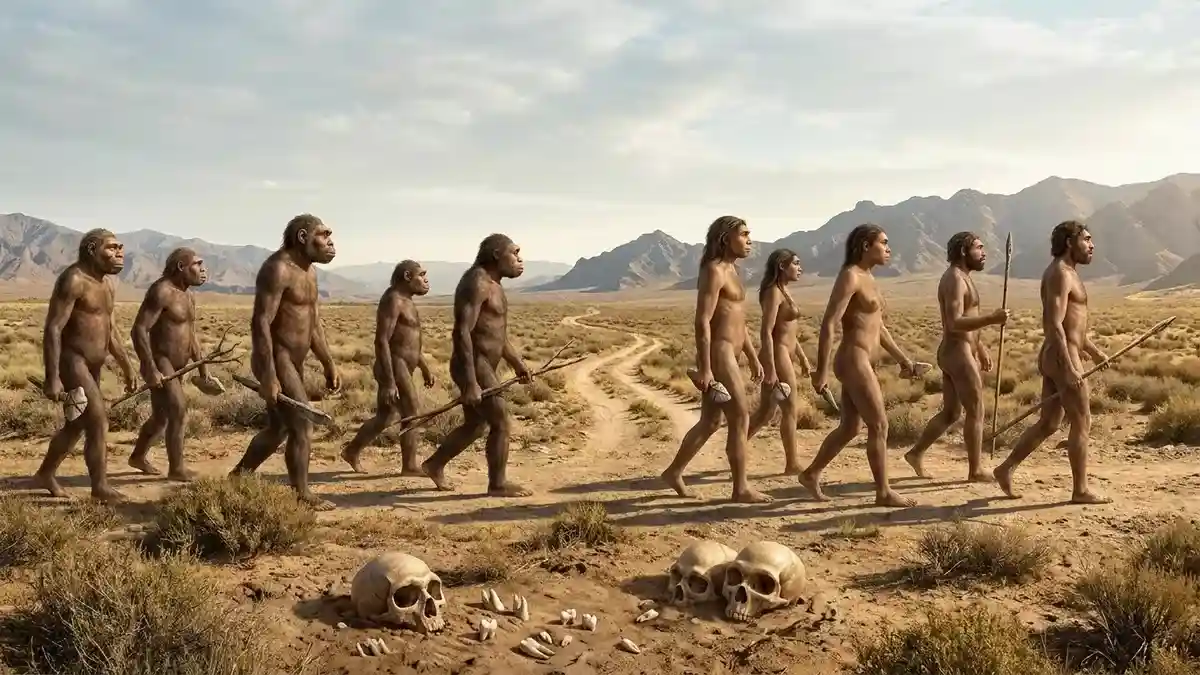
For decades, the narrative of human evolution has been defined by a relatively simple story: a single, pioneering species—Homo erectus—ventured out of Africa approximately 1.8 million years ago to populate the wider world. However, a landmark study recently published in PLOS ONE is shattering that consensus. By analyzing the fossilized teeth of hominins found at the famous Dmanisi site in the Republic of Georgia, researchers have discovered that the first great migration out of Africa was likely a far more crowded and complex affair than previously believed.
Multiple Human Species Migrated Out of Africa 1.8 Million Years Ago
The Dmanisi Enigma: A Fossil Treasure Trove
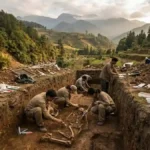
Located southwest of Tbilisi, the Dmanisi archaeological site has long served as a focal point for understanding early human dispersal. Since excavations began in the late 1990s, the site has yielded the oldest hominin remains ever discovered outside the African continent. Among the most significant finds are five remarkably well-preserved skulls dating back to the early Pleistocene.
From the moment these skulls were unearthed, they baffled the scientific community. The sheer morphological diversity displayed by the specimens—ranging from small, primitive-looking braincases with massive facial features to more gracile, human-like structures—led to intense debate. Was this just the extreme range of physical variation within a single species, or were these individuals evidence of multiple human lineages living side-by-side?

Looking Beyond the Skull: Dental Insights
To resolve this long-standing debate, an international research team pivoted their attention from the variable shapes of the skulls to the one part of the anatomy most resistant to the distortions of time: teeth.
Dental enamel is incredibly durable, making teeth the “gold standard” for evolutionary classification. The team conducted an expansive comparative study, examining 583 fossil teeth from a wide range of human ancestors, including australopiths and several early Homo species. By statistically classifying the crown surface area of premolars and molars, they could determine where the Dmanisi specimens truly fit on the human family tree.
The analysis produced a clear, startling split. The fossils did not cluster as a single group; instead, they aligned with different branches of human evolution:
The Primitive Branch: One of the Dmanisi individuals showed deep affinities with australopiths, representing a much earlier, more ape-like evolutionary state.
The Homo Branch: The other two individuals analyzed were clearly linked to early members of the genus Homo.
The differences between these groups were simply too great to be explained by natural variation between males and females (sexual dimorphism), even when compared to the high levels of variation seen in living great apes, such as gorillas.

A More Complex Human History
The researchers argue that the evidence points to the coexistence of at least two distinct human species at Dmanisi 1.8 million years ago. These groups are identified as Homo georgicus (the more primitive form) and Homo caucasi (the more modern, human-like species).
If these findings hold, they force a radical rethinking of early human history. We are no longer looking at a linear, single-file march out of Africa. Instead, the migration appears to have been an ongoing, multi-species process. Early human history was characterized by a diverse array of species, each potentially adapting in unique ways to their new environments as they expanded beyond the African continent.
Why This Matters
This shift toward a “multispecies migration” model suggests that our evolutionary history is far more branching and interconnected than the traditional “Out of Africa” theory implied. By showing that early human dispersals involved multiple species, scientists are uncovering a past defined by diversity and ecological adaptability. This study serves as a potent reminder that the story of humanity is not just a single, triumphant journey, but a complex mosaic of different hominin groups finding their way in a rapidly changing world.
Frequently Asked Questions (FAQ)
1. What was the traditional theory regarding human migration out of Africa?
For decades, the accepted theory was that a single species, Homo erectus, migrated out of Africa about 1.8 million years ago, making it the first human species to inhabit the rest of the globe.
2. Why did scientists study teeth instead of skulls?
While skulls can be quite variable, dental enamel is highly durable and less prone to distortion over millions of years. Teeth provide a more reliable biological record for evolutionary classification and taxonomic grouping.
3. Does the study prove there were two species at Dmanisi?
The statistical analysis showed that the differences between the Dmanisi specimens are too large to be explained by male/female differences within a single species. The researchers concluded that at least two distinct species—Homo georgicus and Homo caucasi—likely coexisted at the site.
4. What are the implications of this discovery?
This finding suggests that early human migrations were much more complex than previously thought. Rather than one species moving in a straight line, multiple human species may have been moving and adapting to new environments concurrently.
5. Where did the research team get their comparative data?
The team compared the Dmanisi fossils against a massive dataset of 583 fossil teeth, which included specimens from australopiths (the older, ape-like ancestors) and several early members of the genus Homo.