
Table of Contents
- 1. The Art and Science of Maya Dentistry
- 2. Unlocking Secrets From Three Loose Teeth
- 3. Proving the Procedures Were Done in Life
- 4. Challenging the Boundaries of Ancient Childhood
- 4.1. Localized Regional Traditions
- 4.2. Rites of Social Maturity
- 5. Conclusion
- 6. Frequently Asked Questions
- 6.1. How old were the Maya children found with jade dental inlays?
- 6.2. How do scientists know the procedures were done while the children were alive?
- 6.3. What materials did the ancient Maya use for dental inlays?
- 6.4. Was this dental practice common among all ancient Maya people?
- 6.5. Why did these children receive adult dental modifications?
Ancient Jade Dental Art Discovered in Maya Kids Redefines History
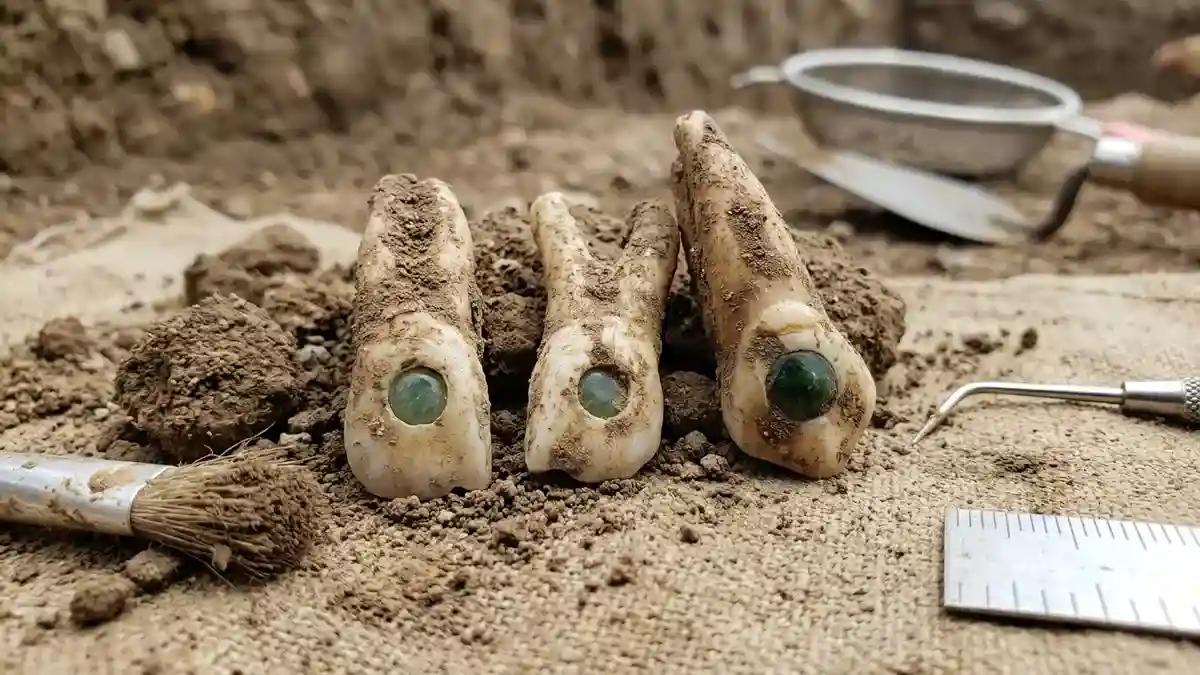
A stunning archaeological discovery is reshaping our understanding of ancient Mesoamerican traditions and childhood. Researchers have uncovered evidence of decorative jade dental inlays embedded in the teeth of ancient Maya children—a complex and painful cosmetic practice previously believed to be reserved exclusively for adults.
The study, published in the Journal of Archaeological Science: Reports, analyzed three isolated teeth from a Pre-Hispanic skeletal collection housed at the Popol Vuh Museum at Francisco Marroquín University in Guatemala. The findings reveal that the sophisticated dental modifications seen across elite Maya populations were applied to individuals far younger than previously recorded, offering a rare and intimate glimpse into the social rituals of Maya youth.
Ancient Jade Dental Art Discovered in Maya Kids Redefines History

The Art and Science of Maya Dentistry
Dental modifications were a vibrant and widespread facet of Maya culture during the Classic and Postclassic Periods, spanning roughly from CE 250 to 1550. Rather than practicing dentistry merely for oral health or pain relief, ancient Maya craftsmen were master artisans who transformed human smiles into dazzling displays of wealth, status, and spiritual devotion.
Using rudimentary stone tools, these ancient dentists meticulously drilled perfectly round cavities directly into the front facing enamel of a person’s teeth. They then carved precious gemstones—most frequently jade, obsidian, or metallic pyrite—to match the precise dimensions of the newly created hole. To ensure the gems remained secured over a lifetime of eating and speaking, the stones were permanently bonded into place using a remarkably durable, custom-formulated organic cement.
Historically, data collected by top researchers, including prominent archaeologist Vera Tiesler, indicated that up to 60 percent of Maya adults possessed some form of dental filing, engraving, or gem inlay. However, all prior evidence suggested that these intense operations were a rite of passage that began no earlier than mid-adolescence.
Unlocking Secrets From Three Loose Teeth
The new study flips the traditional timeline completely on its head. The three analyzed teeth did not come from an intact, excavated skeleton but were instead unprovenanced items donated directly to the Popol Vuh Museum. Because they were loose specimens, the standard archaeological context was entirely missing; scientists lacked immediate data regarding the exact town they came from, their soil layer, or the social status of the families involved.
Despite these limitations, laboratory analysis yielded concrete biographical details about the individuals who wore them. Through dental development metrics, scientists determined that the teeth belonged to children who were between the ages of 8 and 10 at their time of death:
The First Tooth: A maxillary central left incisor (an upper front tooth), belonging to a child estimated to be 8 to 9 years old.
The Second Tooth: A mandibular lateral incisor (a lower front tooth), also from a child around 8 or 9 years old.
The Third Tooth: A maxillary right canine (an upper eye tooth), belonging to a child aged roughly 9 to 10 years old.

While researchers cannot definitively prove whether the two front incisors belonged to the exact same child or came from completely separate individuals, the physical evidence points to multiple distinct cases of child dentistry.
“These teeth were loose museum donations with zero associated taphonomic or social status records. Yet, the physical response of the bone itself tells the undeniable story of what happened to these children while they were alive.” — Research Analysis Team
Proving the Procedures Were Done in Life
One of the most critical questions the research team had to answer was whether these jade gems were inserted while the children were alive or if they were added posthumously as part of a funeral preparation ritual.
Microscopic analysis provided definitive proof of living modification. The interior structures of the teeth showed clear signs of biological healing and defense mechanisms, specifically the formation of protective secondary dentin around the borders of the drilled cavities. Dentin is a living tissue that responds to trauma; its presence proves that the children’s bodies actively reacted to the dental work, meaning they lived for a significant period after enduring the drilling process.
The study also revealed a fascinating variance in the technical skill levels of the ancient practitioners who performed the operations. The lower lateral incisor showcased master-class precision, with the drilled cavity neatly penetrating only the hard outermost enamel layer. Conversely, the upper front incisor was drilled much more aggressively, plunging deep into the underlying dentin layer, though thankfully stopping short of the highly sensitive central nerve pulp chamber. These dramatic differences in craftsmanship strongly suggest that the children were treated by different artisans possessing varying degrees of experience and steady hands.
Challenging the Boundaries of Ancient Childhood
Before this discovery, the global archaeological record contained only one other instance of a Maya child found with dental inlays. That case involved a toddler between the ages of 3 and 4 discovered at the Pusilha site in Belize. Crucially, however, forensic analysis of the Belize specimen showed that those specific inlays were added long after death, purely as a funerary honor.
The Guatemalan teeth stand completely alone as the earliest known physical evidence of living children undergoing elective cosmetic dental surgery. This raises an intriguing anthropological question: Why would a community subject young children to an invasive, painful procedure typically reserved for grown adults?
The scientific community is exploring two primary theories:
Localized Regional Traditions
It is entirely possible that this practice was not widespread across the entire Maya empire but instead represented a highly specific, localized custom unique to a particular region or royal dynasty in ancient Guatemala.
Rites of Social Maturity
A more culturally profound possibility is that the jade fillings marked a critical milestone in a child’s development toward adulthood. Anthropological records indicate that around the age of 10, Maya children traditionally aged out of early childhood and began taking on rigid adult responsibilities. Young girls were integrated into intensive domestic housework and weaving, while young boys began strenuous physical labor out in the agricultural fields, or milpas. Embedding a permanent piece of sacred jade into a child’s smile right at the age of 8, 9, or 10 may have served as a visual, societal marker signaling their transition into active, contributing members of adult society.
Conclusion
The discovery of living child dental modifications in the Pre-Hispanic Maya world shatters long-held assumptions regarding the strict age boundaries of ancient body modification. While the precise social status and regional origin of these young individuals remain wrapped in mystery, their teeth have provided an invaluable breakthrough. They prove that Maya dental artistry was fluid, dynamic, and deeply intertwined with the shifting stages of human life, forcing modern historians to completely rethink how ancient cultures defined the transition from a child to an adult.
Frequently Asked Questions
How old were the Maya children found with jade dental inlays?
The teeth analyzed in the study belonged to children who were between the ages of 8 and 10 at their time of death, making them the youngest living individuals ever found with this type of modification.
How do scientists know the procedures were done while the children were alive?
Microscopic analysis revealed the presence of protective secondary dentin forming around the drilled cavities. Dentin only grows as a living biological response to trauma, proving that the children survived the dental procedures.
What materials did the ancient Maya use for dental inlays?
While jade was the most highly prized and common gemstone used due to its spiritual association with life and royalty, ancient Maya artisans also frequently utilized obsidian, pyrite, and hematite.
Was this dental practice common among all ancient Maya people?
Body modifications were highly popular, with some studies showing up to 60 percent of Maya adults having altered teeth. However, until this study, the practice was believed to be restricted exclusively to older teenagers and adults.
Why did these children receive adult dental modifications?
Historians suggest the jade inlays may have been a highly localized regional custom or a physical marker celebrating a rite of passage. Around the age of 10, Maya youth typically left early childhood behind to take on adult economic and domestic duties.