
Table of Contents
- 1. The Mystery of the “Hyperflexed” Skeletons
- 1.1. Reinterpreting Ancient Burials
- 2. Peering Into Bone Microstructure
- 3. Modern Closures: A Living Prehistoric Tradition
- 4. Love, Memory, and the “Two-Layer” Migration Model
- 5. Frequently Asked Questions
- 5.1. Are these mummies older than the ones found in Egypt?
- 5.2. If only bones remain, why are they considered mummies?
- 5.3. How did ancient people discover smoke-drying?
- 5.4. What does “hyperflexed” mean?
- 5.5. Do people still practice smoke-mummification today?
World’s Oldest Mummies Discovered in China and Southeast Asia
The history of intentional human mummification has officially been rewritten. While popular culture often associates the practice with the elaborate tombs of ancient Egypt, a groundbreaking study published in PNAS reveals that pre-farming hunter-gatherers in southern China and Southeast Asia were purposefully preserving their dead 10,000 years ago—thousands of years before the Egyptians.
Instead of utilizing salt or chemical resins, these ancient communities developed a sophisticated technique: smoke-drying. By tightly binding the bodies of their ancestors and suspending them over low-temperature fires, they created a widespread, enduring mortuary tradition that allowed the deceased to remain a tangible part of the living world.
World’s Oldest Mummies Discovered in China and Southeast Asia
The Mystery of the “Hyperflexed” Skeletons
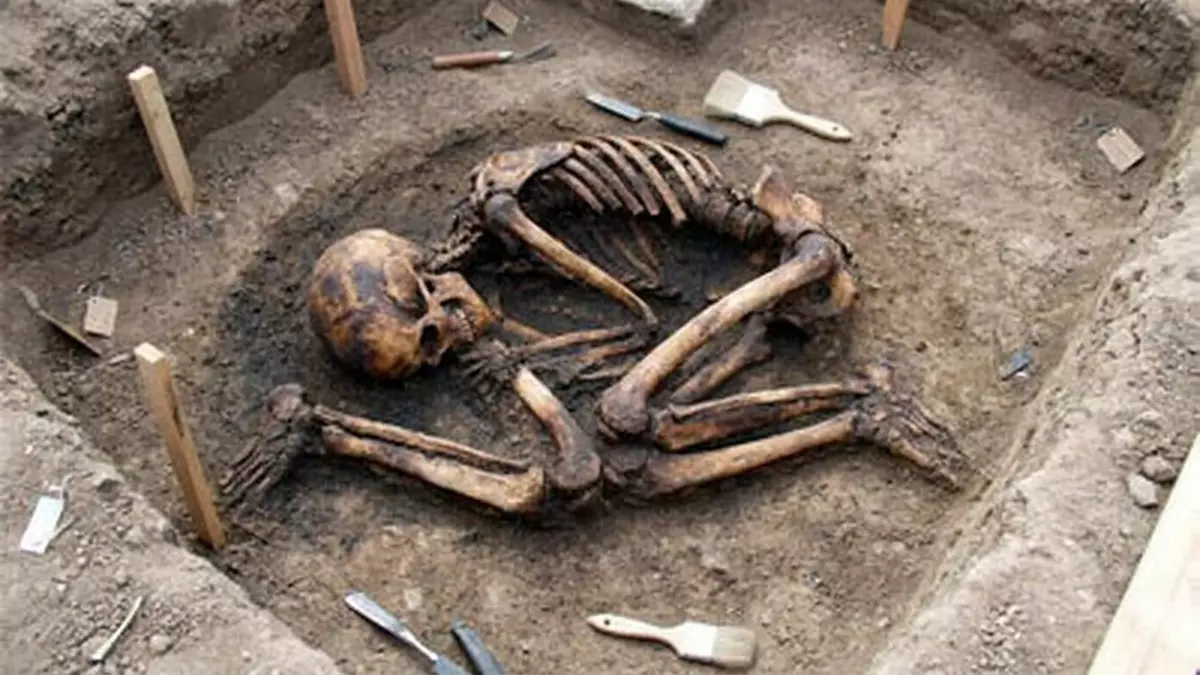
For decades, archaeologists excavating sites across southern China, the Philippines, Laos, Thailand, Malaysia, and Indonesia were puzzled by a recurring phenomenon. Many skeletons dating from 4,000 to 12,000 years ago were discovered in a highly unnatural, tightly crouched fetal position known as hyperflexion.
Reinterpreting Ancient Burials
Initially, these tightly packed remains were simply viewed as a space-saving burial style. However, a major clue emerged in 2022 when a similarly hyperflexed skeleton in Portugal was identified as a mummy. To force a human body into such an extreme, compact position, the joints must be tightly bound shortly after death, holding the limbs in place as the tissues decompose and dry out.
When researchers re-examined the Southeast Asian burials, they noticed something even more unusual: many of the hyperflexed bones exhibited faint traces of burning and soot coloration, yet the soil of the graves themselves showed no signs of a fire. The burning hadn’t happened inside the tomb; it had occurred beforehand.
Peering Into Bone Microstructure
To prove that these individuals had undergone a deliberate drying process, an international research team led by Hsiao-chun Hung, a senior research fellow at the Australian National University, utilized advanced, non-destructive laboratory techniques:
X-Ray Diffraction: This method allowed scientists to look at the internal atomic microstructure of the ancient bone material.
Infrared Spectroscopy: Used to assess chemical alterations in the bone caused by thermal exposure.
The tests confirmed that the bones had not been cremated—which requires intense, direct combustion. Instead, the skeletons showed clear evidence of prolonged exposure to low-intensity heat.
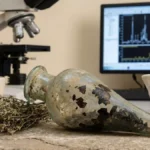
Combined with the presence of soot discoloration, the evidence overwhelmingly pointed to an extended period of smoking over an open fire. In the hot, humid climates of Southeast Asia where organic tissue decays rapidly, smoke-drying was likely the single most effective way to temporarily halt decomposition.
Modern Closures: A Living Prehistoric Tradition
The researchers did not have to rely solely on chemical analysis to understand how this process looked in practice. In 2019, team members traveled to Papua, an Indonesian province, to observe the traditional funeral customs of the indigenous Dani and Pumo peoples.
To this day, these communities create mummies of revered ancestors using a method that mirrors the archaeological findings:
Because the ancient hunter-gatherers left their smoke-dried mummies exposed to the humid elements rather than sealing them in airtight sarcophagi or dry caves, the soft tissues eventually rotted away after a few decades or centuries, leaving behind only the distinctively stained, hyperflexed bones discovered by modern archaeologists.
Love, Memory, and the “Two-Layer” Migration Model
The discovery of these 10,000-year-old mummies carries heavy cultural and historical weight. On an emotional level, the practice shows a profound desire to keep lost loved ones close.
“The practice prolonged the visible presence of the deceased, allowing ancestors to remain among the living in a tangible way—a poignant reflection of enduring human love, memory, and devotion.”
— Hsiao-chun Hung, Lead Author
On a historical level, the distribution of these smoked burials strongly supports the “two-layer” migration model of early human movement into Asia:
| Migration Wave | Timeframe | Lifestyle | Burial Tradition | Modern Descendants |
| First Layer | ~65,000 to 10,000 years ago | Hunter-Gatherers | Smoke-drying & Hyperflexion | Indigenous groups like the Dani & Pumo |
| Second Layer | ~4,000 years ago | Neolithic Farmers | Standard agricultural burials | Modern mainstream Asian populations |
The fact that smoke-mummification is unique to the oldest hunter-gatherer layer suggests that the tradition is an incredibly ancient piece of shared cultural heritage. In fact, authors of the study note that the practice may have originated as early as 42,000 years ago during the initial expansion of Homo sapiens from Africa into Southeast Asia, signaling an astounding line of biological and cultural continuity.
Frequently Asked Questions
Are these mummies older than the ones found in Egypt?
Yes. The earliest evidence of purposeful Egyptian mummification dates back roughly 5,000 to 6,000 years ago. The smoke-dried mummification practices discovered in China and Southeast Asia date back at least 10,000 years, making them the oldest known examples of intentional mummification in human history.
If only bones remain, why are they considered mummies?
Even though the soft tissue, skin, and hair have degraded over the millennia due to the humid climate, they are classified as mummies because the physical layout of the bones and their chemical signatures prove that the bodies were deliberately subjected to a preservation process (smoke-drying) after death.
How did ancient people discover smoke-drying?
The exact origin remains a mystery. It is highly likely that prehistoric hunter-gatherers discovered the preservation qualities of smoke accidentally through a religious ritual involving fire. Alternatively, they may have successfully used smoke to preserve animal meat for food and later adapted the technique to honor their deceased human ancestors.
What does “hyperflexed” mean?
In archaeology, a hyperflexed burial refers to a skeleton that has been folded into an unnaturally tight, compact fetal position. To achieve this, the limbs of the deceased must be bound firmly together shortly after death while the body is still pliable.
Do people still practice smoke-mummification today?
Yes. Indigenous groups in Southeast Asia, such as the Dani and Pumo peoples of Papua, Indonesia, still practice this exact form of mortuary ritual today to preserve the bodies of their ancestors and keep them integrated within the community.