
Table of Contents
- 1. The Loess Plateau: Deep Roots, Not Sudden Migration
- 2. An Ancient Crossroads of Trade and Biology
- 3. Patrilineal Dynasties and the Geography of Ritual Sacrifice
- 4. Conclusion
- 5. Frequently Asked Questions
- 5.1. What was Shimao and why is it historically important?
- 5.2. Where did the people who built Shimao originally come from?
- 5.3. How was the society of Shimao organized?
- 5.4. What did the DNA study reveal about the human sacrifices at the East Gate?
- 5.5. How did the sacrifice of women differ from that of men in Shimao?
Ancient DNA Rewrites the Secrets of China’s Mysterious Stone City
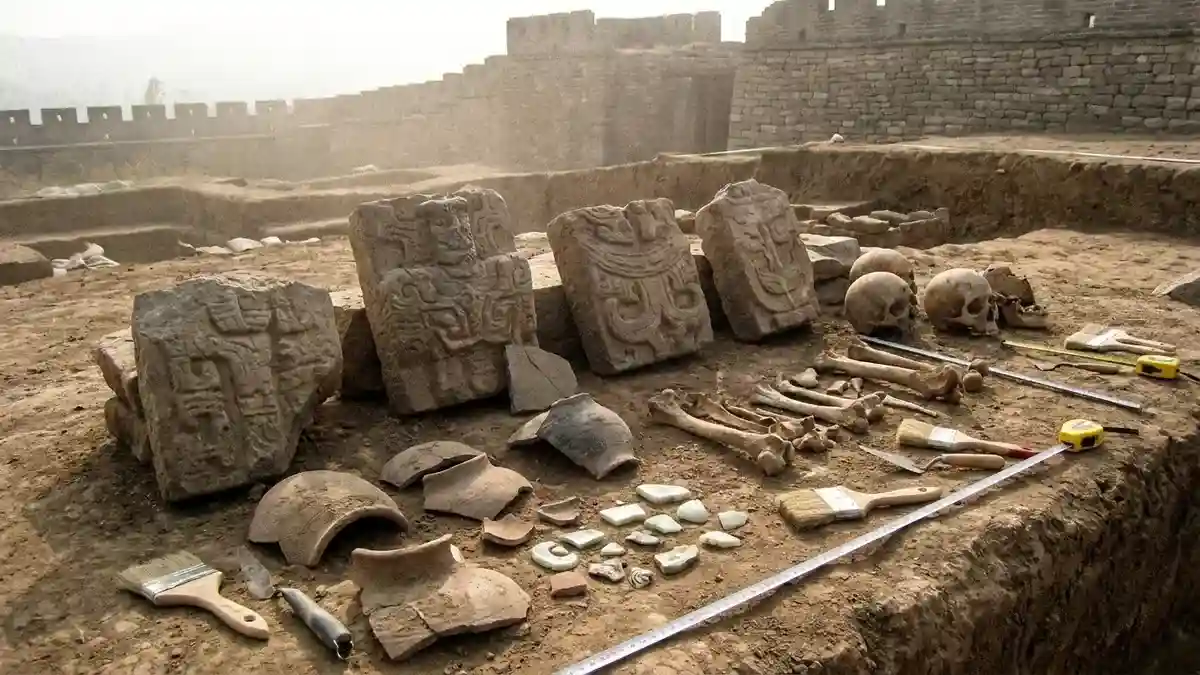
A landmark genetic study has completely transformed our understanding of Shimao, a massive, four-millennium-old fortified stone city in northern Shaanxi, China. Published in the journal Nature, the comprehensive DNA analysis provides the clearest picture yet of the origins, kinship structures, and grim ritual practices of one of East Asia’s earliest and most influential urban centers.
Occupied between 2200 and 1700 BCE, Shimao was a sprawling Late Neolithic metropolis stretching across nearly four square kilometers. Its sophisticated stone architecture, elite stepped palaces, and extensive fortifications have long intrigued historians. Now, by peering directly into the genomes of its builders, scientists have answered long-standing questions about who these people were and how they structured power.
Ancient DNA Rewrites the Secrets of China’s Mysterious Stone City
The Loess Plateau: Deep Roots, Not Sudden Migration
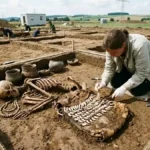
For over a decade, an interdisciplinary team from the Institute of Vertebrate Paleontology and Paleoanthropology meticulously analyzed ancient genomes from 169 individuals. These samples were excavated from the heart of Shimao, its nearby satellite settlements, and surrounding cemetery sites. Out of these, researchers successfully sequenced 144 unrelated individuals, allowing them to map out broad migratory patterns and intricate family trees.
The genetic data shattered theories that Shimao was founded by a sudden wave of foreign invaders or migratory groups. Instead, the study revealed that the overwhelming majority of Shimao’s population descended directly from local groups belonging to the ancient Yangshao culture.
This genetic continuity on the Loess Plateau stretches back at least a full millennium before Shimao’s rise. Rather than a sudden historical rupture, the creation of Shimao was the culmination of long-term, organic regional population growth.
An Ancient Crossroads of Trade and Biology
While the core population was deeply local, Shimao was far from isolated. Its prosperity drew people from vastly different ecological and cultural landscapes, acting as a prehistoric melting pot.
The genetic analysis detected clear DNA signatures from multiple distinct directions:
The Southern Steppe: Genetic links to the Yumin-related pastoralist groups of the northern grasslands.
The Shanxi Basin: Strong genetic input from populations related to the contemporary Taosi culture to the south.
Subtropical South China: Surprising biological traces tied to early rice-farming communities living along the Yangtze River.
These diverse genetic inputs reveal that Shimao sat at the center of an expansive, multi-directional network of economic and cultural exchange, bridging the worlds of northern steppe herders and southern agriculturalists.
Patrilineal Dynasties and the Geography of Ritual Sacrifice
By reconstructing multi-generational pedigrees extending up to four generations, the research team unlocked the inner workings of Shimao’s social hierarchy. The city operated under a strict patrilineal and patrilocal system. This means that wealth, political status, and family lineage were passed exclusively down the male line, and women moved into their husbands’ family households upon marriage.
This highly stratified, male-centric social structure directly dictated the city’s dark religious rituals.
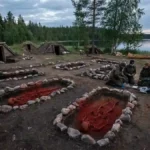
Excavations at Shimao’s monumental East Gate previously unearthed a chilling discovery: approximately 80 severed human skulls buried in distinct pits. Early archaeological hypotheses suggested these pits might represent specialized rituals centered on female victims.
The new genetic evidence completely disproves this theory, confirming that the vast majority of the individuals decapitated at the gate were male.
Conversely, female sacrificial victims were treated differently. The DNA data shows that women selected for sacrifice were placed primarily within elite cemetery zones like Huangchengtai and Hanjiagedan, often buried alongside wealthy tomb owners. This sharp division demonstrates a highly formalized ritual system where gender rigidly dictated a person’s role, location, and manner of death in state ceremonies.
Conclusion
The ancient genomes of Shimao provide the first direct biological blueprint of how early state-level political authority was forged in northern China. By combining deep ancestral roots with far-reaching trade networks and highly controlled, gender-specific ritual practices, the rulers of Shimao built a complex urban society that laid the foundations for early East Asian statehood.
Frequently Asked Questions
What was Shimao and why is it historically important?
Shimao was a massive, fortified stone settlement in northern Shaanxi, China, dating back more than 4,000 years. It is one of the largest late Neolithic urban centers in East Asia, boasting advanced stone masonry, defensive walls, and complex social stratification that marks the dawn of early state-level societies in China.
Where did the people who built Shimao originally come from?
Ancient DNA reveals that the founders of Shimao did not migrate from afar; they were the direct descendants of local Neolithic farming populations belonging to the Yangshao culture. This population had inhabited the Loess Plateau for over a thousand years prior to Shimao’s construction.
How was the society of Shimao organized?
Genetic pedigree tracking across four generations confirms that Shimao was a strongly patrilineal and patrilocal society. Power, lineage, and property were inherited through male lines, and wives permanently relocated to the residential areas of their husbands’ clans.
What did the DNA study reveal about the human sacrifices at the East Gate?
While earlier theories suggested that the 80 severed skulls found at the East Gate belonged to women, the new genetic analysis proves that the vast majority of these victims were actually men.
How did the sacrifice of women differ from that of men in Shimao?
Men were predominantly decapitated and placed in mass pits near defensive structures like the East Gate. In contrast, sacrificed women were primarily buried within high-status, elite cemetery zones (such as Huangchengtai), serving as ritual accompaniments to wealthy tomb owners.