
Table of Contents
**Ancient Bathhouse and Roman Villa with Mosaics Discovered in Alexandria**
Archaeologists in Alexandria, Egypt, have made a remarkable discovery that illuminates centuries of the city’s vibrant history. In the Moharam Bek district, rescue excavations have uncovered a significant site featuring a rare circular Ptolemaic bathhouse and a luxurious Roman villa adorned with stunning mosaic floors. These finds reveal how one neighborhood evolved from the Hellenistic period through Roman and Byzantine times, offering fresh insights into daily life, architecture, and culture in one of the ancient world’s greatest cities.
This exciting discovery highlights Alexandria’s layered past and the wealth of treasures still hidden beneath its modern streets. It provides valuable new data for understanding urban development in the southeastern part of the ancient metropolis.
Ancient Bathhouse and Roman Villa with Mosaics Discovered in Alexandria
### Rescue Excavation Reveals Multi-Period Site
The finds came to light during routine salvage work by Egypt’s Supreme Council of Antiquities. About nine months ago, a construction application near Alexandria Station triggered the excavation. What started as preliminary surveys quickly expanded as multiple occupation layers emerged beneath the contemporary neighborhood.
The site offers a continuous archaeological sequence spanning the Ptolemaic, Roman, and Byzantine eras. This long-term occupation shows that the district remained an active part of Alexandria’s urban fabric for hundreds of years before later shifts in city planning reduced its prominence. The discoveries help fill important gaps in knowledge about the southeastern sector, an area that has received relatively little previous archaeological attention.
### Ptolemaic Tholos Bathhouse: A Public Wellness Center
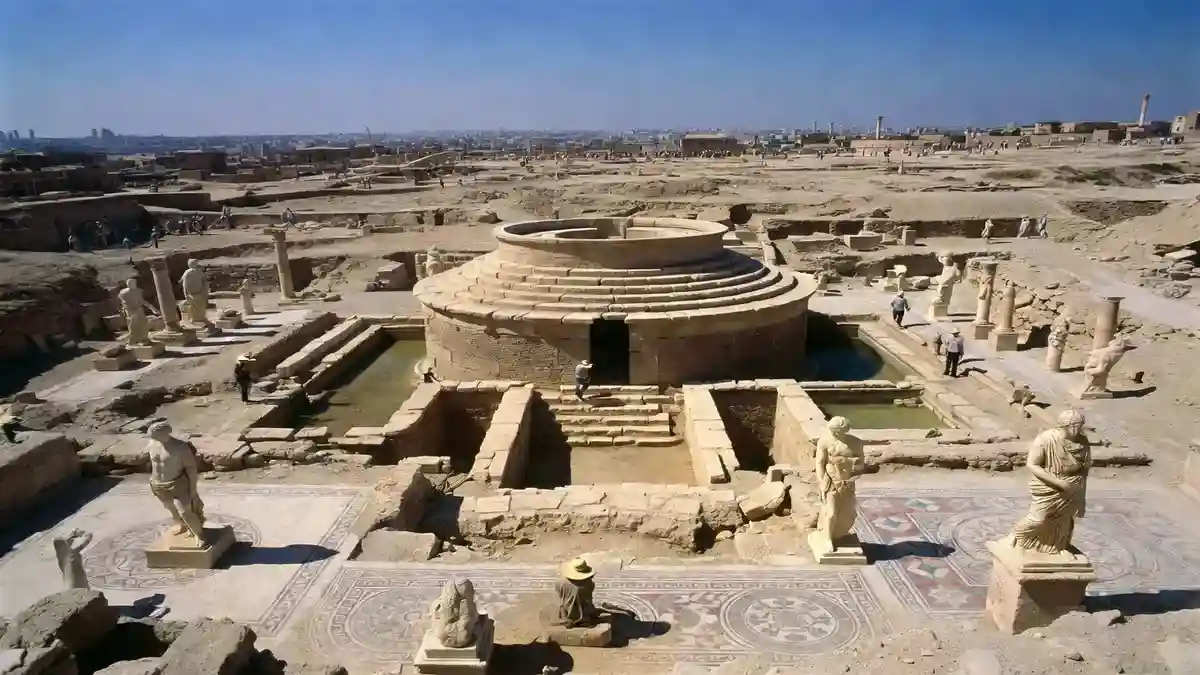
One of the standout features is a circular public bath dating to the late Ptolemaic period. Known as a Tholos-type bath due to its distinctive round design, this structure served essential hygiene needs for residents while possibly offering therapeutic benefits. Public baths in the Hellenistic world were social hubs where people gathered, relaxed, and maintained cleanliness in a Mediterranean climate.
Archaeologists are still mapping the full extent of the bath complex. Early indications suggest additional connected rooms lie nearby, pointing to a larger facility than initially visible. The design reflects advanced engineering typical of Ptolemaic Alexandria, which blended Greek, Egyptian, and emerging Roman influences under the rule of the successors of Alexander the Great.
 Inca Empire (Quiz)
### Luxurious Roman Villa with Exquisite Mosaics
Adjacent to the bathhouse, excavators uncovered the remains of a high-status Roman residential villa. The house clearly belonged to a wealthy family, as evidenced by its sophisticated features and decorative elements. The most impressive discoveries are the well-preserved mosaic floors showcasing multiple artistic techniques.
These include Opus Tessellatum, composed of tiny square tiles forming intricate patterns, and Opus Sectile, featuring larger cut stone pieces arranged into geometric and figurative designs. Such luxurious flooring was a hallmark of elite Roman homes, signaling both aesthetic taste and economic prosperity. The mosaics likely depicted mythological scenes, floral motifs, or geometric borders typical of the period.
The villa also boasted advanced water management systems. A small private bathing pool connected to an organized network of supply channels and drainage demonstrates high levels of comfort and hygiene. These installations highlight Roman engineering expertise and the comfortable lifestyle enjoyed by Alexandria’s upper classes during the imperial period.
### Artifacts and Religious Insights from the Site
The excavation has yielded a rich collection of portable artifacts that bring the ancient residents to life. Finds include coins, oil lamps, everyday pottery vessels, and stamped amphora fragments. These transport containers once carried wine, olive oil, and other goods across the Mediterranean, underscoring Alexandria’s role as a major trading port.
Particularly striking are several marble statues recovered from the site. These include figures associated with Bacchus (Dionysus), the god of wine and revelry, and Asclepius, the Greco-Roman deity of medicine and healing. A headless statue believed to represent Minerva (Athena) was also discovered. The prominent presence of Asclepius has prompted researchers to explore whether parts of the area later functioned as a healing or therapeutic center, possibly linked to the nearby bathhouse.
Such religious artifacts reflect the cultural and spiritual diversity of Roman Alexandria, a cosmopolitan hub where Greek, Egyptian, and Roman traditions intermingled freely.
### Historical Significance for Alexandria’s Urban Development
Alexandria, founded by Alexander the Great in 331 BCE, grew into a center of learning, commerce, and culture under the Ptolemies and later Roman rule. The new finds illustrate how residential and public spaces coexisted and evolved over time. The transition from Ptolemaic to Roman phases shows continuity in urban planning alongside changes in architectural styles and daily practices.
The site’s location near Alexandria Station places it within the historic boundaries of the ancient city. Its preservation through multiple eras before eventual decline provides clues about shifting economic and administrative priorities in late antiquity and the Byzantine period. These discoveries contribute to ongoing efforts to reconstruct the ancient city’s layout, including its streets, neighborhoods, and infrastructure.
### Conservation and Future Display Plans
Archaeologists are proceeding with care to protect the fragile remains. One large section of mosaic flooring remains in situ while experts evaluate the best method for long-term preservation, possibly involving lifting and relocating the surface. Restoration has already begun on smaller objects, including statues and pottery.
Some of the cleaned and conserved artifacts may soon go on display at Alexandria’s renowned Greco-Roman Museum, allowing the public to appreciate these treasures firsthand. Ongoing excavations suggest that more structures and objects could still emerge as work continues in the area.
### Broader Context of Discoveries in Alexandria
Alexandria’s archaeological record is exceptionally rich due to its strategic location and historical importance. Previous finds have included the famous Library, royal palaces, and underwater remains of the ancient harbor. However, urban rescue excavations like this one in Moharam Bek are crucial for understanding less-explored residential districts.
The combination of a public bath and private villa reflects the social fabric of the city—places where elite luxury existed alongside communal facilities accessible to broader populations. Trade artifacts confirm Alexandria’s enduring role connecting Europe, Africa, and Asia through maritime networks.
The Asclepius statues are particularly intriguing. Healing cults were popular in the Roman world, often associated with baths and springs. This site may represent a localized example of such practices, blending medicine, religion, and leisure in daily life.
### Modern Techniques and Collaborative Efforts
Egypt’s Ministry of Tourism and Antiquities coordinates these projects with international partners and local experts. Advanced documentation methods, including photography and detailed recording, ensure that every layer and artifact is properly studied before any construction proceeds.
This approach balances urban growth with heritage protection—a growing priority in historic cities like Alexandria, where modern development frequently intersects with ancient remains.
### Why This Discovery Matters Today
The unearthing of the Ptolemaic bathhouse and Roman villa enriches our understanding of how ordinary and elite residents lived in ancient Alexandria. It demonstrates technological sophistication in water systems, artistic achievement in mosaics, and cultural blending in religious practices. For historians and archaeologists, the site offers a valuable case study in urban continuity and change over nearly a millennium.
Public interest in such discoveries remains high, as they connect modern visitors directly to the world of Cleopatra, Roman emperors, and early Byzantine society. The planned museum displays will help share these stories widely.
As excavations proceed, researchers anticipate even more details about the site’s chronology, function, and connections to other known areas of the city. Each new artifact helps paint a fuller picture of life in this legendary Mediterranean metropolis.
### Conclusion: A Window into Alexandria’s Layered Past
The discovery of an ancient bathhouse and elegant Roman villa with beautiful mosaics in Alexandria’s Moharam Bek district represents a major contribution to Egyptian archaeology. These remains showcase the city’s evolution across Ptolemaic, Roman, and Byzantine periods and highlight the sophisticated lifestyle of its inhabitants.
Through careful rescue excavation, conservation, and future public presentation, this site ensures that Alexandria’s heritage continues to inspire and educate. It reminds us of the city’s enduring legacy as a crossroads of civilizations and the importance of protecting archaeological treasures amid modern development.
As more secrets emerge from beneath the streets, we gain deeper appreciation for the ingenuity, artistry, and daily rhythms of ancient Alexandrians. This find adds vibrant new colors to the tapestry of one of history’s most fascinating cities.
### FAQ: Alexandria Bathhouse and Roman Villa Discovery
**What type of bathhouse was found in Moharam Bek?**
A circular Tholos-style public bath from the late Ptolemaic period, designed for hygiene and possibly therapeutic use, with potential additional rooms still under investigation.
**What makes the Roman villa’s mosaics special?**
They feature high-quality Opus Tessellatum (small square tiles) and Opus Sectile (larger cut stone) techniques, indicating a wealthy owner and advanced artistic craftsmanship.
**Which gods are represented in the marble statues?**
Statues linked to Bacchus (Dionysus), Asclepius (healing), and a headless figure believed to be Minerva (Athena) were recovered, suggesting religious and possibly medical significance.
**How do the finds help understand ancient Alexandria?**
They provide a continuous sequence of occupation layers, filling gaps in the southeastern district and revealing details about urban planning, trade, and daily life across multiple eras.
**Will the public be able to see the artifacts?**
Yes. Restored objects are being prepared for display at Alexandria’s Greco-Roman Museum, and parts of the site may be integrated into future heritage presentations.
**Why was a rescue excavation necessary?**
Modern construction in the area threatened the buried remains, so authorities conducted salvage work to document and preserve the site before development.