
Table of Contents
- 1. Unlocking the Secrets of the Sambaquis
- 1.1. Molecular Fingerprinting via ZooMS
- 2. Engineering the Perfect Weapon: Prehistoric Whale-Bone Harpoons
- 3. Evidence of a Complex Maritime Economy
- 4. Rewriting the Global Whaling Timeline
- 5. Ecological Insights and Modern Conservation
- 6. Frequently Asked Questions
- 6.1. What makes the discovery of the 5,000-year-old harpoons in Brazil so significant?
- 6.2. What are sambaquis and why are they important to this study?
- 6.3. How did scientists prove the harpoons were used to hunt whales?
- 6.4. What technology was used to identify the ancient whale bones?
- 6.5. What does this discovery tell us about ancient Brazilian societies?
5,000-Year-Old Harpoons Reveal Indigenous Whaling in Brazil Emerged Earlier Than Thought
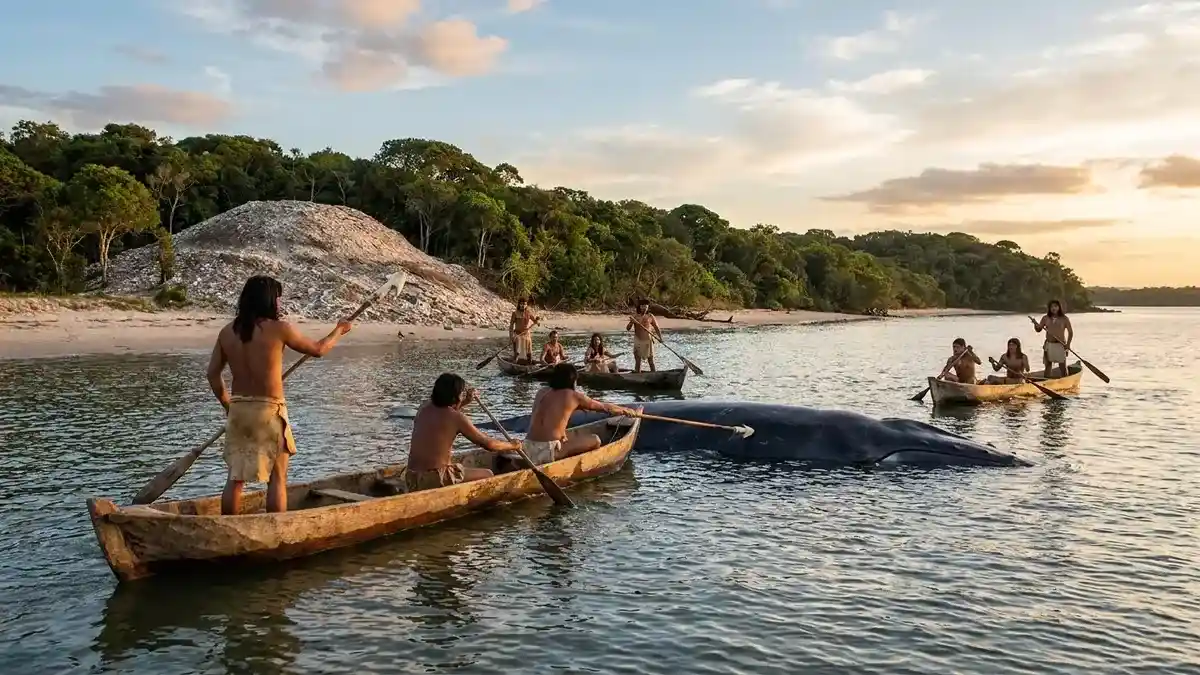
A revolutionary archaeological discovery on the subtropical coast of southern Brazil has completely upended the global history of maritime innovation. By deploying advanced molecular testing and carbon dating on ancient bone tools, an international research team has proven that Indigenous coastal communities were actively hunting massive whales nearly 5,000 years ago.
For over a century, conventional scientific narratives assumed that complex whaling technology was born exclusively in the freezing waters of the Arctic and North Pacific. The astonishing evidence uncovered in Santa Catarina shatters this theory. It establishes that South American societies were successfully engineering heavy weapons and coordinating ocean hunts a full millennium before northern cultures developed similar capabilities, redefining our understanding of early human ingenuity in the Southern Hemisphere.
5,000-Year-Old Harpoons Reveal Indigenous Whaling in Brazil Emerged Earlier Than Thought

Unlocking the Secrets of the Sambaquis
The breakthrough study, published in Nature Communications, focused on material recovered from sambaquis—massive, ancient shell mounds constructed over dozens of generations by prehistoric coastal societies. Located along Babitonga Bay in the state of Santa Catarina, many of these monumental structures have unfortunately been destroyed by modern urban expansion.
Faced with a rapidly disappearing landscape, scientists from the Universitat Autònoma de Barcelona collaborated with the Museu Arqueológico de Sambaqui de Joinville to re-examine legacy collections excavated decades ago. Lead author Krista McGrath and her team utilized cutting-edge technology to analyze hundreds of preserved marine animal bones and specialized bone implements that had long been kept in museum storage.
Molecular Fingerprinting via ZooMS
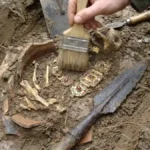
To identify the exact marine species present in the mounds, the team used ZooMS (Zooarchaeology by Mass Spectrometry)—a high-tech method that extracts and analyzes collagen proteins from ancient bones to determine species with absolute precision. The results revealed an incredibly diverse marine hunting portfolio, identifying remains from:
Southern right whales and humpback whales
Blue whales, sei whales, and sperm whales
Multiple regional dolphin species
Engineering the Perfect Weapon: Prehistoric Whale-Bone Harpoons
While the presence of whale bones alone could imply that ancient people merely scavenged dead animals that washed ashore, the discovery of highly specialized hunting weapons proves otherwise.
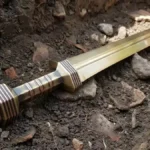
The researchers identified fifteen distinct harpoon components, including projectile heads and heavy foreshafts, meticulously carved directly out of durable whale ribs. Microscopic analysis revealed that these weapons were engineered with sophisticated design features:
Hollowed Sockets: Custom-carved recesses at the base designed to securely hold long wooden shafts.
Hydrodynamic Penetration Tips: Sharpened, tapered points specifically shaped to pierce thick marine blubber and anchor deep within the animal.
[Whale Rib Raw Material] ──► Meticulous Carving ──► Engineered Socket & Tip ──► Attached to Wooden Shaft ──► Heavy-Duty Whaling Harpoon
To establish an airtight timeline, scientists subjected two of the whale-bone harpoon foreshafts to high-precision radiocarbon dating. The results were definitive: the weapons were manufactured between 4,710 and 4,970 years ago, locking in a 5,000-year-old date for active South American whaling.
Evidence of a Complex Maritime Economy
The overwhelming abundance of whale remains matching the exact species targeted by the harpoons strongly supports the conclusion that these communities engaged in organized, intentional hunts.
Furthermore, the vast majority of the analyzed bones showed clear metal-alternative butchery cut marks and came from food refuse rather than decorative ornaments. This indicates that large whales were treated as a standard, staple food resource rather than a rare, purely symbolic catch.
Executing a successful whale hunt close to shore required immense social coordination. A sambaqui community had to organize dedicated boat crews, build stable, seaworthy watercraft, and manufacture heavy weapons capable of bringing down an animal weighing dozens of tons.
This level of organization proves that sambaqui societies were far more socially complex and technologically advanced than older archaeological models, which often minimized them as simple hunter-gatherers who survived by picking up shellfish on the beach.
Rewriting the Global Whaling Timeline
Historically, textbook histories placed the origin of large-scale whaling in the far north. While deer bone harpoons from South Korea date to around 6,000 years ago, traditional Arctic and sub-Arctic whaling cultures typically cluster much later, between 3,500 and 2,500 years ago.
The evidence from southern Brazil completely shifts this global map. By proving that advanced whaling flourished in a subtropical Atlantic environment nearly 5,000 years ago, the study challenges the long-held assumption that early whaling was a specialized technological response restricted to cold, harsh northern climates.
Ecological Insights and Modern Conservation
The ZooMS analysis also provided vital ecological baseline data for modern marine biology. Humpback whale remains were found in surprisingly high numbers within Babitonga Bay. This strong presence suggests that during the mid-Holocene epoch, the bay and its surrounding coastal waters served as an active breeding or calving ground for humpbacks.
In the modern era, humpback breeding grounds are located much farther north along the Brazilian coast due to the catastrophic population collapses caused by industrial commercial whaling in the 19th and 20th centuries.
Interestingly, local scientists note that modern humpback sightings have been steadily increasing along the southern Brazilian coast in recent years. The 5,000-year-old data from the sambaquis proves that these modern whales are not invading new territory; rather, they are undergoing a long-term ecological recolonization of their deeply ancient, ancestral home.
Frequently Asked Questions
What makes the discovery of the 5,000-year-old harpoons in Brazil so significant?
This discovery provides the earliest definitive evidence of active large-whale hunting in South America, predating most well-documented whaling cultures in the Arctic and North Pacific. It proves that complex maritime hunting technologies emerged independently in a subtropical environment far earlier than previously believed.
What are sambaquis and why are they important to this study?
Sambaquis are large, human-made mounds built out of shells, bones, and sediment by ancient Indigenous coastal communities over thousands of years. Because many original sites have been destroyed by modern urban development, the preserved bones and tools saved in museum collections from these mounds provide priceless clues about prehistoric life.
How did scientists prove the harpoons were used to hunt whales?
Researchers identified fifteen distinct harpoon components carved directly from whale ribs. These tools featured specialized engineering, including hollowed-out sockets to attach wooden shafts and intentionally sharpened tips for deep tissue penetration. The weapons were found alongside abundant whale bones showing clear butchery cut marks.
What technology was used to identify the ancient whale bones?
Scientists utilized a cutting-edge molecular method called ZooMS (Zooarchaeology by Mass Spectrometry). This non-destructive technique analyzes preserved collagen proteins inside ancient bone fragments to accurately identify the specific species of animal, including humpback, blue, right, and sperm whales.
What does this discovery tell us about ancient Brazilian societies?
It proves that ancient sambaqui communities possessed a highly complex social organization. Hunting massive whales required sophisticated engineering, seaworthy watercraft, and tightly coordinated, cooperative hunting crews. This shows their economy extended far beyond simple fishing and shellfish gathering.