
Table of Contents
- 1. Unearthing Playa Chica: From Domestic Quarters to Industrial Hub
- 2. The Technology of Ancient Fishers: Pig Tusks and Goat Horns
- 3. Inside the Ancient Processing Plant: Smoking, Drying, and Preservation
- 4. Reconstructing the Menu: What the Indigenous Islanders Caught
- 4.1. Inshore Species and Shallow-Water Catching
- 4.2. Mollusks and Sea Urchins
- 4.3. Supplementary Inland Foods
- 5. Overturning Historical Myths: The Power of the Canarian Maritime Economy
- 6. Connecting to the African Mainland: The Berber Maritime Legacy
- 7. Looking Ahead: The Future of Canarian Coastal Archaeology
- 8. Frequently Asked Questions
- 8.1. What makes the Playa Chica archaeological site so significant?
- 8.2. How did the ancient inhabitants preserve their seafood without refrigeration?
- 8.3. What kinds of tools did the ancient Canarian fishers use?
- 8.4. Who were the original inhabitants of the Canary Islands during this period?
- 8.5. How did this coastal site impact communities living further inland?
New Canary Islands Discovery Rewrites Ancient Maritime History
A groundbreaking archaeological excavation on the northwest coast of Gran Canaria has unveiled a sophisticated, 800-year-old seafood processing hub. The discoveries at the Playa Chica site challenge long-held historical assumptions, proving that the Indigenous Berber-descended populations of the Canary Islands maintained a highly organized marine economy and robust coastal-to-inland trade networks centuries before European colonization.
New Canary Islands Discovery Rewrites Ancient Maritime History
Unearthing Playa Chica: From Domestic Quarters to Industrial Hub
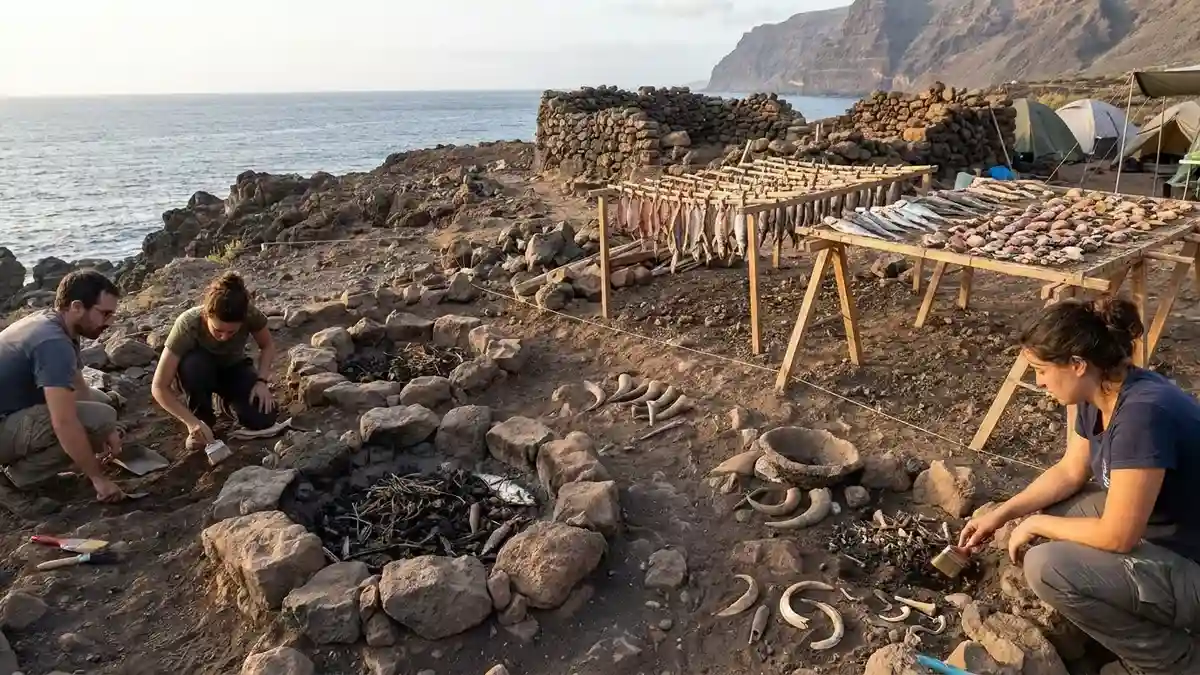
Nestled near Sardina on Gran Canaria’s northwest coast, the archaeological site of Playa Chica has provided scientists with a pristine window into the past. Excavations reveal a deep, multi-layered history stretching from the 6th century through the 13th century CE. However, the most dramatic revelation occurred during the final phase of occupation, dating between the 11th and 13th centuries CE.
During its earliest eras, Playa Chica served a standard domestic function. Archaeologists uncovered the remains of a stone residential building filled with the remnants of everyday household life. But by the 11th century, the site underwent a radical transformation. The residential footprint disappeared, replaced by a specialized, large-scale marine processing facility designed to handle massive quantities of seafood.

Researchers from the multi-disciplinary team isolated distinct operational areas across the site, mapping out specialized zones designated for heavy processing, tool manufacturing, and smoking. This shift indicates a conscious transition from a subsistence-based lifestyle to a targeted, surplus-driven maritime industry.
The Technology of Ancient Fishers: Pig Tusks and Goat Horns
The sheer volume of marine remains recovered at Playa Chica forced researchers to look closely at the specialized toolkit developed by these Indigenous communities. Rather than relying on basic scavenging, the island’s inhabitants engineered unique tools from local livestock to maximize their maritime harvest.
Among the most significant artifact discoveries were unique fish-scaling tools crafted from goat horn cores. The site yielded not only the finished descalers but also hundreds of horn fragments, proving that the manufacturing of these specialized tools occurred directly on-site. When found in the excavated soil layers, these goat horn tools were completely surrounded by billions of microscopic fish scales embedded in the black volcanic beach sand.

In addition to the scaling tools, archaeologists recovered delicate, highly functional fishhooks carved entirely from pig tusks. These hooks, combined with the presence of specialized net-sinking stones, demonstrate that the Indigenous fishers possessed a sophisticated understanding of marine technology. They utilized a diverse array of angling, trapping, and netting techniques tailored to the specific behaviors of local marine wildlife.
Inside the Ancient Processing Plant: Smoking, Drying, and Preservation
To understand how a coastal site could support inland populations, scientists analyzed the environmental and chemical signatures left behind in the soil. The most compelling evidence for a large-scale preservation industry came from the discovery of twenty-nine distinct ancient hearths packed into a concentrated area.
+-------------------------------------------------------------------------+
|                      PLAYA CHICA SMOKE PRODUCTION                       |
+------------------------------------+------------------------------------+
| Fuel Source                        | Industrial Function                |
+------------------------------------+------------------------------------+
| Canary Island Pine Cones           | Dense, heavy smoke generation      |
| Sedge Rhizomes                     | Controlled, low-temperature burn   |
| Euphorbia Plant Matter             | Slow-burning fuel for preservation |
+------------------------------------+------------------------------------+
An intensive analysis of the charcoal and plant remains within these hearths revealed that they were intentionally operated at consistently low temperatures. This is a classic indicator of smoking and drying operations rather than high-heat cooking.
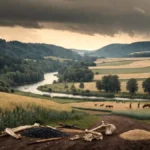
To create the thick, preserving smoke necessary to cure fish, the workers gathered specific local flora known for high smoke outputs, including Canary Island pine cones, sedge rhizomes, and desert plants from the Euphorbia family.
Smoking and drying drastically reduced the moisture content of the seafood, slowing spoilage and preventing bacterial growth. This preservation step was vital, as it allowed volatile organic proteins to be stored safely and transported across rugged volcanic terrains without rotting.
Reconstructing the Menu: What the Indigenous Islanders Caught
The biological data recovered from the latest occupational phase at Playa Chica indicates a sustained, intensive harvesting strategy rather than occasional, opportunistic fishing trips. The sheer quantity of marine biomass points to an ecosystem that was systematically managed.
Inshore Species and Shallow-Water Catching
The vast majority of the recovered fish bones belonged to species that thrive in shallow coastal waters and rocky intertidal zones. This suggests that while the fishers were highly efficient, their operations were focused on the rich, predictable waters close to the shore, utilizing small watercraft or shore-based netting systems.
Mollusks and Sea Urchins
Shellfish made up a massive portion of the total archaeological assemblage. Millions of discarded shells from local mollusks and sea urchins formed thick, compacted layers across the site. The data indicates these species were harvested in bulk, shucked on the beach, and processed alongside the fish catches.
Supplementary Inland Foods
While marine resources dominated the site, archaeologists also found traces of agricultural goods, including carbonized grains of barley, durum wheat, and common figs. These items were likely brought to the coast by inland traders to sustain the maritime workers, highlighting a bi-directional economic relationship between different regions of the island.
Overturning Historical Myths: The Power of the Canarian Maritime Economy
For decades, mainstream historical narratives suggested that the pre-Hispanic Indigenous societies of the Canary Islands relied almost exclusively on land-based agriculture and livestock herding, viewing marine resources as a desperate fallback during times of drought. The discoveries at Playa Chica thoroughly dismantle this myth.
The structural layout of the site—characterized by an abundance of processing tools, massive concentrations of fish scales, and an total absence of standard residential pottery—proves that the sea was central to the island’s economic identity.
Playa Chica functioned as a specialized industrial node within a larger network. The volume of seafood processed here far exceeded what a local coastal community could consume. Instead, this hub generated a reliable food surplus that was systematically packed, preserved, and funneled through established coastal-inland trade networks to feed larger populations living in the interior highlands of Gran Canaria.
Connecting to the African Mainland: The Berber Maritime Legacy
The implications of the Playa Chica excavation extend far beyond the geography of the Canary Islands. The Indigenous populations of the archipelago, collectively known as the Guanches or ancient Canarians, were descendant lineages of Berber populations who migrated from Northwestern Africa during the first millennium CE.
Tracing the maritime traditions of these ancient Berber groups along the Atlantic coast of mainland Africa has proven difficult for historians due to poor preservation and limited coastal excavations on the continent. Consequently, the pristine preservation conditions at Playa Chica provide invaluable insights into how these early African diasporas interacted with island ecosystems.
The site proves that these populations possessed deep ecological knowledge, successfully adapting mainland resource management strategies to dominate a challenging, isolated island environment.
Looking Ahead: The Future of Canarian Coastal Archaeology
While the findings at Playa Chica offer an unprecedented look at ancient seafood processing, researchers emphasize that this is only the beginning. Massive stretches of the Canary Islands’ coastlines remain unexcavated, leaving open the question of whether Playa Chica was a unique anomaly or part of an archipelago-wide network of industrial fishing hubs. Future excavations targeting similar coastal formations will clarify how deeply integrated this maritime economy truly was across the ancient Atlantic world.
Frequently Asked Questions
What makes the Playa Chica archaeological site so significant?
Playa Chica provides the first definitive evidence of a specialized, industrial-scale seafood processing and preservation center in the pre-Hispanic Canary Islands, proving that the Indigenous economy was highly sophisticated and reliant on the sea.
How did the ancient inhabitants preserve their seafood without refrigeration?
The islanders built low-temperature smoking hearths fueled by specific smoke-producing plants, such as Canary Island pine cones and sedge rhizomes. Smoking and drying dried out the fish, preventing spoilage and extending its shelf life for storage and transport.
What kinds of tools did the ancient Canarian fishers use?
Archaeologists discovered specialized fish-scaling tools modified from goat horn cores and durable fishhooks carved out of pig tusks, showing an innovative reuse of domestic animal remains for maritime industries.
Who were the original inhabitants of the Canary Islands during this period?
The pre-Hispanic inhabitants of the islands were Indigenous populations descended from North African Berber groups who settled the archipelago during the first millennium CE.
How did this coastal site impact communities living further inland?
Because the site produced massive food surpluses, the preserved fish and shellfish were transported via local trade networks to inland settlements, creating a vital economic connection between coastal workers and interior farmers.