
Table of Contents
- 1. The Temasek Wreck: An Underwater Time Capsule
- 2. Unlocking a Record-Breaking Treasure Trove of Porcelain
- 2.1. Jingdezhen Imperial Wares
- 2.2. Longquan Celadon
- 2.3. Regional Industrial Commodities
- 3. Dating the Disaster: The Lotus Pond and Mandarin Ducks
- 4. Mapping the Route: Destined for Temasek, Not India
- 5. Overturning colonial Myths of a “Sleepy Fishing Village”
- 6. Frequently Asked Questions
- 6.1. What is the Temasek Wreck?
- 6.2. What did the ship’s cargo consist of?
- 6.3. How did scientists figure out exactly when the ship sank?
- 6.4. How do researchers know the ship was headed to Singapore?
- 6.5. Why does this discovery change Singapore’s official history?
Singapore Shipwreck Discovery Rewrites Island’s 14th-Century History
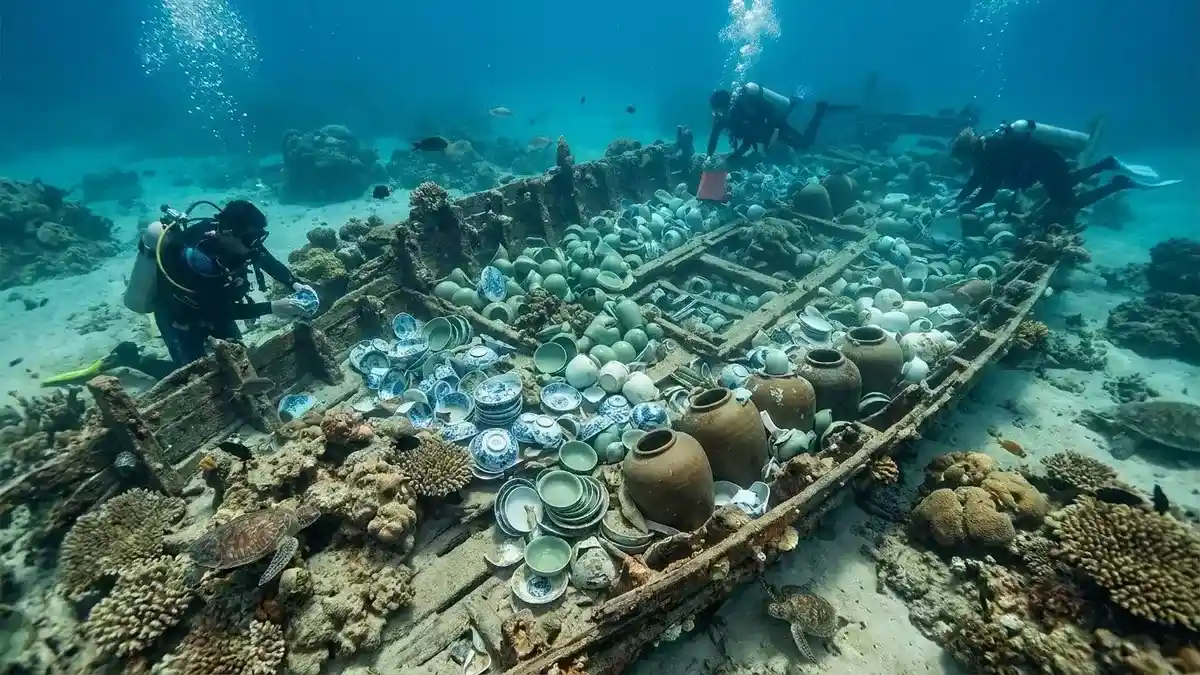
The discovery of Singapore’s earliest known shipwreck has provided definitive proof that the island was a thriving, globally integrated trading port centuries before British colonization. The vessel, named the Temasek Wreck, sank between 1340 and 1352. It was recovered during a meticulous four-year maritime excavation off the coast, revealing an unprecedented cargo of imperial Chinese porcelain and commercial ceramics.
Singapore Shipwreck Discovery Rewrites Island’s 14th-Century History
The Temasek Wreck: An Underwater Time Capsule
Long before modern Singapore became a global financial hub, the island was known locally as Temasek, functioning as a vital maritime entrepôt (a specialized port where goods are imported, stored, and re-exported) connecting East Asian merchants with broader Southeast Asian and Indian Ocean trade networks.
Between 2016 and 2019, marine archaeologists executed a highly technical recovery operation in Singapore’s coastal waters. They brought up roughly 3.5 tonnes of ancient ceramic cargo from the seabed.
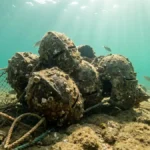
While the vessel’s wooden hull completely rotted away over 600 years in the warm, tropical waters, the dense cargo remained locked in a perfectly chronological matrix on the ocean floor.
Unlocking a Record-Breaking Treasure Trove of Porcelain
The sheer volume and quality of the recovered ceramics have stunned historians. The excavation yielded approximately 136 kilograms of highly valuable blue-and-white porcelain originating from the legendary kilns of Jingdezhen. This marks the largest concentration of this specific high-grade pottery ever found on any documented shipwreck in the world.
A comprehensive analysis of the assemblage, published by Dr. Michael Flecker of Heritage SG in the Journal of International Ceramic Studies, meticulously mapped out the origins of the ship’s diverse cargo:
Jingdezhen Imperial Wares
In addition to the classic blue-and-white porcelain, the ship carried delicate qingbai and shufu wares—milky-white glazed ceramics highly sought after by royal courts and wealthy elite merchants across Asia.
Longquan Celadon
The recovery team pulled up significant quantities of prized Longquan celadon, famous for its thick, jade-green glaze and smooth, durable finish.

Regional Industrial Commodities
The lower holds of the vessel were packed with functional, utilitarian greenware from Fujian kilns, white ceramics from Dehua, and large, thick-walled brown stoneware storage jars from Cizao, which were typically used to transport bulk liquids, oils, and foodstuffs.
Dating the Disaster: The Lotus Pond and Mandarin Ducks
To establish the exact timeline of the ship’s final voyage, researchers analyzed the stylistic iconography painted on the tableware. Several of the recovered blue-and-white ceramic bowls feature a recurring decorative motif: mandarin ducks swimming peacefully through a lotus pond.
Historical production records show that the manufacturing of this specific duck-and-lotus design was restricted to a remarkably brief historical window during the Yuan Dynasty. Production ceased abruptly when widespread socio-political unrest disrupted kiln operations across China in the mid-14th century.
This tight stylistic window allows archaeologists to confidently date the shipwreck between 1340 and 1352 CE, offering a precise snapshot of international trade patterns during the twilight decades of Mongol rule in China.
Mapping the Route: Destined for Temasek, Not India
By analyzing the cargo’s composition and dimensions, Dr. Flecker and his team successfully reconstructed the vessel’s planned voyage and ultimate destination. The ship was almost certainly a Chinese ocean-going junk that originally set sail from the bustling international port of Quanzhou.
+-------------------------------------------------------------------------+
|                  14th-CENTURY CERAMIC CARGO PROFILES                    |
+------------------------------------+------------------------------------+
| Indian Ocean Market Standard       | Temasek Wreck Excavation Finds     |
+------------------------------------+------------------------------------+
| Massive platters (40–50 cm wide)   | Modest tableware (under 35 cm wide)|
| Tailored for Middle East dining    | Matches residential domestic sites |
| Meant for long-distance transit    | Identical to Fort Canning shards   |
+------------------------------------+------------------------------------+
The absence of massive, oversized blue-and-white platters measuring 40 to 50 centimeters across is a critical piece of geographical evidence. These massive serving dishes were highly prized for communal dining traditions in India and the Middle East, and ships heading toward the Indian Ocean routinely carried them.
Instead, the platters found on the Temasek Wreck all measure under 35 centimeters across. These smaller, specialized proportions match the domestic fragments unearthed at land-based archaeological digs around Singapore, including elite residential zones at Fort Canning. This perfect stylistic alignment proves the ship wasn’t passing through—it was carrying a cargo specifically tailored to the tastes and needs of the local Temasek populace.
Overturning colonial Myths of a “Sleepy Fishing Village”
For generations, popular colonial-era historical narratives maintained that prior to the arrival of Sir Stamford Raffles and the British East India Company in 1819, Singapore was merely a quiet, isolated fishing settlement of little consequence.
The recovery of the Temasek Wreck completely dismantles this colonial narrative. A vessel packed with tons of commercial cargo and the world’s highest concentration of elite Yuan Dynasty porcelain does not navigate toward an insignificant fishing village.
The shipwreck provides undeniable maritime evidence that 14th-century Singapore was a wealthy, influential, and highly secure trading node. It possessed an organized port authority capable of receiving massive ocean-going commercial junks, handling high-value luxury transactions, and distributing specialized goods down through regional economic networks centuries before European powers arrived in the Straits of Malacca.
Frequently Asked Questions
What is the Temasek Wreck?
The Temasek Wreck is a mid-14th-century Chinese merchant vessel that sank in Singapore’s waters between 1340 and 1352 CE. It represents the earliest known shipwreck ever discovered within the country’s maritime borders.
What did the ship’s cargo consist of?
The ship carried roughly 3.5 tonnes of ceramic goods. This included 136 kilograms of elite blue-and-white porcelain from Jingdezhen, high-quality Longquan celadon, white glazed Dehua pottery, and large brown Cizao stoneware storage jars.
How did scientists figure out exactly when the ship sank?
Archaeologists targeted specific decorative motifs on the porcelain, such as mandarin ducks swimming in a lotus pond. This pattern was only manufactured during a very short window in the Yuan Dynasty before political rebellion shut down Chinese kilns, placing the wreck between 1340 and 1352 CE.
How do researchers know the ship was headed to Singapore?
The sizes and styles of the wreck’s dishes (all under 35 cm) perfectly match ceramic fragments excavated on land at Singapore’s Fort Canning. The cargo lacked the much larger 40 to 50 cm platters typically produced for the Indian and Middle Eastern markets, showing it was packed specifically for the local Singapore market.
Why does this discovery change Singapore’s official history?
It completely disproves the outdated idea that precolonial Singapore was just an isolated, quiet fishing village. The immense volume and luxury status of the cargo prove that 14th-century Singapore was a sophisticated, highly active international trading hub integrated into global networks.