
Table of Contents
- 1. The Intensive Craftsmanship of Chinchorro Mummification
- 2. Arsenic Poisoning and the Tragedy of Infant Mortality
- 3. From Private Mourning to a Shared Cultural Identity
- 4. The Toxic Cost of Ancient Artistry
- 5. A Lasting Legacy of Prehistoric Creativity and Resilience
- 6. Frequently Asked Questions
- 6.1. Why did the Chinchorro culture mummify their dead?
- 6.2. How did the local environment impact the Chinchorro people?
- 6.3. How does Chinchorro mummification compare to Egyptian mummification?
- 6.4. What was the difference between the black and red mummies?
- 6.5. What health risks did the Chinchorro face from making mummies?
7,000-Year-Old Chinchorro Mummies: A Prehistoric Response to Widespread Grief
An innovative perspective published in the Cambridge Archaeological Journal is rewriting what we know about the world’s oldest artificial mummies. While the incredibly sophisticated mortuary practices of the Chinchorro culture in northern Chile have long been studied as technical or religious milestones, a new study suggests a deeply emotional origin. The research proposes that artificial mummification originally emerged not merely as a ritual, but as a profound form of ancient grief therapy—a collective psychological defense mechanism against devastating infant loss within the harsh Atacama Desert.
Dating back between 7,000 and 3,500 years ago, these hunter-gatherer creations predate the famous artificial mummies of ancient Egypt by thousands of years. By looking past the complex chemistry and structural engineering of the remains, scientists are uncovering a heartbreaking story of environmental tragedy, parental love, and artistic expression born from trauma.
7,000-Year-Old Chinchorro Mummies A Prehistoric Response to Widespread Grief
 4,000-Year-Old Child’s Skull Surgery Uncovered in Uzbekistan Changes Ancient Medical History
The Intensive Craftsmanship of Chinchorro Mummification
The Chinchorro people were highly mobile hunter-gatherers who settled along the hyper-arid coast of the Atacama Desert. While their daily survival relied on highly skilled fishing and marine foraging, their intellectual and spiritual lives found expression through an extraordinarily complex relationship with the dead.
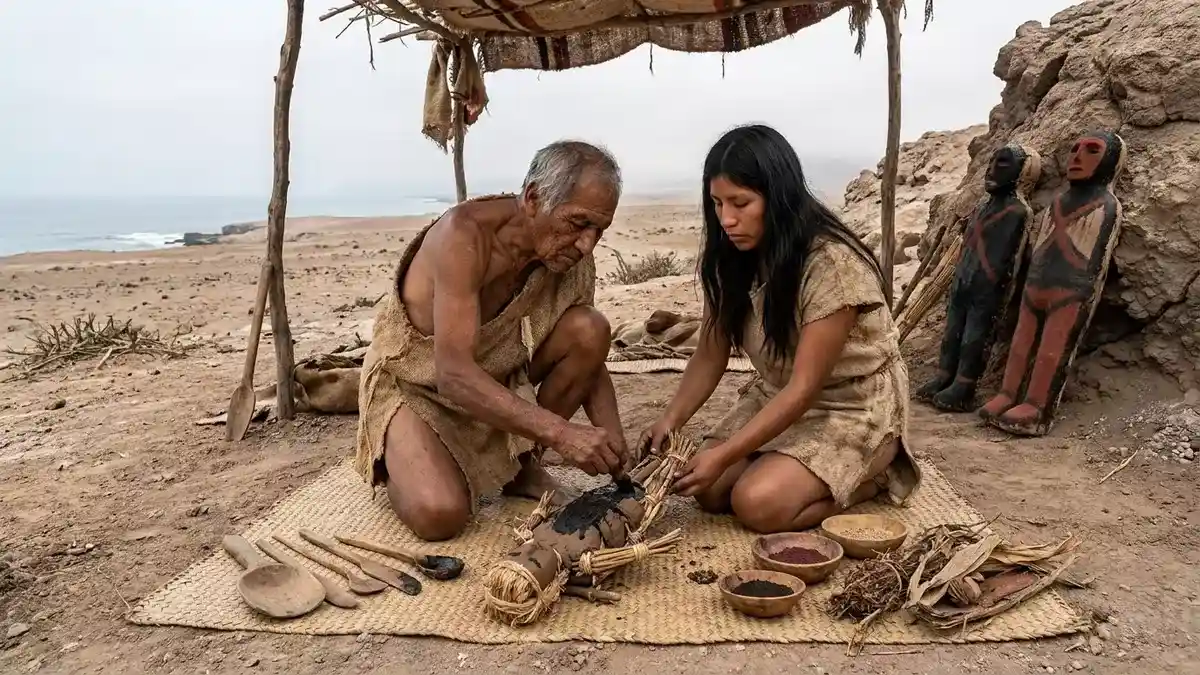
Unlike many nomadic societies that utilized simple burials, the Chinchorro developed an incredibly intensive, creative, and physically demanding method of body preservation. The process was less about passive preservation and more about active reconstruction:
Disassembly and Reinforcement: The specialists completely disassembled the anatomy of the deceased, carefully removing internal organs and skin. They then reinforced the skeletal framework using wooden sticks, plant fibers, clay, and tightly packed soil.
Anatomical Recreation: Once structurally sound, the body was meticulously reassembled. The embalmers went so far as to sculpt missing tissue, frequently recreating facial features and genitalia out of clay to give the deceased a lifelike, stylized form.
Pigment Coating: Finally, the entire body was sealed. In the earliest eras of the practice, the completed figures were coated in a thick, polished black paste made from manganese. In later centuries, this style transitioned into the use of vibrant red ocher.
Arsenic Poisoning and the Tragedy of Infant Mortality
To understand why a hunting-and-gathering community would dedicate such immense time and material wealth to preserving human remains, researchers looked closely at the local environment. The study highlights a tragic geographic reality centered in regions like the Camarones Valley.
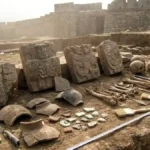
This coastal desert landscape features water sources naturally contaminated with extreme, toxic levels of arsenic. For ancient populations drinking from these streams, long-term exposure would have had catastrophic biological consequences. High arsenic levels cause severe reproductive issues, including chronic miscarriages, stillbirths, and exceptionally high infant mortality rates.
For small, tightly knit coastal communities whose long-term survival depended on successful reproduction, losing a significant percentage of their children was an immense emotional and social strain. The study asserts that the very first phase of the Chinchorro mummification tradition focused exclusively on these lost infants and young children.
Faced with unbearable loss, parents chose not to hide the dead underground. Instead, they transformed the tiny, fragile bodies of their children into durable, beautifully designed, and visually striking statues. This artistic process provided a physical outlet for processing grief, allowing grieving parents to symbolically retain their lost children within the social world of the living.
From Private Mourning to a Shared Cultural Identity
Over generations, what likely began as an intimate, emotionally charged response to individual family trauma expanded in scope. The practice evolved from a specialized grief therapy for lost children into a defining, widespread cultural tradition applied to all members of Chinchorro society, regardless of their age, social status, or sex.
As the centuries progressed, the mummies began to feature highly standardized artistic styles and elaborate ornamentation. What started as an anchor for parental grief transformed into a complex system of communal memory and social visibility. By creating permanent, recognizable figures of their ancestors, the Chinchorro constructed a visual landscape of the dead that reinforced their connection to the land and to each other, cementing their collective identity through mortuary art.
The Toxic Cost of Ancient Artistry
While the black manganese mummies represent a staggering creative achievement, the new research exposes a dark, unintended consequence of this ancient art form. Sifting through bioarchaeological data, scientists discovered that the heavy use of manganese pigments actively poisoned the living.
Chemical analyses of Chinchorro skeletal remains revealed severely elevated levels of manganese. Constant exposure to and handling of this raw mineral during the intensive preparation process likely led to severe neurological disorders among the living artisans. Over time, chronic manganese toxicity causes permanent brain damage, resulting in symptoms that closely mimic Parkinsonian syndromes, including tremors, rigidity, and motor cognitive difficulties.
Archaeologists suspect that these severe, observable health risks eventually forced a dramatic shift in Chinchorro cultural practices. The alarming physical toll of the chemical likely explains why the culture ultimately abandoned the iconic black manganese pigments altogether, adapting their artistic style to utilize safer, iron-based red ocher for their ancestral preservation.
A Lasting Legacy of Prehistoric Creativity and Resilience
The Chinchorro mummies stand as a powerful testament to human resilience. They show that even in the deepest reaches of prehistory, human beings did not experience loss as a simple fact of nature. Instead, when confronted with the crushing weight of environmental poisoning and the loss of their children, they turned to profound creativity, using chemistry, sculpture, and communal art to heal the psychological wounds of a grieving society.
Frequently Asked Questions
Why did the Chinchorro culture mummify their dead?
While initially viewed as a purely religious or technological development, new research indicates that Chinchorro mummification emerged as an emotional coping mechanism. It functioned as a form of ancient grief therapy, helping parents process intense emotional trauma caused by widespread infant mortality.
How did the local environment impact the Chinchorro people?
The water sources in the Atacama Desert, particularly in areas like the Camarones Valley, contained dangerously high levels of natural arsenic. This chronic toxicity caused high rates of miscarriages, stillbirths, and infant deaths, which deeply strained the small coastal communities.
How does Chinchorro mummification compare to Egyptian mummification?
The Chinchorro culture began artificially preserving their dead roughly 7,000 years ago, making their mummies thousands of years older than those found in ancient Egypt. Furthermore, their process was uniquely artistic, involving the complete disassembly, structural reinforcement with sticks and clay, and sculptural painting of the body.
What was the difference between the black and red mummies?
The colors represent different historical periods and materials. The older style utilized black manganese paste to coat and polish the reinforced bodies. Due to health risks associated with manganese, later generations transitioned to using red ocher, a safer, iron-rich mineral pigment.
What health risks did the Chinchorro face from making mummies?
The artisans who prepared the earliest mummies were exposed to toxic levels of manganese. Bioarchaeological evidence shows that this exposure led to severe manganese poisoning, which causes debilitating neurological conditions similar to Parkinson’s disease, eventually forcing the culture to change its methods.