
Table of Contents
- 1. A Chronological First for the Caucasus Region
- 2. Pushing Back the Roots of Tabakoni to the Middle Bronze Age
- 3. Continuous Adaptation Over Abandonment
- 4. Connecting Colchis to the Wider Eurasian World
- 5. The Twilight and Legacy of the Tabakoni Mound
- 6. Frequently Asked Questions
- 6.1. What makes the Tabakoni archaeological site unique?
- 6.2. How did scientists determine the exact age of the wooden structures?
- 6.3. When was the Tabakoni mound first settled?
- 6.4. Why is the discovery of millet at the site important?
- 6.5. Did people live at Tabakoni continuously without stopping?
Bronze Age Settlement at Georgia’s Tabakoni Mound Rewrites Caucasus History
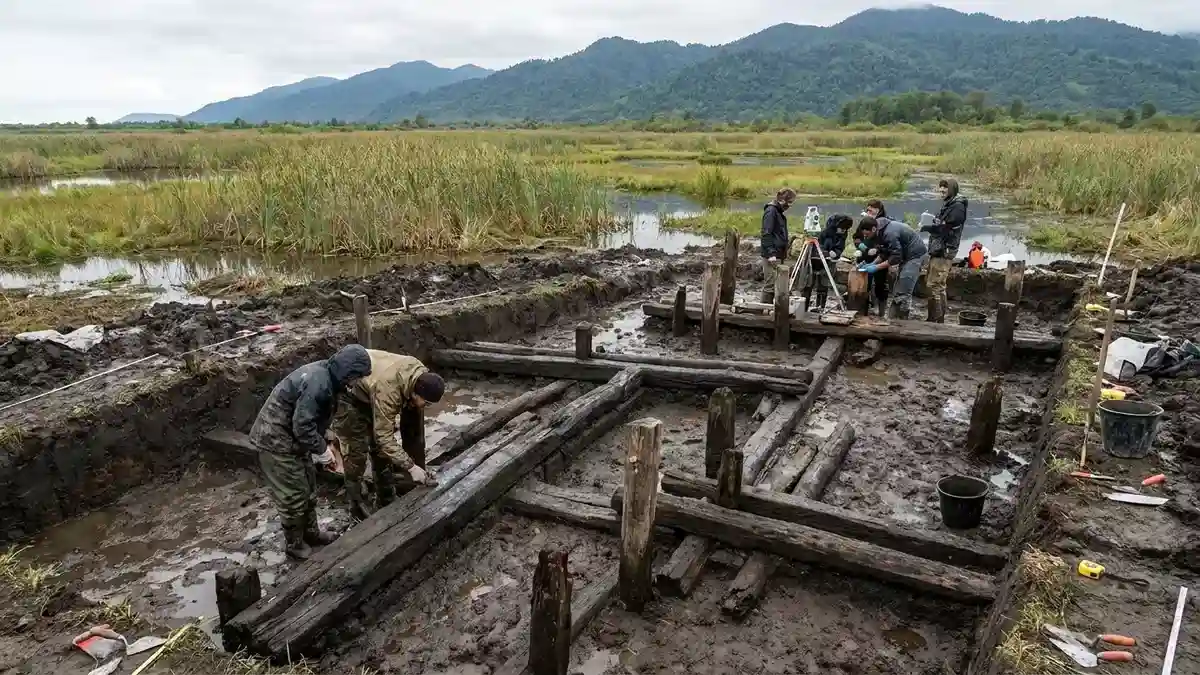
An international archaeological breakthrough in western Georgia has established the first precise timeline for the ancient Tabakoni settlement mound. Situated in the waterlogged Colchis lowlands of the eastern Black Sea region, this remarkable site has surrendered incredibly well-preserved wooden architecture that dates back nearly 4,000 years.
By applying an innovative mix of tree-ring analysis and carbon dating to water-soaked timbers, a joint Georgian-German research team has unlocked centuries of structural secrets. The findings, published in the journal Antiquity, show how early human societies continuously modified their landscape to conquer a challenging environment throughout the Bronze and Iron Ages.
Bronze Age Settlement at Georgia’s Tabakoni Mound Rewrites Caucasus History
A Chronological First for the Caucasus Region
Between 2011 and 2017, a multidisciplinary team of archaeologists set out to excavate the Tabakoni tell—a type of archaeological mound formed by generations of people living and building on the exact same spot. Because the site is located in a highly waterlogged environment, oxygen was kept away from buried organic materials, protecting complex wooden foundations from rotting over the millennia.
This rare preservation allowed scientists to combine two advanced dating techniques for the first time in Caucasus archaeology:
Dendrochronology (Tree-Ring Dating): Matching the distinct growth ring patterns of the recovered timbers to create an exact, year-by-year chronological sequence.
Radiocarbon Wiggle-Matching: Anchoring carbon-14 measurements directly onto the tree-ring sequences to narrow down the margin of error to mere decades, rather than centuries.
By using the wood as a precise clock, the team successfully mapped out individual construction events buried deep within the mound’s stratigraphy, creating a highly accurate timeline for human activity in ancient Colchis.
Pushing Back the Roots of Tabakoni to the Middle Bronze Age
The newly established timeline reveals that human engineering at Tabakoni began much earlier than previously assumed. Laborers started constructing the stable wooden and earth foundations of the artificial mound as early as the 20th century BCE. This pushes the origins of the settlement squarely into the Middle Bronze Age.

Beyond structural engineering, this foundational layer yielded a major botanical discovery: some of the earliest physical evidence of millet cultivation in the Colchis region.
Millet is a fast-growing, highly resilient cereal crop that requires minimal water but handles damp conditions well. Finding carbonized millet seeds paired with early building phases indicates that the first settlers at Tabakoni were not just casually occupying the land; they were deliberately introducing agricultural strategies specifically tailored to survive and thrive in the humid, unpredictable climate of the Colchian plain.
Continuous Adaptation Over Abandonment
The stratigraphic layers of the Tabakoni mound tell a fascinating story of architectural persistence. Rather than being a site that communities abandoned completely only for an entirely separate culture to reclaim it centuries later, Tabakoni shows a pattern of intentional, continuous modification.
As old wooden structures decayed or became unsuited for the community’s needs, the inhabitants did not walk away. Instead, they leveled the existing buildings and used earth to intentionally backfill the spaces. This created a fresh, elevated platform upon which they constructed the next generation of homes and communal spaces.
This repeated cycle of building, leveling, and backfilling caused the settlement mound to slowly rise higher and higher over the centuries. While the site experienced periods of intermittent use rather than completely unbroken daily occupation, the overarching sequence shows that the location was continually modified and reused to meet shifting social demands, population pressures, and evolving environmental conditions.
Connecting Colchis to the Wider Eurasian World
The architectural transformations uncovered at Tabakoni carry significant weight in broader historical debates regarding Bronze Age settlement patterns across the South Caucasus. The practice of repeatedly remodeling and elevating a single mound closely parallels the development of famous “tell” sites found throughout ancient Eurasia, demonstrating that the peoples of the Black Sea coast were connected to widespread architectural trends.
Furthermore, the evidence of millet farming alters our understanding of ancient food production. It shows that agricultural strategies in the South Caucasus were incredibly varied, with distinct pocket communities choosing specific crops perfectly adapted to local soil and weather profiles rather than relying on a single, uniform farming model.
The Twilight and Legacy of the Tabakoni Mound
The long, vibrant history of the Tabakoni settlement finally came to a close during the second half of the first millennium BCE. After centuries of serving as a hub of adaptation, structural remodeling, and agricultural resilience, the mound was permanently abandoned during the Iron Age.
However, the modern data extracted from its timbers has forever changed the region’s historical framework. By introducing a new gold standard of chronological precision, the Tabakoni project opens up fresh pathways for understanding the profound social, economic, and environmental shifts that shaped the ancient Black Sea world.
Frequently Asked Questions
What makes the Tabakoni archaeological site unique?
Tabakoni is a waterlogged settlement mound in western Georgia. Because the soil remained saturated with water, oxygen was blocked out, which miraculously preserved ancient wooden structures and timbers that would normally rot away in dry soil over thousands of years.
How did scientists determine the exact age of the wooden structures?
Archaeologists used a combination of radiocarbon dating and dendrochronology (tree-ring dating) on the preserved timbers. By aligning the carbon dates with the exact growth rings of the trees, they achieved a level of chronological precision never before seen in the archaeology of the Caucasus region.
When was the Tabakoni mound first settled?
The study shows that construction on the stable foundations of the mound began as early as the 20th century BCE. This places the definitive origins of the Tabakoni settlement in the Middle Bronze Age, much earlier than alternative timelines suggested.
Why is the discovery of millet at the site important?
The presence of charred millet in the earliest layers represents some of the oldest evidence of this crop in the Colchis region. It proves that the ancient inhabitants were utilizing specialized agricultural strategies, choosing a resilient crop perfectly suited to the humid climate and damp soil of the Colchian lowlands.
Did people live at Tabakoni continuously without stopping?
Not entirely. The data indicates that human occupation across the centuries was intermittent rather than completely unbroken. However, instead of abandoning the site permanently when changes occurred, generations of people returned to intentionally level older structures, backfill them, and rebuild on top, causing the mound to grow higher over time.