
Table of Contents
**2,000-Year-Old Chicken Bones Rewrite Korea’s Farming History**
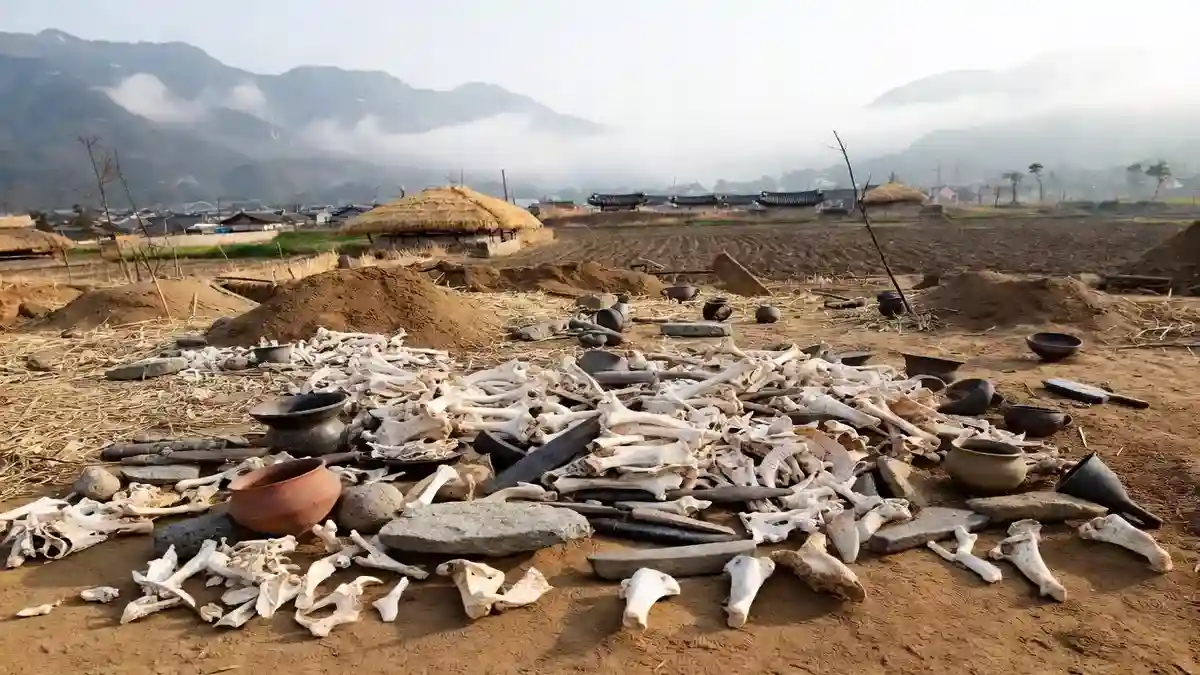
Archaeologists have uncovered compelling new evidence of early chicken domestication on the Korean Peninsula through advanced scientific analysis of ancient bird bones. This discovery sheds fresh light on how farming practices and animal husbandry developed in ancient Korea, revealing that managed chickens were part of daily life more than 1,800 years ago.
The findings challenge previous assumptions about when and how domestic chickens arrived in the region and demonstrate the power of modern biomolecular techniques to unlock secrets hidden in fragmented remains.
2,000-Year-Old Chicken Bones Rewrite Korea’s Farming History
### Groundbreaking Discovery at the Gungok-ri Site
A research team from Hanyang University ERICA, led by Kyungcheol Choy, examined bird bones recovered from the Gungok-ri archaeological site in southwestern Korea. Their study, published in the *Journal of Archaeological Science: Reports*, focused on remains that had long puzzled experts due to the striking similarity between domestic chicken bones and those of wild pheasants.
In Korean archaeology, small or broken bone fragments often make visual identification nearly impossible. This site, however, provided a unique opportunity. Using cutting-edge methods, the researchers confirmed the presence of domestic chickens (*Gallus gallus*) dating back to the Proto-Three Kingdoms period.

Radiocarbon dating placed these bones between 80 CE and 361 CE, indicating that chickens were part of the local economy for over 300 years during this formative era in Korean history. This timeframe aligns with significant cultural and technological changes as societies on the peninsula transitioned toward more complex agricultural systems.
### Revolutionary Science: ZooMS Analysis Solves an Old Problem
The key to this breakthrough was Zooarchaeology by Mass Spectrometry, or ZooMS. This technique analyzes preserved collagen peptides in bone to identify species at a molecular level. Even tiny samples weighing as little as 2 milligrams can yield reliable results.

Out of 14 bird bone samples from the pheasant family tested at Gungok-ri, five were confirmed as domestic chickens. This represents the first direct biomolecular evidence of ancient chickens in Korea, moving beyond earlier morphological studies that had only tentatively identified a few possible specimens.
**Why This Method Matters:**
– Overcomes limitations of visual bone identification
– Works effectively on fragmented or degraded remains
– Provides species-level precision for challenging animal groups
– Opens doors for reanalyzing existing collections from other sites
The successful application of ZooMS to bird bones marks a milestone in Korean archaeology. Previously used more commonly on mammal remains, its adaptation here expands the toolkit available to researchers studying ancient food systems and animal management.
### Isotope Evidence Shows Human Care and Management
Beyond species identification, the team analyzed stable isotopes in the bone collagen. The chickens displayed nitrogen isotope values around 4‰, a signature consistent with diets influenced by human intervention rather than wild foraging.
This pattern strongly suggests the birds were raised and fed by people, possibly with household scraps, grains, or other managed food sources. Such evidence points to deliberate animal husbandry practices rather than opportunistic hunting of wild birds.
Combined with the earlier morphological assessments that identified four potential chickens, the new data strengthens the case for established chicken-keeping at the settlement. These birds were likely valued for eggs, meat, and possibly cultural or ritual significance.
### Historical Context: Chickens in East Asian Agricultural Development
The Proto-Three Kingdoms period (108 BCE to 313 CE) was a dynamic time of social change, emerging states, and expanding agricultural practices across the Korean Peninsula. The confirmation of domestic chickens during this era adds an important piece to the puzzle of how farming diversified.
Scholars have long debated the routes by which chickens spread across East Asia. Many theories propose movement from China through Korea to Japan, but direct evidence from the Korean Peninsula had been scarce until now. The Gungok-ri findings provide solid support for chickens being integrated into Korean communities by the first few centuries CE.
This timeline fits broader patterns of animal domestication and exchange in the region. As rice cultivation and other crops became more established, raising chickens would have offered a reliable protein source that required relatively little space and could thrive in village settings.
### Implications for Understanding Ancient Korean Society
The presence of managed chickens reveals more than just dietary habits. It points to sophisticated food production systems where communities invested time and resources in animal care. Chickens could provide eggs as a steady food supply, feathers for practical uses, and meat for special occasions or offerings.
In a time before modern refrigeration or large-scale trade, keeping domestic fowl represented a meaningful step toward food security and economic stability. The Gungok-ri residents likely viewed these birds as valuable assets integrated into their daily routines and seasonal cycles.
This discovery also highlights the role of smaller settlements in early agricultural innovation. While much attention has focused on larger centers, rural or village sites like Gungok-ri played crucial parts in testing and spreading new practices.
### Broader Impact on East Asian Archaeology
The study contributes to ongoing discussions about the spread of domestic animals across East Asia. Chickens originated in Southeast Asia and gradually moved northward through human networks. Establishing their presence in Korea helps map these ancient exchange routes more accurately.
Researchers note that similar challenges exist with identifying other domestic animals in Korean sites. Fragmented bones from pigs, cattle, dogs, and horses often face the same identification issues. The successful use of ZooMS on birds suggests great potential for re-examining collections across the country.
Future applications could clarify timelines for when different species were introduced and how animal husbandry evolved alongside crop farming. This would provide a richer understanding of the transition from hunter-gatherer societies to settled agricultural communities.
### Challenges and Opportunities in Korean Zooarchaeology
Traditional archaeological methods have limitations when dealing with highly fragmented remains common at many Korean sites. Environmental factors, soil conditions, and excavation practices can further complicate visual analysis.
Biomolecular approaches like ZooMS offer a powerful solution. They require minimal sample destruction while delivering high-confidence results. As more laboratories in Korea adopt these techniques, the field stands to gain significantly more data from existing and future excavations.
The Gungok-ri project demonstrates how collaboration between archaeologists, chemists, and other specialists can yield transformative insights. Even a small group of ancient bones can rewrite important chapters in history when examined with the right tools.
### Modern Connections to Korea’s Agricultural Heritage
Today, Korea maintains a rich tradition of poultry farming and cuisine that builds on these ancient foundations. Understanding the deep roots of chicken domestication adds cultural depth to modern practices and highlights the long continuity of human-animal relationships in the region.
For history enthusiasts and food lovers alike, this discovery connects contemporary Korean meals to practices stretching back nearly two millennia. It reminds us that many everyday elements of life have surprisingly ancient origins.
### Why This Research Excites the Scientific Community
The study stands out for its methodological innovation and clear results. By combining ZooMS with radiocarbon dating and isotope analysis, the team created multiple lines of evidence that reinforce each other.
Such rigorous, multi-proxy approaches represent the future of archaeology. They allow researchers to ask—and answer—more nuanced questions about past human behavior, diet, and environmental interactions.
As climate and development pressures threaten more archaeological sites, techniques that maximize information from limited samples become increasingly valuable.
### Conclusion: A Small Bone with Big Historical Impact
The 2,000-year-old chicken bones from Gungok-ri offer a fascinating glimpse into early animal management on the Korean Peninsula. Through advanced science, researchers have confirmed what was previously only suspected: domestic chickens were raised and integrated into local economies during the Proto-Three Kingdoms period.
This discovery enriches our understanding of how ancient Korean communities developed sustainable farming systems and participated in wider East Asian networks of exchange and innovation. It also showcases the exciting potential of new analytical methods to illuminate the past.
As more sites are examined with these tools, we can expect an even clearer picture of Korea’s agricultural origins to emerge. The story of these ancient chickens is ultimately one of human ingenuity—how our ancestors learned to work with animals to build more resilient and prosperous societies.
These humble bones remind us that history often hides in unexpected places, waiting for curious minds and modern technology to bring it into the light. They add vibrant detail to the narrative of Korea’s deep farming heritage and inspire continued exploration of the peninsula’s ancient past.
### FAQ: Questions About Ancient Chicken Bones in Korea
**How old are the chicken bones found in Korea?**
The bones date between 80 CE and 361 CE, placing them in the Proto-Three Kingdoms period and making them approximately 1,700 to 2,000 years old.
**What scientific method confirmed they were domestic chickens?**
Zooarchaeology by Mass Spectrometry (ZooMS) analyzed collagen peptides in the bones, distinguishing them from similar wild pheasant remains with high accuracy.
**What do isotope results reveal about how the chickens were raised?**
Nitrogen isotope values indicate the birds were fed by humans rather than foraging freely, providing evidence of deliberate animal husbandry and management.
**Why is this discovery important for East Asian history?**
It offers the first direct biomolecular proof of domestic chickens in ancient Korea, supporting theories about their spread from China through the peninsula to Japan.
**Can this technique be used for other animals?**
Yes. ZooMS shows strong potential for identifying fragmented remains of pigs, cattle, dogs, horses, and other species in Korean archaeological sites.
**How does this change our view of early Korean farming?**
It demonstrates that chicken-keeping was established by the first few centuries CE, highlighting more diverse and sophisticated animal management practices than previously documented.