
Table of Contents
**19th-Century Bone Dental Bridge Reveals Early Cosmetic Dentistry in Portugal**
A remarkable archaeological find in Porto is shedding new light on personal grooming and medical care in 19th-century Europe. Researchers have uncovered a rare bone dental bridge from an early 1800s burial, offering the first documented example of a fixed prosthetic of its kind in Portugal. This small but significant artifact highlights how individuals addressed tooth loss through creative, custom-made solutions long before modern dentistry became widespread.
The discovery, detailed in the *International Journal of Osteoarchaeology*, comes from the historic burial grounds of the 3rd Order of Our Lady of Carmo hospital. It provides a fascinating glimpse into the lives of people navigating health challenges during a turbulent era marked by disease outbreaks and social change.
19th-Century Bone Dental Bridge Reveals Early Cosmetic Dentistry in Portugal
### The Discovery Context in Porto’s Historic Cemetery
The prosthetic was recovered during excavations at a cemetery linked to a religious hospital institution in Porto. Dating between 1801 and 1831, the burial contained the remains of a young adult, most likely female, though incomplete skeletal elements prevented full confirmation of sex. The upper jaw showed clear signs of significant tooth loss well before death, with healed sockets indicating the person had lived without those teeth for an extended period.
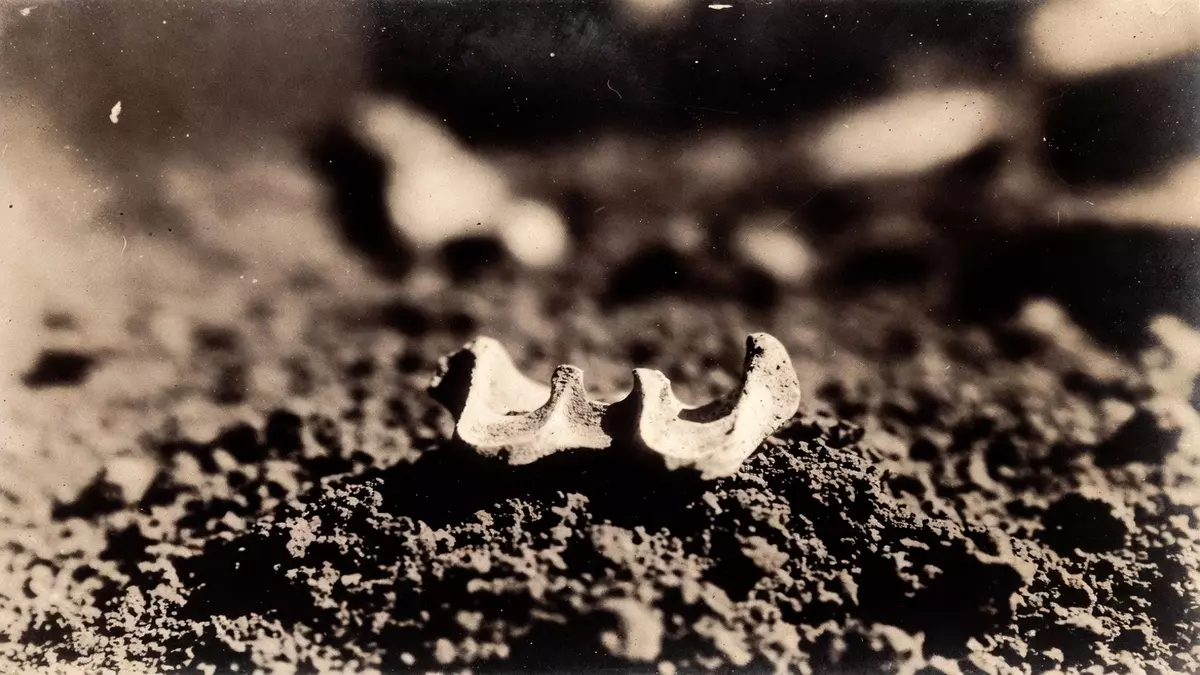
Only two loose lower teeth survived with the skeleton. Near the skull, archaeologists found the dental bridge — a carefully crafted piece measuring just 24 millimeters long, 6 millimeters wide, and 12 millimeters high. Its modest size and design suggest it was not intended as a heavy-duty chewing aid but rather as a visible front-facing restoration.
 Ancient shipwreck with 300 amphorae found off Italy could reshape views of Mediterranean wine trade
This find stands out because fixed bone dental bridges from this period are exceptionally rare in Portuguese archaeology. Earlier discoveries include a wire ligature from the late 15th century and an ivory bridge from the 16th–17th centuries. The new specimen fills an important gap in the timeline of dental prosthetics in the region.
### Advanced Analysis Techniques Uncover the Bridge’s Secrets
Researchers employed a range of non-invasive scientific methods to study the artifact without causing damage. These included micro-CT scanning, X-ray diffraction, stereomicroscopy, and Zooarchaeology by Mass Spectrometry (ZooMS). The detailed imaging revealed three roughly U-shaped teeth carved into the bone, increasing gradually in size. Small perforations at both ends indicate the bridge was secured in place using threads or wires.
Material analysis confirmed the bridge was made from animal bone belonging to the Bovidae family, which includes cattle, bison, and various antelope species. Cattle bone seems the most probable source given its widespread availability in Europe at the time. However, Portugal’s extensive maritime trade connections with Africa leave open the intriguing possibility of an antelope origin.
One particularly unusual feature emerged in the scans: a small cube-shaped object embedded in one corner. Chemical analysis identified this as lead-based compounds, primarily pyromorphite and cerussite. Experts believe the lead served to reinforce or repair the attachment holes, strengthening the delicate prosthetic. While lead was commonly used in historical crafts and even medicine, its presence here adds another layer of complexity to the object’s story.
**Cosmetic Function Over Practical Chewing**
The bridge’s thin profile and simple construction suggest it was primarily cosmetic. It likely covered the front surface of missing lower teeth, helping mask gaps, discoloration, or damage. Such a device could also have improved speech by filling empty spaces in the mouth. In an era when appearance influenced social standing, this kind of restoration would have been highly valued by those who could afford it.
### 19th-Century Dentistry and Social Status in Portugal
Dental care during the late 18th and early 19th centuries remained expensive and largely inaccessible to ordinary people. Procedures and prosthetics were typically reserved for wealthier individuals or those connected to religious or military institutions. The presence of this customized bone dental bridge points to the deceased belonging to a relatively privileged social class.
The burial site itself reflects broader historical conditions in Porto. The cemetery was active during decades plagued by cholera epidemics and military conflicts, including the Napoleonic invasions and subsequent civil wars. The BeFRAIL project, which investigates human frailty and health through archaeological evidence from Carmo-linked sites, provided the framework for this discovery. By examining skeletal remains and associated artifacts, researchers can better understand how people coped with physical challenges in challenging times.
Tooth loss was common in the period due to poor nutrition, limited oral hygiene, and the absence of effective treatments for decay or infection. Many suffered in silence, but some sought solutions through emerging craft traditions that blended medical knowledge with artisanal skill.
**Historical Development of Dental Prosthetics**
Dental appliances have ancient roots, appearing in civilizations from the Etruscans to the Maya. In Europe, the Renaissance saw increased experimentation with ivory, bone, and metals. By the 18th century, practitioners like Pierre Fauchard — often called the father of modern dentistry — advanced techniques for crowns, bridges, and dentures.
In Portugal, formal dentistry evolved gradually. The 19th century brought more standardized practices, but handmade prosthetics like this bone bridge represent a transitional phase. They demonstrate ingenuity and personalization at a time when mass-produced dental solutions were still decades away.
### Scientific Insights from the BeFRAIL Project
The BeFRAIL project places this dental bridge within a larger study of health and aging in 19th-century Porto. By combining osteological analysis with material science, researchers reconstruct not just individual stories but also community-wide patterns of disease, nutrition, and medical access.
The hospital cemetery provides a unique sample of urban Portuguese society during a transformative period. Many buried there had connections to religious orders or charitable institutions, offering care to both the poor and those of middling status. The discovery of such a specialized prosthetic among the remains suggests that even in institutional settings, personal dignity and appearance mattered.
Microscopic and chemical analyses continue to yield surprises. The choice of bone material, the use of lead for reinforcement, and the careful carving all reflect skilled craftsmanship. Future comparisons with similar finds across Europe could reveal whether this bridge represents a local tradition or a wider practice.
### Broader Implications for Understanding Past Health Practices
This Portuguese find contributes to the global history of medicine and body modification. It shows that concerns about appearance and function crossed cultural and temporal boundaries. People in the past, much like today, sought ways to maintain confidence and social integration despite physical limitations.
The artifact also raises questions about the risks involved. Lead exposure, even in small amounts, carried potential health hazards, though researchers found no direct link to the individual’s cause of death. Such details help modern scholars appreciate the trade-offs people made when medical options were limited.
**Cultural and Economic Factors**
Portugal’s position as a maritime power facilitated access to diverse materials. Trade routes may have supplied exotic bones or specialized tools for crafting prosthetics. Wealthier families could commission skilled artisans, while public hospitals occasionally provided care that included such innovations for select patients.
The crucifix found with the burial further contextualizes the individual within Portugal’s deeply Catholic society. Religious institutions played key roles in both healthcare and burial practices, blending faith with emerging scientific approaches.
### Why This Discovery Captivates Modern Audiences
In an age of cosmetic dentistry, implants, and perfect smiles, this 19th-century bone dental bridge feels surprisingly relatable. It humanizes history, reminding us that people have always cared about how they look and how they are perceived. The young adult in the Porto grave likely smiled with renewed confidence thanks to this modest prosthetic.
For historians and archaeologists, the bridge opens doors to studying craft techniques, material sourcing, and the social history of medicine. It also underscores the value of careful excavation in urban settings where development often threatens buried heritage.
Ongoing work at the Carmo site may yield additional dental devices or related artifacts. Each new find enriches our understanding of how ordinary individuals navigated health and identity in the past.
### Conclusion: A Smile from the Past
The rare bone dental bridge from Porto stands as a powerful testament to human resilience and ingenuity. Carved from animal bone and carefully fitted to restore appearance, it reveals a personal story within the larger narrative of 19th-century Portugal. Through advanced scientific analysis, researchers have brought this “smile from the past” back to life, illuminating early cosmetic tooth replacement practices.
As part of the BeFRAIL project, the discovery deepens our knowledge of health, frailty, and social care during a dynamic and difficult era. It reminds us that the desire for dignity and normalcy transcends time. This small prosthetic continues to speak across the centuries, connecting us to the hopes and challenges of those who came before.
Future studies will undoubtedly build upon this foundation, revealing even more about the evolution of dentistry and the human experience in Portugal and beyond. In the meantime, this extraordinary find offers a touching reminder that even the smallest artifacts can tell the biggest stories.
## FAQ
**What is the bone dental bridge discovered in Portugal?**
It is a small prosthetic carved from animal bone, featuring three U-shaped teeth. Dating to the early 19th century, it represents the first documented fixed bone dental bridge found in a Portuguese archaeological context.
**Who did the dental bridge belong to?**
The bridge was found with the remains of a young adult, likely female, buried at the 3rd Order of Our Lady of Carmo hospital cemetery in Porto between 1801 and 1831.
**What material was the bridge made from?**
The prosthetic was crafted from bone of the Bovidae family, most likely cattle. Analysis also revealed lead compounds used for reinforcement.
**Was the dental bridge functional for chewing?**
Researchers believe it served primarily cosmetic purposes. Its thin design suggests it helped hide missing or damaged front teeth and possibly improved speech.
**How was the bridge studied?**
Scientists used non-destructive techniques including micro-CT scans, X-ray diffraction, stereomicroscopy, and ZooMS to examine its construction and materials.
**Why is this discovery important?**
It provides rare evidence of early 19th-century cosmetic dentistry in Portugal and contributes to the BeFRAIL project’s research on health and frailty in historic Porto.
**Where can more details be found?**
The full study was published in the *International Journal of Osteoarchaeology* in 2026, with additional information available through Portuguese archaeological institutions.