
Table of Contents
- 1. Echoes of the Conquest: The Auaritas of La Palma
- 2. Inside the Time Capsule: Cueva de Las Jimenas
- 2.1. A Sacred Space of the Ancestors
- 2.2. The Peak of Indigenous Artistry: Phase IVb
- 3. A High-Stakes Secret Recovery Operation
- 4. Preserving Authenticity Through Modern Science
- 5. Frequently Asked Questions
- 5.1. When and where was the ancient ceramic vessel found?
- 5.2. What makes this specific pottery discovery so rare?
- 5.3. Who were the original inhabitants of La Palma?
- 5.4. What is “Phase IVb” ceramic tradition?
- 5.5. What will happen to the vessel now?
Rare 15th-Century Indigenous Vessel Discovered in La Palma Cave
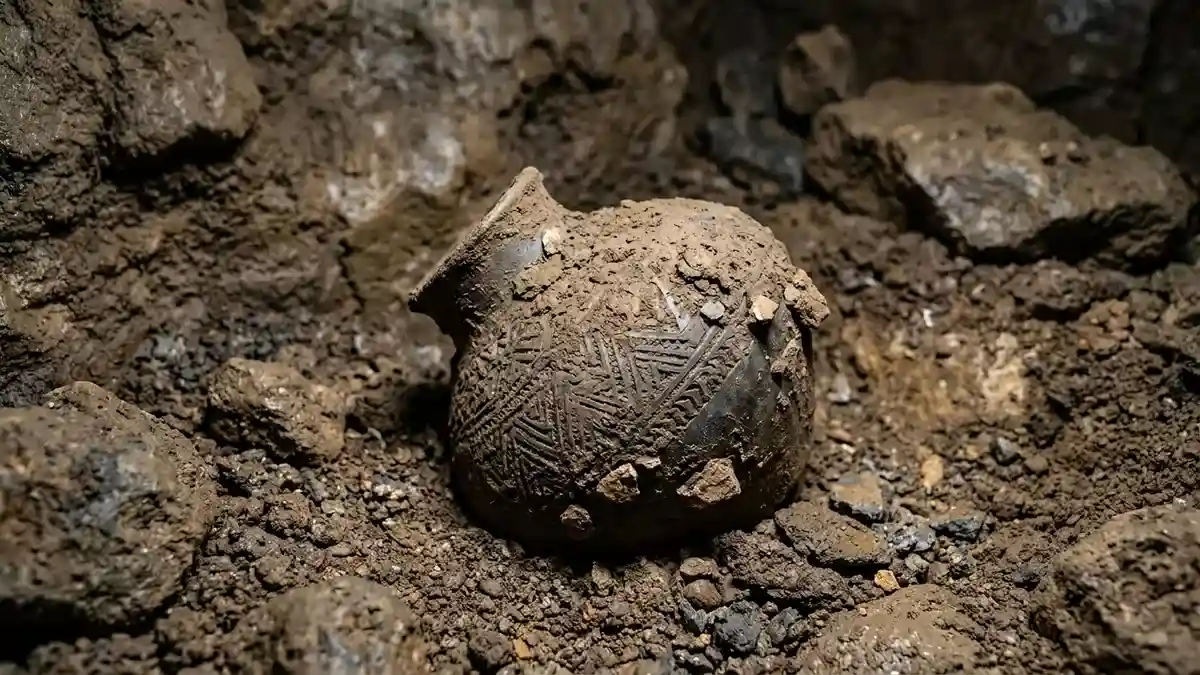
In a groundbreaking archaeological achievement, researchers working in the municipality of Tijarafe on the island of La Palma have unearthed a rare, fully intact ceramic vessel dating back to the 15th century. Discovered deep within a rugged cave system, this remarkable artifact originates from the turbulent era of the Castilian conquest of the Canary Islands. Local historians and authorities are hailing the find as one of the most significant pieces of cultural heritage recovered in the region in modern history.
Unlike the vast majority of historical encounters that leave behind only shattered fragments, this vessel managed to survive centuries entirely whole. Sealed away from the elements, it offers a tangible connection to the island’s original Indigenous inhabitants just as their world was about to change forever.
Rare 15th-Century Indigenous Vessel Discovered in La Palma Cave

Echoes of the Conquest: The Auaritas of La Palma
To understand the immense historical weight of this discovery, one must look back to the 1400s. Long before Spanish ships arrived, La Palma—the northwesternmost island in the Canarian archipelago—was home to the Auaritas, a distinct branch of the Indigenous Guanche population. The Auaritas possessed a rich culture, deeply tied to the volcanic landscape, seasonal farming, and expert pottery traditions.
The arrival of the Crown of Castile marked the beginning of a devastating chapter. The European conquest resulted in a systemic dismantling of Indigenous society. Through violent military campaigns, forced enslavement, and the introduction of deadly Old World diseases to which the natives had no immunity, the Auaritas were largely decimated. Many historians view this brutal subjugation of the Canary Islands as a trial run for the colonial models and tragic genocides that the Spanish Empire would later unleash across the Americas.
Inside the Time Capsule: Cueva de Las Jimenas
The priceless artifact was discovered in the Cueva de Las Jimenas, a cave hidden within the dramatic cliffs of the Barranco de Los Gomeros, located near the neighborhood of El Jesús.
A Sacred Space of the Ancestors
For generations of Auaritas, this cave was far more than a simple shelter; it was used extensively as a sacred funerary site. Over the centuries, layers of soil and organic material built up within the cave, creating distinct chronological strata. Each layer contains unique remnants of different eras of Indigenous ceramic craftsmanship, turning the cave into a vertical timeline of ancient life on La Palma.
The Peak of Indigenous Artistry: Phase IVb
Archaeologists have identified this specific vessel as belonging to Phase IVb of the island’s ceramic timeline. This phase represents the final, most advanced style of pottery developed by the Auaritas right at the dawn of the European invasion.
What makes this specific piece an absolute masterpiece is its anomaly in design:
The Norm: Standard Guanche and Auarita pottery was mostly utilitarian, left completely unadorned or featuring only basic markings made by pressing fingernails into wet clay.
The Exception: This newly found vessel features highly elaborate, ornate decorative patterns. Its complex engravings suggest it may have held a special ritualistic or status-driven purpose within the community.
A High-Stakes Secret Recovery Operation
Though the vessel was initially located in 2024, its existence was kept strictly confidential by authorities and the research team for months. Because intact ancient pottery is extraordinarily rare, officials feared that word of the find could attract looters or untrained onlookers, risking the permanent destruction of the fragile piece.
Compounding the secrecy was the sheer physical difficulty of the extraction. The vessel was wedged in a remote, nearly inaccessible crevice deep inside the cave. Over hundreds of years, shifting soil and heavy stones had fallen onto the artifact, pinning it down and causing structural fractures. One wrong move could have caused the entire vessel to crumble into dust.
“The structural integrity of the piece was highly compromised by shifting rocks. Extracting it required stabilizing the object in its exact location before we could even attempt to lift it.” — Archaeological Team Report
On August 11, 2025, a specialized team executed a flawlessly planned extraction. Renowned historical restorer Salomé González Rodríguez led the delicate operation, using precise chemical and physical stabilization techniques to reinforce the cracked areas of the clay while it was still trapped in the rock. Once stabilized, the vessel was safely freed and transported to a temporary conservation workshop.
Preserving Authenticity Through Modern Science
Now safely out of the cave, the vessel has been placed under the strict custody of the Ayuntamiento de Tijarafe (the City Council of Tijarafe). Experts are treating the object with reversible, state-of-the-art conservation methods to ensure its absolute authenticity is preserved for future generations.
The artifact is currently undergoing a multi-disciplinary scientific analysis:
Ceramic Petrography: Analyzing the mineral composition of the clay to determine exactly where on the island it was harvested, which will reveal ancient trade routes or tribal territories.
Photogrammetry: Taking hundreds of high-resolution photographs from various angles to stitch together a perfect 3D digital model for virtual study and public exhibition.
Stylistic Comparative Analysis: Investigating the unique decorative features to determine whether they indicate a highly localized village style or the survival of a much older, forgotten design tradition.
Local officials view this discovery as a monumental milestone for the municipality. Beyond its immense academic value, the vessel stands as a powerful symbol of resilience, shedding light on the sophisticated roots of the island’s original people and bolstering a deep sense of cultural identity and ancestral pride within the modern community of La Palma.
Frequently Asked Questions
When and where was the ancient ceramic vessel found?
The vessel was initially located in 2024 inside the Cueva de Las Jimenas, a historical funerary cave situated within the Barranco de Los Gomeros ravine near El Jesús, in the municipality of Tijarafe, La Palma. It was carefully extracted by experts on August 11, 2025.
What makes this specific pottery discovery so rare?
Finding a completely whole, intact ceramic vessel from this era is exceptionally rare, as most archaeological discoveries consist of small, broken fragments. Furthermore, while most Indigenous pottery from the island was plain, this vessel features uniquely intricate and ornate decorations.
Who were the original inhabitants of La Palma?
La Palma was originally populated by the Auaritas, a distinct subgroup of the broader Indigenous Guanche culture that inhabited the Canary Islands before European colonization.
What is “Phase IVb” ceramic tradition?
Phase IVb refers to the final evolutionary stage of Indigenous ceramic design on La Palma, coinciding directly with the arrival of Castilian forces in the 15th century. It represents the pinnacle of their independent artistic and technological development.
What will happen to the vessel now?
The vessel is being preserved by the Ayuntamiento de Tijarafe. It is undergoing advanced scientific testing, including 3D photogrammetry and chemical clay analysis, and its historic recovery has been documented in a specialized film to share with the public.