
Table of Contents
- 1. What Is Chiari Malformation Type I?
- 1.1. Symptoms and Severity of CM-I
- 2. The Evolutionary Mismatch: The Neanderthal Introgression Hypothesis
- 2.1. The Brain-Skull Disconnect
- 3. Mapping Ancient Skulls with Advanced 3D Technology
- 3.1. What the 3D Models Revealed
- 4. Global Population Impacts and Future Medical Screening
- 4.1. A New Approach to Early Childhood Health
- 5. Looking Ahead: The Limitations and Next Steps
- 6. Frequently Asked Questions
- 6.1. What exactly is Chiari Malformation Type I?
- 6.2. How does Neanderthal DNA cause this condition?
- 6.3. Who is most at risk for inheriting this disorder?
- 6.4. Can Chiari Malformation Type I be cured?
- 6.5. Can a DNA test tell me if I will develop Chiari Malformation?
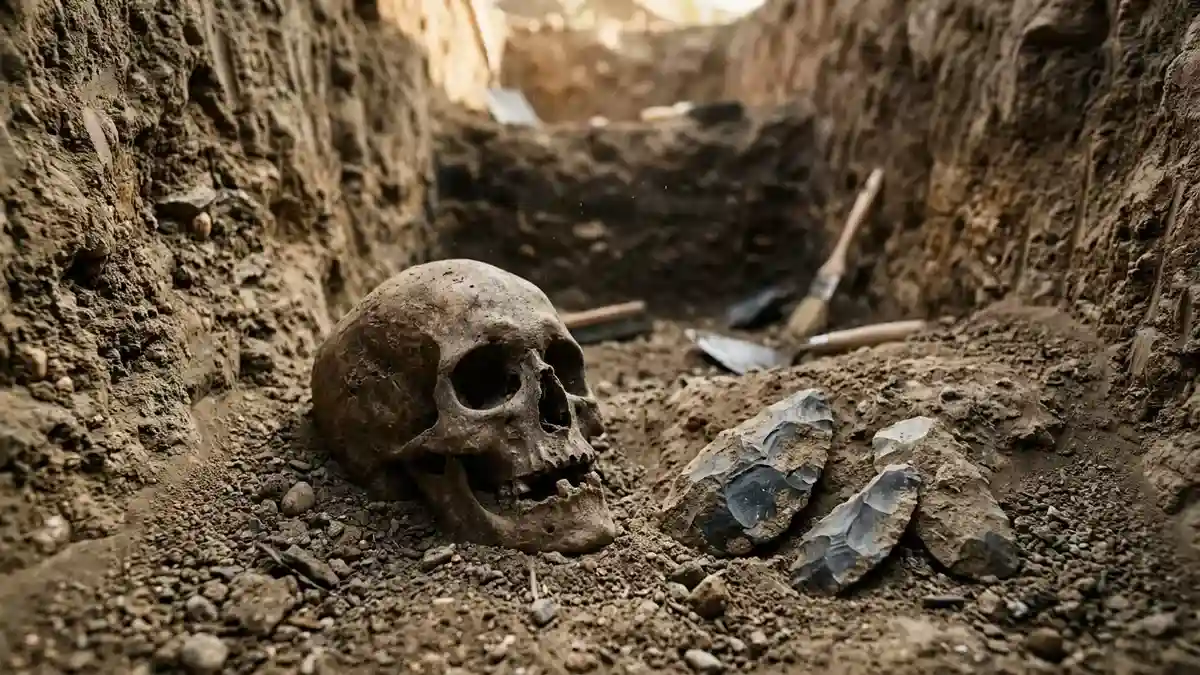
Neanderthal DNA Linked to Rare, Life-Threatening Brain Disorder
An ancient genetic legacy is casting a long shadow over modern human health. A groundbreaking study reveals that DNA inherited from Neanderthals over 40,000 years ago may be the underlying cause of a serious, potentially life-threatening neurological condition known as Chiari Malformation Type I (CM-I).
The disorder, which causes part of the brain to push through the base of the skull, could affect up to 1% of the global population—a figure significantly higher than medical professionals previously estimated. This discovery bridges the gap between evolutionary anthropology and modern neurology, offering an entirely new perspective on how prehistoric interbreeding events continue to shape human anatomy and health today.
Neanderthal DNA Linked to Rare, Life-Threatening Brain Disorder

What Is Chiari Malformation Type I?
Chiari Malformation Type I is a structural defect that occurs at the base of the skull. In a typical anatomy, the cerebellum—the part of the brain that controls balance and motor skills—sits neatly within a space at the lower back of the skull, directly above the opening called the foramen magnum.
In individuals with CM-I, the occipital bone at the back of the skull is abnormally small or shallow. Because the skull lacks the adequate volume to accommodate the cerebellum, pressure forces the lower part of the brain, known as the cerebellar tonsils, downward. The brain tissue herniates through the foramen magnum and protrudes into the upper spinal canal.
Symptoms and Severity of CM-I
This structural mismatch blocks the normal flow of cerebrospinal fluid (CSF), the clear liquid that cushions the brain and spinal cord. The resulting pressure can trigger a wide spectrum of neurological symptoms, which often manifest in late childhood or adulthood:

Severe Headaches: Typically felt at the back of the head and neck, often worsened by coughing, sneezing, or straining.
Chronic Neck Pain: Persistent stiffness and soreness radiating down the shoulders.
Dizziness and Balance Issues: Problems with gait, coordination, and spatial orientation.
Sensory Disturbance: Numbness, tingling, or altered temperature sensation in the hands and feet.
Vision and Hearing Problems: Double vision, sensitivity to light, blurred vision, or ringing in the ears (tinnitus).
In advanced or severe cases, the chronic compression of the brainstem and spinal cord can lead to progressive muscle weakness, paralysis, sleep apnea, and even sudden death.
The Evolutionary Mismatch: The Neanderthal Introgression Hypothesis
For decades, clinicians understood the physical mechanics of Chiari Malformation Type I, but the evolutionary “why” remained a mystery. Why would human anatomy develop a structural defect where the brain essentially outgrows its own skull container?
The answer lies in our evolutionary timeline. Roughly 40,000 to 60,000 years ago, anatomically modern humans (Homo sapiens) migrating out of Africa encountered and interbred with archaic human species, including Neanderthals (Homo neanderthalensis), in Eurasia. This process, known as genetic introgression, left a lasting imprint, with non-African modern populations retaining between 1% and 2.3% Neanderthal DNA.
The Brain-Skull Disconnect
In 2013, neurosurgeon Dr. Yvens Barbosa Fernandes proposed a radical theory: the modern human brain and the archaic skull might be a bad evolutionary fit.
Modern humans are characterized by a highly globular, rounded brain shape. Neanderthals, by contrast, possessed a more elongated, low, and flattened cranial vault. Dr. Fernandes hypothesized that when modern humans inherited specific skull-shaping genes from Neanderthals, it created a structural mismatch. The rounded, voluminous modern human brain was forced to fit into a skull structure influenced by archaic, flattened geometry, leading directly to the structural overcrowding seen in CM-I.
Mapping Ancient Skulls with Advanced 3D Technology
To test this theory, an international team of scientists led by Dr. Kimberly Plomp at the University of the Philippines Diliman and Professor Mark Collard at Simon Fraser University turned to cutting-edge digital anthropology. Their findings were published in the peer-reviewed journal Evolution, Medicine, and Public Health.
The research team collected high-resolution 3D CT scans of 103 modern human skulls. The sample was split into two distinct groups:
46 individuals diagnosed with Chiari Malformation Type I.
57 healthy individuals without the condition, acting as a control group.
Using a sophisticated technique called geometric morphometric analysis, the scientists mapped specific anatomical landmarks on the skulls to create highly precise 3D digital models. They then compared these modern human models against the fossilized cranial remains of several extinct hominin species, including Homo erectus, Homo heidelbergensis, Neanderthals, and early Homo sapiens.
What the 3D Models Revealed
The structural comparisons yielded undeniable evidence. The skulls of modern human patients suffering from Chiari Malformation Type I shared a striking statistical similarity with Neanderthal crania.
Specifically, the CM-I patients displayed a significantly reduced cranial vault height (a flatter top of the skull) and a more forward-positioned foramen magnum—both defining structural characteristics of Neanderthal anatomy. Conversely, the healthy control group showed no such similarities. Furthermore, the researchers found no correlation between CM-I skull structures and other ancient species like Homo erectus or Homo heidelbergensis, effectively narrowing the genetic culprit down to Neanderthal DNA.
Global Population Impacts and Future Medical Screening
Because Neanderthal DNA is distributed unevenly across modern global populations, the prevalence of Chiari Malformation Type I likely varies by geographic ancestry.
Genetic studies show that people of European and Asian descent carry the highest percentages of Neanderthal genetic material. In contrast, populations indigenous to sub-Saharan Africa carry little to no Neanderthal DNA, as their ancestors did not participate in the Eurasian interbreeding events. This genetic distribution suggests that CM-I may be significantly more prevalent in European and Asian lineages, though researchers emphasize that extensive multi-ethnic genomic studies are still required to map out definitive regional statistics.
A New Approach to Early Childhood Health
The validation of the Neanderthal Introgression Hypothesis could revolutionize preventive pediatrics. Because CM-I symptoms often lie dormant until irreversible neurological damage has occurred, early detection is vital.
If ongoing genetic research isolates the exact Neanderthal alleles responsible for these skull alterations, healthcare systems could implement targeted genetic screening. Introducing a simple DNA marker test during routine early childhood health assessments could flag high-risk individuals infancy. Pediatricians could then monitor skull development via non-invasive imaging, intervening surgically or therapeutically long before the onset of debilitating symptoms.
Looking Ahead: The Limitations and Next Steps
While this study marks a massive leap forward in evolutionary medicine, the scientific community notes several limitations that require further investigation.
First, fossilized hominin skulls are rare, meaning the study relied on a relatively small sample size of ancient remains. Second, it remains unclear exactly when these cranial differences begin to manifest during an individual’s development.
Future research initiatives will focus on tracking skull and brain growth throughout childhood and adolescence to determine how archaic DNA interacts with modern soft tissue in real-time. Additionally, identifying the precise genetic expressions that dictate the placement of the foramen magnum and the height of the cranial vault will be a top priority for evolutionary geneticists.
By unearthing the prehistoric roots of Chiari Malformation Type I, this research not only reshapes our understanding of human history but also paves the way for advanced, personalized genetic medicine.
Frequently Asked Questions
What exactly is Chiari Malformation Type I?
Chiari Malformation Type I (CM-I) is a structural neurological disorder where the lower part of the brain (the cerebellum) protrudes through the opening at the base of the skull into the spinal canal. This happens because the back of the skull is too small or shallow, causing overcrowding that blocks the flow of cerebrospinal fluid.
How does Neanderthal DNA cause this condition?
Neanderthals had longer, flatter skulls compared to the rounded skulls of modern humans. When modern humans interbred with Neanderthals 40,000 years ago, some archaic skull-shaping genes were passed down. In some people, these genes cause a flatter skull structure that cannot properly accommodate a modern, rounded human brain, resulting in a structural mismatch.
Who is most at risk for inheriting this disorder?
Populations with European or Asian ancestry are statistically more likely to carry Neanderthal DNA (typically between 1% and 2.3%). Because indigenous sub-Saharan African populations carry almost no Neanderthal DNA, CM-I is expected to be more common in people of Eurasian descent, though more regional studies are needed.
Can Chiari Malformation Type I be cured?
While it cannot be cured genetically, the symptoms and structural compression can be managed. For mild cases, doctors treat symptoms like pain and dizziness with medication and therapy. For severe cases, a surgical procedure called a decompression craniectomy is performed to remove a small piece of bone from the back of the skull, creating more space for the brain and restoring normal fluid flow.
Can a DNA test tell me if I will develop Chiari Malformation?
Currently, standard commercial DNA tests can tell you your total percentage of Neanderthal ancestry, but they cannot diagnose or predict Chiari Malformation. Scientists are still working to identify the specific individual genes tied to skull development before a targeted medical screening test can be made available to the public.