
Table of Contents
- 1. The Heist That Cracked a Royal Relic
- 2. From Sovereign Seat to Secret Jewelry
- 2.1. Mapping the Dispersal of National Heritage
- 3. The Continuous Tug-of-War Over Scottish Identity
- 4. Evolution of a Living Artifact
- 5. Frequently Asked Questions
- 5.1. What is the Stone of Destiny?
- 5.2. How did the stone get broken into fragments?
- 5.3. Where did the missing fragments end up?
- 5.4. How many fragments have been officially verified?
- 5.5. Where is the primary Stone of Destiny located today?
Lost Fragments of the Stone of Destiny Redefine Scotland’s Royal History
For generations, the Stone of Scone—famously known as the Stone of Destiny—has stood as a dual symbol of Scottish sovereignty and British monachal authority. This massive, 152-kilogram block of red sandstone has endured a dramatic history of military conquest, political theft, and structural repair.
Now, a pioneering academic study has revealed a hidden, forgotten chapter in the relic’s history: dozens of missing stone fragments scattered across the globe. Conducted by Professor Sally Foster, a cultural heritage expert at the University of Stirling, the research demonstrates how the fragmentation of this singular ancient object created an underground network of deeply personal and political heirlooms, expanding the reach of Scotland’s most powerful national icon far beyond its geographical borders.
Lost Fragments of the Stone of Destiny Redefine Scotland’s Royal History
The Heist That Cracked a Royal Relic
To understand how pieces of Scotland’s coronation stone ended up thousands of miles away, one must look back to Christmas Day in 1950. The Stone had spent more than six centuries resting beneath the Coronation Chair in Westminster Abbey, having been seized as spoils of war by England’s King Edward I in 1296 to symbolize English dominance over the Scots.
Determined to strike a blow for Scottish nationalism, a group of four idealistic Scottish university students, led by Ian Hamilton, broke into Westminster Abbey and successfully liberated the heavy artifact. However, the daring heist did not go perfectly to plan. During the chaotic removal from the wooden chair, the ancient sandstone block dropped and fractured cleanly into two separate pieces.
       [THE 1950 WESTMINSTER ABBEY HEIST]
                       │
                       ▼
         [STONE DROPPED & BROKEN IN TWO]
                       │
  ┌────────────────────┴────────────────────┐
  ▼                                         ▼
[Major Structural Repair]         [The Missing Fragments]
Executed by mason Bertie Gray     34 distinct shards retained
                                   as secret nationalist tokens
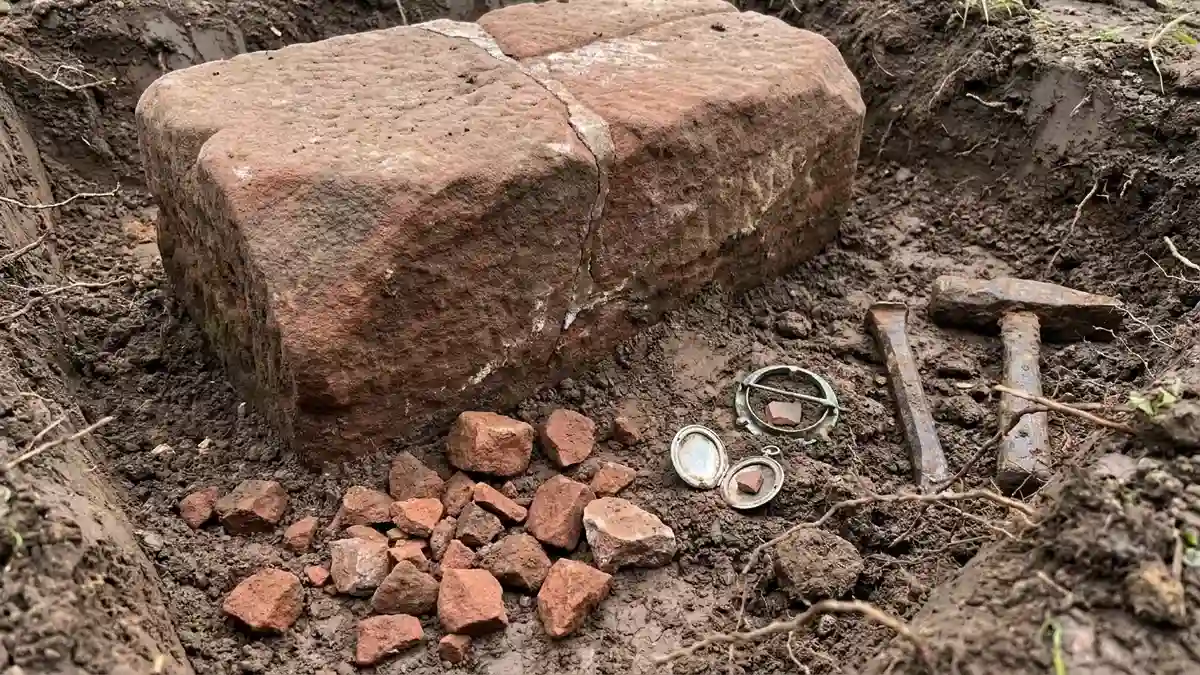
The students transported the broken pieces back to Scotland, where a sympathetic master stonemason named Bertie Gray secretly repaired the monument, bonding it back together before it was officially handed over to authorities. While Gray successfully restored the structural integrity of the primary block, he kept dozens of tiny chips and fragments that fell away during the repair process, distributing them as secret, sacred mementos to key figures within the Scottish nationalist movement.
 Zīrid Ifrīqiya and the Islamic world in the 10th–12th centuries: an international conference at UCL
From Sovereign Seat to Secret Jewelry
Professor Foster’s comprehensive study, published in The Antiquaries Journal, meticulously traces the incredible journeys of 34 distinct fragments that were detached during that 1950 repair window. Rather than being treated as mere construction waste, these sandstone shards were transformed into highly charged, intimate tokens of national identity.
Over the decades, these fragments found extraordinary and deeply personal homes across the world:
The Hamilton Brooch: One small fragment was custom-set into a bespoke brooch crafted specifically for Ian Hamilton’s girlfriend.
The Ewing Locket: Another piece was sealed inside a wearable locket proudly worn by the pioneering Scottish nationalist politician Winnie Ewing.
The Australian Donation: A sizable fragment traveled all the way to the Southern Hemisphere after Bertie Gray gifted it to a visiting woman. Her descendants eventually donated the artifact to the Queensland Museum in Australia, proving the stone’s cultural diaspora.
Mapping the Dispersal of National Heritage
Through the systematic tracking of private family letters, vintage photographs, and historic legal records, Foster’s interdisciplinary research combines material culture and ethnography to prove that these tiny shards carry an emotional and political weight equal to the monument itself.
| Fragment Status | Quantity | Known Locations / Handlers | Political & Cultural Impact |
| Verified & Logged | 17 Pieces | Queensland Museum, Political Lockets, Private Family Heirlooms | Transformed a rigid state monument into a highly personalized, global network of identity. |
| Unaccounted For | 17 Pieces | Distributed across international hands | Continues to drive active historical investigations and heritage hunting. |
The Continuous Tug-of-War Over Scottish Identity
While its fragments were traveling the globe in secret, the primary Stone of Destiny remained firmly anchored at the center of fierce constitutional debates between Edinburgh and London.
+-------------------------------------------------------------+
|               MODERN TIMELINE OF THE STONE                  |
|                                                             |
|   1996                      2023              2024          |
|   [ RETURNED TO SCOTLAND ] ──> [ CORONATION ] ──> [ PERTH MUSEUM ]|
|   • Sent to Edinburgh Castle   • Temp return to   • Installed in  |
|   • Ended 700-year exile       • Westminster      • New Heritage  |
|                                • Case Attacked    • Center        |
+-------------------------------------------------------------+
In 1996, amid rising calls for Scottish devolution, the British government officially returned the Stone of Scone to Scottish soil, ending its 700-year exile. It was initially housed alongside the Honors of Scotland in Edinburgh Castle. Its symbolic volatility was put on full display in 2023; after being temporarily transported back to London for the coronation of King Charles III, the stone returned to Edinburgh, where political activists launched a high-profile attack on its protective glass display casing.
By 2024, the primary block was permanently relocated to the brand-new, state-of-the-art Perth Museum, returning it to its ancestral home region of Scone. Yet, the political drama surrounding its fragments has never truly quieted down. The study notes that former Scottish First Minister Alex Salmond was presented with a verified fragment back in 2008—a controversial gift that instantly reignited public debates regarding who legally owns and controls the physical pieces of Scottish history.
Evolution of a Living Artifact
Ultimately, Professor Foster’s research highlights that a nation’s heritage is not a static, frozen concept. Objects evolve over time based on how people interact with them, break them, share them, and protect them.
The physical fragmentation of the Stone of Destiny did not diminish its power; instead, it decentralized it. While 17 shards still remain completely unaccounted for, the ongoing search for these missing pieces continues to deepen the narrative of an artifact that simply refuses to fade into the quiet pages of history books—standing as an eternal, living emblem of Scotland’s ongoing quest for self-definition.
Frequently Asked Questions
What is the Stone of Destiny?
The Stone of Destiny, also known as the Stone of Scone, is an ancient 152-kilogram red sandstone block used for centuries in the coronation ceremonies of Scottish monarchs, and later, British sovereigns.
How did the stone get broken into fragments?
On Christmas Day in 1950, four Scottish nationalist students stole the Stone from Westminster Abbey to return it to Scotland. During the extraction, the heavy stone dropped and broke into two pieces. A mason secretly repaired the block but kept the small fragments that broke off during the process.
Where did the missing fragments end up?
The fragments traveled across the globe. Some were fashioned into political jewelry, such as brooches and lockets for key figures in the Scottish independence movement, while one piece traveled to Australia and was eventually gifted to the Queensland Museum.
How many fragments have been officially verified?
Out of 34 documented fragments that were reportedly removed and distributed following the 1950 heist, Professor Sally Foster’s research has successfully tracked down and authenticated 17 pieces. The remaining 17 shards are still missing.
Where is the primary Stone of Destiny located today?
After being officially returned to Scotland in 1996 and displayed at Edinburgh Castle, the main block of the Stone of Destiny was moved in 2024 to the newly opened Perth Museum in Scotland, close to its original historical home.