
Table of Contents
- 1. A Wider Pattern Revealed
- 2. The Dual Role of Caves: Home and Necropolis
- 3. Environmental Factors and Population Dynamics
- 4. Cultural Movements and Ancestral Ties
- 5. A More Flexible Understanding of the Past
- 6. Frequently Asked Questions (FAQ)
- 6.1. 1. Were cave burials considered rare in the Great Basin?
- 6.2. 2. What distinguishes “domestic” caves from “funerary” caves?
- 6.3. 3. Did open-air burials happen in the Great Basin?
- 6.4. 4. What factors influenced the number of burials in a specific cave?
- 6.5. 5. Are modern Indigenous groups linked to these burial sites?
Challenging Preconceptions: New Study Reevaluates Great Basin Burials
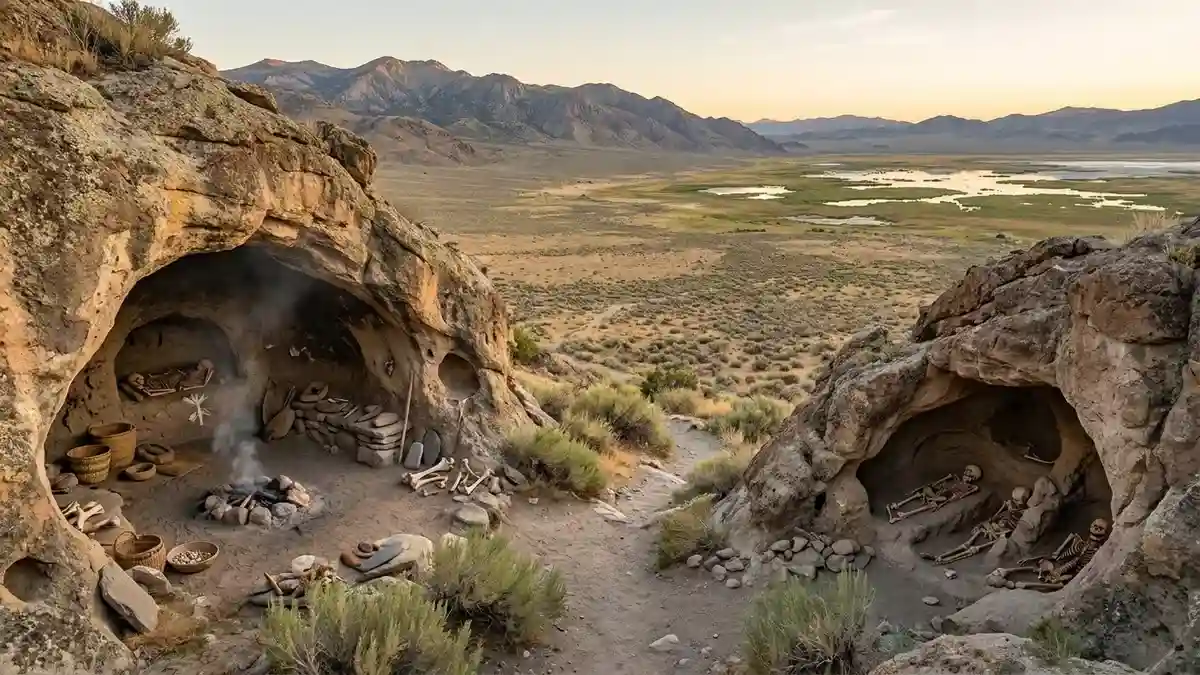
For decades, archaeological narratives regarding the Great Basin—a vast, arid region spanning much of Nevada and Utah—have often highlighted cave burials as an anomaly. Specifically, the lower Lahontan drainage basin in western Nevada was long considered unique for its high frequency of interments in caves and rockshelters, while such practices were viewed as exceptionally rare in the neighboring Bonneville Basin of western Utah. However, a landmark study recently published in American Antiquity (2026) is overturning this long-held perspective, revealing that cave burial was a widespread and flexible tradition across the region.
Challenging Preconceptions New Study Reevaluates Great Basin Burials
A Wider Pattern Revealed
By meticulously compiling and analyzing records from an extensive array of excavated caves, rockshelters, and open-air sites, researchers have built a more comprehensive map of ancient burial customs. The team, led by experts including D. Madsen and B. Hockett, documented 18 cave or rockshelter sites in the Bonneville Basin alone, containing the remains of at least 91 individuals.
When these figures are combined with data from the upper Lahontan region, it becomes clear that cave interments were not isolated to a single, idiosyncratic culture. Instead, burial in caves occurred on a regular, consistent basis across the broader Great Basin landscape. The previous assumption that the lower Lahontan basin was a unique outlier appears to have been an artifact of fragmented data rather than a reflection of ancient cultural reality.

The Dual Role of Caves: Home and Necropolis
The study highlights a fascinating dichotomy in how ancient Great Basin groups utilized caves. In many instances, burial sites were not secluded, forbidden spaces; they were integrated into the fabric of daily life.
Domestic Caves: Many cave burials were discovered in locations that also functioned as living spaces. These sites contain a wealth of domestic markers, including hearths, stone tools, and food remains, suggesting that early inhabitants lived, worked, and buried their deceased in the same sheltered environments.
Specialized Funerary Caves: Conversely, sites like Lehman Cave and Snake Creek Cave tell a different story. These locations served primarily as “natural trap” burials, housing more than three dozen individuals with little evidence of routine domestic activity.
This flexibility—the ability to inter the dead in either active living areas or specialized, secluded spaces—demonstrates that ancestral populations were not bound by a single, rigid burial protocol. While open-air burials actually outnumbered cave interments by a significant margin across the entire Great Basin, the sheer ubiquity of cave burials across different areas points to a shared, region-wide cultural tradition.
Environmental Factors and Population Dynamics
Why did some regions see higher counts of cave burials than others? The researchers argue that the answer lies in environmental necessity and population density rather than isolated ritualistic behaviors.
The lower Lahontan basin was characterized by large marshes and wetlands that provided a reliable, abundant source of food and resources. This ecological richness naturally supported larger human populations and encouraged groups to return to the same locations generation after generation. Because the region is also home to hundreds of dry caves suitable for storage and seasonal shelter, it was simply more practical for these populations to utilize caves for interments as well.
Cultural Movements and Ancestral Ties
The study also delves into the complex history of human migration within the region. Ethnographic accounts, particularly from Northern Paiute communities in recent centuries, suggest a cultural tendency to avoid caves containing human remains—often out of a combination of respect and spiritual fear. This suggests that many of the burial caves documented by archaeologists likely predate the Paiute occupation of those specific areas.
The researchers point to material culture and oral traditions that link these sites to ancestral Washoe groups and other populations whose descendants are now primarily based in California. Genetic studies of North American populations further confirm that this region saw significant shifts in territory and movement over the last 2,000 years, illustrating that the history of the Great Basin is one of constant flux and cultural evolution.
A More Flexible Understanding of the Past
Ultimately, the 2026 study in American Antiquity serves as a powerful reminder of the importance of revisiting “settled” science. By viewing burial practices through the lens of population density and resource use, rather than as static cultural anomalies, researchers have uncovered a much more nuanced picture of early life in the Great Basin. The findings confirm that cave and rockshelter burial was a common, well-integrated component of a larger regional tradition, utilized by diverse groups who adapted their funerary practices to the unique demands of the landscapes they inhabited.
Frequently Asked Questions (FAQ)
1. Were cave burials considered rare in the Great Basin?
Yes. Earlier archaeological theories labeled cave burials as rare or unusual, particularly outside of the lower Lahontan drainage basin in Nevada. The new study disproves this by showing these burials were a regular, widespread occurrence across the entire region.
2. What distinguishes “domestic” caves from “funerary” caves?
Domestic caves contain evidence of everyday life—such as tools, food remains, and fire hearths—alongside burials. Funerary caves, such as Lehman Cave, were primarily used for the dead and show little evidence of habitation or daily domestic use.
3. Did open-air burials happen in the Great Basin?
Yes, they were actually more common than cave burials. These burials often occurred in former house floors, near refuse middens, or in designated outdoor cemetery areas.
4. What factors influenced the number of burials in a specific cave?
The research suggests that environmental factors, such as the proximity to wetlands and the availability of dry caves for shelter or storage, played a larger role than cultural or ritual differences. Regions with more abundant resources naturally supported larger, more stable populations, leading to more frequent cave interments.
5. Are modern Indigenous groups linked to these burial sites?
The study suggests that many burial caves predate the arrival of more recent groups like the Northern Paiute. Instead, the evidence points toward ancestral Washoe groups and other populations who inhabited the area before major shifts in territory during the last two millennia.