
Table of Contents
**Ancient DNA Reveals Rare Dwarfism in Teenager from 12,000 Years Ago in Italy**
Discover how ancient DNA has unlocked the earliest confirmed case of a rare skeletal disorder in an anatomically modern human, shedding light on human health throughout history and the remarkable social bonds in Stone Age communities. This groundbreaking study from 2026 reopens the case of a teenage girl whose skeleton was found decades ago, proving that rare genetic diseases have been part of human life for tens of thousands of years. The research offers fresh hope for patients today while revealing how prehistoric families cared for members with severe physical challenges.
Ancient DNA Reveals Rare Dwarfism in Teenager from 12,000 Years Ago in Italy
## The Double Burial That Changed History

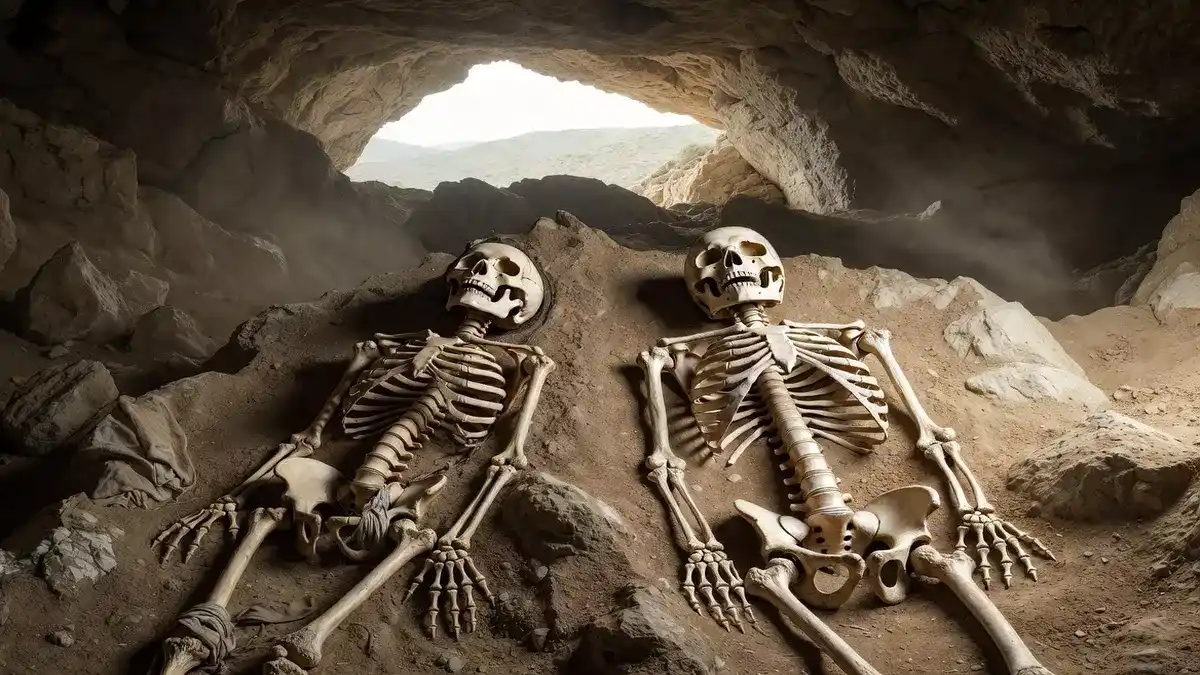
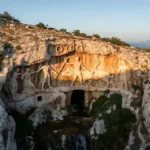
In 1963, archaeologists uncovered a touching double burial inside Grotta del Romito, a limestone cave nestled in the hills of southern Italy. The two individuals were laid to rest in an embrace, their bodies preserved in the cool, dry air of the cave. One was a teenage girl known as Romito 2; the other, Romito 1, was an adult woman. Their discovery was already rare, but what came next—decades of painstaking study and modern DNA analysis—revealed something far more extraordinary.
Romito 2 stood just 110 centimeters tall, roughly 3 feet 7 inches. Her limbs were strikingly short, giving her a delicate, almost fragile appearance even as a teenager. Romito 1, at 145 centimeters (about 4 feet 9 inches), was also noticeably shorter than the average adult height of the time. Both skeletons showed no signs of trauma or injury, suggesting their deaths were not accidental. The site’s remote mountain location and lack of other human remains nearby pointed to a hunter-gatherer population that had once thrived in this rugged landscape.
## The Girl With the Shortened Limbs
When the skeletons were examined more closely, researchers noticed something striking: severe shortening of the limbs, especially the forearms and lower legs. The teenager’s bones were unusually compact, and her overall stature was far below what would have been expected for a young woman in her community. At first glance, the condition looked like a form of dwarfism, but only ancient DNA could provide the final answer.
The team extracted DNA from the inner ear bones—tiny, dense structures that often survive exceptionally well even in ancient samples. This high-quality genetic material allowed the researchers to sequence the genomes of both individuals with remarkable precision.
## DNA Proves the Earliest Genetic Diagnosis
 Secrets of the Coast: Brain Removal and Long-Distance Dynasties Uncovered in Iron Age Scotland
The genetic results were nothing short of revolutionary. Both Romito 1 and Romito 2 were confirmed to be female. Most importantly, they were first-degree relatives, almost certainly mother and daughter. The analysis revealed that Romito 2 carried two copies of a mutated gene called NPR2. This homozygous mutation is the direct cause of acromesomelic dysplasia, Maroteaux type—a rare inherited condition that affects bone growth in the arms and legs.
Acromesomelic dysplasia is so uncommon that it had never been documented in prehistoric remains before. Modern patients with two copies of the mutated NPR2 gene experience the same severe limb shortening and short stature seen in the teenager’s bones. Romito 1, who had only one copy of the mutation, showed the moderately reduced height that fits the condition’s milder expression in heterozygous individuals.
These findings match perfectly with the clinical features of the disorder observed in today’s patients. The discovery confirms that this rare genetic disease has existed for at least 12,000 years, making it one of the earliest known instances of its kind in anatomically modern humans.
## A Villabruna Hunter-Gatherer Family in the Stone Age
The DNA also identified both women within the Villabruna genetic cluster, a group of early hunter-gatherers who began expanding from southern Europe into central and western Europe around 14,000 years ago. Their lifestyle was tough—moving seasonally, hunting large game, and gathering wild plants—but they lived in small, tightly knit communities.
Despite the severe physical limitations, Romito 2 survived into adolescence. The fact that she lived long enough to develop fully implies her family and community provided extraordinary support. In a world without modern medicine, this care likely involved carrying her on a makeshift litter, helping her reach food and water sources, and ensuring she was not left behind. Such acts of cooperation stand as powerful evidence of social bonds that existed in prehistoric societies long before agriculture or complex civilizations.
## What This Means for Medicine Today
From a medical standpoint, the results carry deep significance. Study co-author Dr. Adrian Daly of Liège University Hospital Centre in Belgium has spent years studying growth disorders. “Our clinical research focuses on identifying the causes of abnormal growth today,” he said. “These results underline that rare genetic diseases are not a modern phenomenon but have been present throughout human history.”
Dr. Daly noted that patients living with severe short or tall stature today still face daily challenges—finding clothing that fits, traveling independently, and navigating social settings. Yet he remained optimistic. “Thankfully, potential treatments for disorders affecting NPR2 and other genes are emerging,” he added. He concluded that ancient DNA genome analyses can identify other rare genetic diseases, including many that have remained largely hidden until now.
The study also highlights how tools developed for modern medicine—genetic sequencing and paleogenomics—can illuminate human history in ways that were unimaginable a decade ago.
## Key Lessons From a Stone Age Skeleton
This case offers several enduring insights. First, rare genetic conditions have accompanied human evolution since at least the late Pleistocene. Second, communities in the Stone Age already practiced forms of care and support that we would recognize as compassionate. Third, the inner ear’s durability makes it an ideal target for ancient DNA studies, opening new possibilities for researching health in the deep past.
The research combined expertise from paleogenomics teams at the University of Vienna, clinical geneticists at Sapienza University of Rome, and anthropologists at Liège University Hospital Centre. Their collaboration shows how interdisciplinary work can yield results that bridge past and present.
## Conclusion: A Window Into Human Resilience
The NPR2-related acromesomelic dysplasia found in Romito 2 reminds us that the challenges of living with a rare genetic condition are not new. Yet the teenager’s survival and the support she received also celebrate human strength and connection. As researchers continue to analyze ancient DNA, we gain a richer understanding of our shared history—and the hope that insights from the past can improve care for people with similar conditions today.
This 12,000-year-old story proves that the same genetic puzzles we face now were solved long ago in the lives of our ancestors. By reading those ancient messages, we not only honor the dead but also move closer to understanding—and helping—the living.
### Frequently Asked Questions
**What condition did the teenage girl have?**
The teenager had acromesomelic dysplasia, Maroteaux type, caused by a homozygous mutation in the NPR2 gene. This rare disorder leads to severe shortening of the limbs and short stature, matching the skeletal evidence exactly.
**How old is the skeleton?**
The double burial is approximately 12,000 years old, dating to the early Holocene period and belonging to the Villabruna hunter-gatherer population.
**How did researchers confirm the diagnosis?**
They extracted DNA from the inner ear bones and identified the specific NPR2 mutations, which match the genetic profile seen in modern patients with the same condition.
**What was the adult woman’s height and relationship?**
Romito 1 was 145 cm tall and carried a single copy of the mutated NPR2 gene. She was almost certainly the mother of Romito 2.
**What does this mean for modern patients?**
The discovery shows that treatments for NPR2 disorders are now available, and that ancient DNA can help identify and understand other rare genetic conditions that affect people today.
**Where was the burial site located?**
The skeletons were found in Grotta del Romito, a limestone cave in southern Italy, during an archaeological excavation in 1963.
**Can we learn more about prehistoric communities from this?**
Yes. The fact that Romito 2 survived to adolescence suggests the community provided practical support for mobility and food, illustrating advanced social cooperation in Stone Age groups.