
Table of Contents
- 1. Who Were the Cliff-Dwellers? Tracing the Bo People
- 2. Surprising Diversity Found Inside the Cliffside Tombs
- 3. Mapping a Broad Southeast Asian Cultural Web
- 4. Conclusion
- 5. Frequently Asked Questions
- 5.1. Why did ancient people hang coffins on cliffs?
- 5.2. Who are the modern Bo people?
- 5.3. What is the difference between hanging coffins and log coffins?
- 5.4. What does the connection to Tai-Kadai and Austronesian speakers mean?
- 5.5. How did the researchers extract DNA from such old remains?
Ancient DNA Reveals True Origins of China’s Mysterious Hanging Coffins
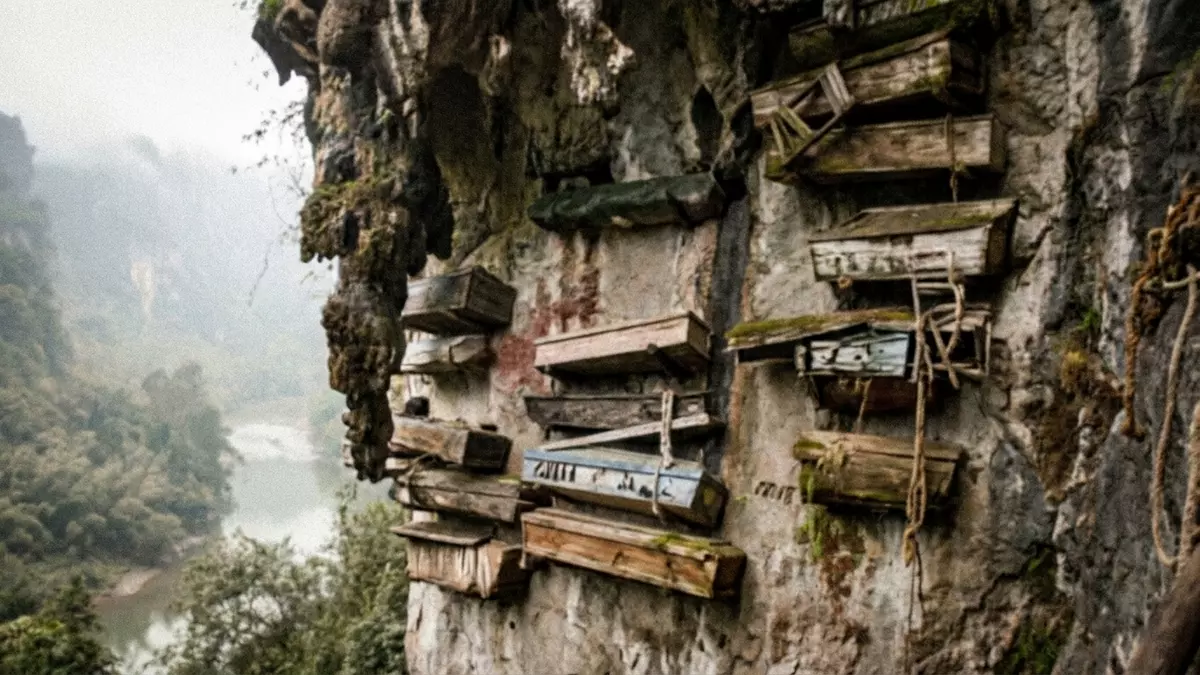
A groundbreaking genomic study has finally illuminated the origins of one of Asia’s most enigmatic archaeological mysteries: the hanging coffin tradition. For centuries, wooden coffins suspended high on sheer cliff faces, tucked into rocky crevices, or placed inside elevated cave walls have fascinated explorers and scientists across southern China and Southeast Asia.
Now, a comprehensive genetic analysis published in Nature Communications has traced a direct ancestral line between the ancient people who performed these daring high-altitude burials and the modern-day Bo people of Southwest China. By bridging ancient skeletal genomes with modern DNA, the research provides unprecedented insights into the migration patterns, cultural networks, and surprising social diversity of this long-lost martial and spiritual society.
Ancient DNA Reveals True Origins of China’s Mysterious Hanging Coffins
Who Were the Cliff-Dwellers? Tracing the Bo People
Historically, Chinese texts heavily associated the cliffside funerary customs with the Bo, an ethnic group that largely vanished from official imperial records following brutal military campaigns during the Ming Dynasty. Until recently, it remained a matter of intense debate whether the few scattered communities identifying as Bo today in Yunnan Province were culturally reinvented or if they truly possessed a biological link to the ancient builders of the cliff cemeteries.
                    [Ancestral Genetic Lineage]
  _______________________________________________________________
 | Neolithic Coastal Populations (Southern East Asia)             |
 |   (Ancestral roots of Tai-Kadai & Austronesian speakers)     |
 |_______________________________ _______________________________|
                                 |
                                 v
 | Ancient Hanging Coffin Builders (Yunnan / Guangxi Sites)     |
 |_______________________________ _______________________________|
                                 |
                                 v
 | Modern Bo Communities (Yunnan Province, Southwest China)     |
 |_______________________________________________________________|
To resolve this mystery, an international research team analyzed full genomes extracted from 11 ancient individuals recovered from hanging coffin sites across the Yunnan and Guangxi provinces. They compared these samples against DNA from four ancient individuals from log coffin sites in northwestern Thailand, alongside genetic profiles from 30 contemporary Bo individuals living in Yunnan.
The comparative data yielded a definitive conclusion: modern Bo populations inherit a massive portion of their genetic architecture directly from the ancient cliff-burial groups. Furthermore, the analysis tied both the ancient and modern cohorts back to Neolithic coastal populations of southern East Asia—the deep ancestral stock that eventually gave rise to modern Tai-Kadai and Austronesian-speaking populations across Southeast Asia and the Pacific.
Surprising Diversity Found Inside the Cliffside Tombs
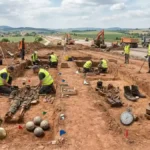
While the study confirmed a strong ancestral core, it also shattered the long-held archaeological assumption that these cliff-dwelling communities were isolated or genetically insular. The most unexpected revelation emerged from the Wa Shi excavation site in Yunnan, where two individuals buried roughly 1,200 years ago during the Tang Dynasty were analyzed.
Despite being laid to rest side-by-side within the exact same hanging coffin tradition and geographic region, their genetic backgrounds could not have been more distinct:
Individual A: Demonstrated a close genetic affinity to northern Yellow River farmers and populations heavily related to modern Tibetan groups.
Individual B: Exhibited a clear genetic signature linking them to ancient Northeast Asian populations.
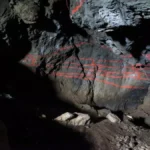
This profound genetic divergence within a single burial site indicates that hanging coffin societies were highly cosmopolitan, socially inclusive, and interconnected with broader geopolitical networks across East Asia. Rather than an isolated fringe culture, they actively integrated outsiders from vastly different geographic origins into their elite spiritual practices.
Mapping a Broad Southeast Asian Cultural Web
The genomic data also highlighted an extensive prehistoric corridor of genetic and cultural exchange flowing between southern China and mainland Southeast Asia. By comparing the Chinese hanging coffin genomes with the log coffin cultures of northwestern Thailand, researchers identified undeniable genetic similarities, proving that these unique elevated burial styles stemmed from shared ideological roots.
However, the regional traditions split over time, adapting to local populations:
| Region | Primary Burial Style | Unique Genetic Marker / Component |
| Southern China | Hanging Coffins (Cliffs & Caves) | Strong Neolithic coastal & Yellow River integration |
| Northwestern Thailand | Log Coffins (Caves & Stilts) | Distinct traces of ancient Hoabinhian hunter-gatherer ancestry |
This localized mixing in Thailand suggests that while the overarching religious philosophy of elevated burials traveled along trade or migratory pathways, migrating groups regularly intermarried with indigenous hunter-gatherer populations who had inhabited Southeast Asia for millennia.
For centuries, the rugged, isolated geography of Yunnan served as a sanctuary, preserving the remnants of Bo culture while keeping their true origins shrouded in mystery.
Conclusion
By merging complex paleogenomics with physical archaeology, scientists have successfully vindicated the oral histories of the modern Bo people. They are not merely an isolated cultural remnant; they are the true biological descendants of an advanced, socially diverse population that once dominated the river valleys and mountain gaps of ancient China. The hanging coffins, far from being isolated monuments of a reclusive tribe, stand as a testament to an expansive, inclusive medieval network that bridged the gap between East and Southeast Asia.
Frequently Asked Questions
Why did ancient people hang coffins on cliffs?
While motivations varied across centuries, historical and anthropological theories suggest that placing coffins in high, inaccessible places protected the deceased from scavengers and floods. Spiritually, many cultures believed that elevating the dead placed them closer to the heavens and the gods, while providing a protective vantage point over their living descendants.
Who are the modern Bo people?
The Bo are a small, distinct ethnic community living primarily in the isolated mountainous pockets of Yunnan Province in Southwest China. For centuries, their true lineage was questioned because their ancestors abruptly disappeared from official Chinese imperial records following military conflicts during the Ming Dynasty.
What is the difference between hanging coffins and log coffins?
Hanging coffins are typically suspended from beams driven into sheer cliff faces or placed on natural ledges high above ground level, a style prominent in southern China. Log coffins, more frequently found in Thailand, utilize large, hollowed-out tree trunks placed inside caves or elevated on wooden structures, though both share a common ideological root of elevating the deceased.
What does the connection to Tai-Kadai and Austronesian speakers mean?
This connection shows that the ancient hanging coffin builders shared deep prehistoric roots with the seafaring and agricultural populations that eventually migrated southward into modern Southeast Asia, Taiwan, and Polynesia, mapping an ancient web of human migration across East Asia.
How did the researchers extract DNA from such old remains?
Geneticists utilized advanced paleogenomic techniques, extracting highly degraded DNA from dense skeletal fragments (often the petrous bone of the skull or teeth) recovered from the coffin sites. They then amplified and sequenced the full genomes, comparing them to thousands of ancient and modern reference samples.