
**Kasta Tomb Restoration Reveals Macedonia’s Largest Ancient Mound**
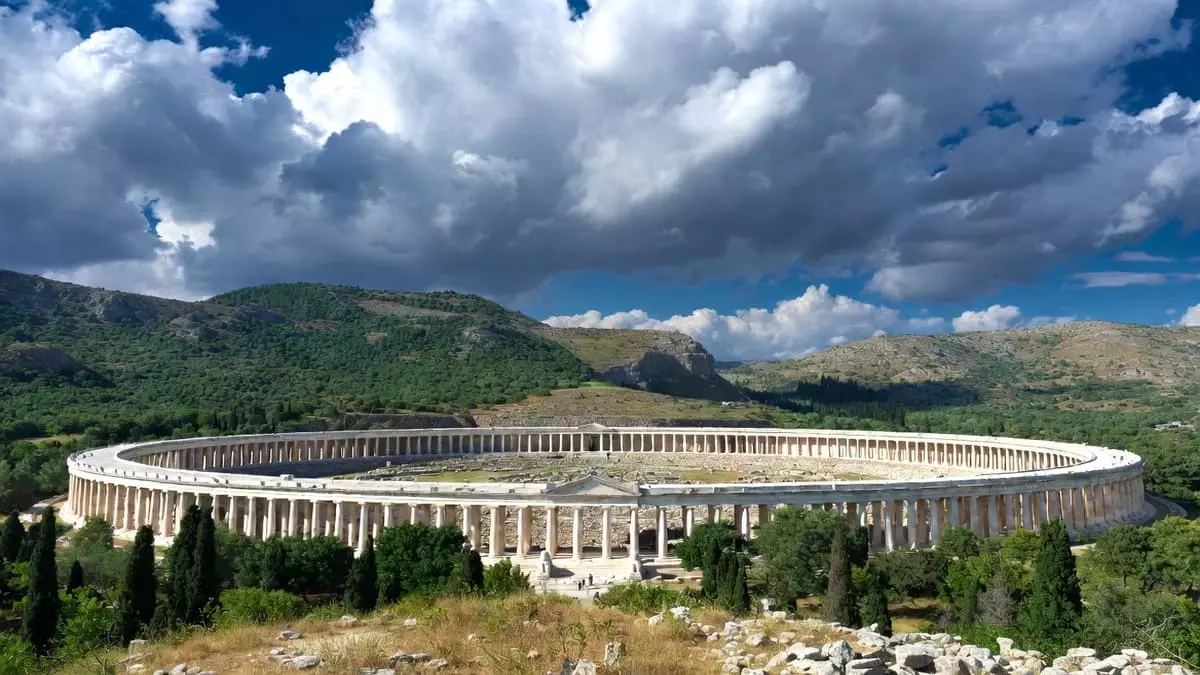
Visitors and history enthusiasts are gaining an unprecedented look at one of ancient Greece’s most impressive monuments. The Kasta Tomb in Amphipolis, northern Greece, has emerged in its full glory thanks to ongoing restoration efforts, highlighting its status as the largest burial mound ever found in Macedonia.
This massive tumulus, dating back to the late 4th century BCE, offers a fascinating window into the power, wealth, and artistry of the Hellenistic world shortly after Alexander the Great’s death. Recent work has uncovered the complete marble perimeter wall, allowing experts and the public to appreciate its extraordinary scale for the first time in centuries.
Kasta Tomb Restoration Reveals Macedonia’s Largest Ancient Mound
### The Monumental Scale of the Kasta Tomb
The Kasta Tomb stands out for its sheer size and engineering ambition. The mound measures over 140 meters in diameter, dwarfing the famous Great Tumulus at Aigai, which spans about 110 meters. Its marble enclosure wall, known as the peribolos, stretches an impressive 497 meters around the base, encircling more than 20 acres of land. The entire protected archaeological area covers over 50 acres.
This discovery has astonished archaeologists. The quality of the marble used, combined with sophisticated construction techniques, points to a project funded and designed for someone at the very top of Macedonian society. While the exact identity of those buried inside remains unknown, the timing and location strongly link it to the inner circle of Alexander the Great or his immediate successors.
Amphipolis itself was a strategically vital city in ancient Macedonia. Located near important trade routes and serving as a naval base during Alexander’s campaigns, it was home to several of his key generals. This context fuels ongoing speculation that the tomb may honor a close associate, family member, or high-ranking official from that turbulent era.
### Recent Restoration Breakthroughs
Greek Culture Minister Lina Mendoni visited the site recently to review progress, praising the team’s achievements in restoring the monument’s original geometry and revealing its full enclosure. Workers have now fully exposed the marble perimeter, providing clear insights into the tomb’s design and historical significance.

Key accomplishments include:
– **Rebuilding the southern wall**: Over 105 meters of the enclosure have been reconstructed using original marble blocks recovered from the site, with minimal modern additions for structural integrity.
– **Internal stabilization**: Temporary steel supports inside the chambers have been removed, reopening views of the burial spaces and repaired stone vault.
– **Drainage and protection**: Engineers are installing an extensive system to prevent water damage, while reshaping the mound to match its ancient profile.
– **Future features**: Plans call for reinstalling the monumental double marble door and restoring the guardian sphinxes at the entrance, including missing wings and a head.
These efforts not only preserve the structure but also protect it from erosion and environmental threats, ensuring it endures for future generations.
### Insights from Later Historical Periods
Restoration work has uncovered more than just the original 4th-century BCE design. Evidence shows Roman-era activity, including points where cranes lifted marble blocks for reuse elsewhere. Archaeologists identified remains of ramps and lifting systems, along with a later mudbrick retaining wall built to stabilize the slopes after earlier disturbances.
Such findings illustrate how the monument continued to influence the landscape long after its construction, serving as a valuable resource and landmark through different empires.
### Historical Context: Post-Alexander Macedonia
The Kasta Tomb was built during one of the most dramatic periods in ancient history. Following Alexander the Great’s sudden death in 323 BCE, his vast empire fragmented amid wars among his generals (the Diadochi). Power struggles, political intrigue, and shifting alliances defined the era.
Amphipolis played a notable role in these events. Alexander prepared campaigns here, and after his death, his wife Roxane and son Alexander IV faced exile and eventual murder in the region. The tomb’s luxurious features—elaborate sphinxes, mosaics, and massive scale—reflect the wealth and ambition of the Macedonian elite during this uncertain time.
While early speculation linked it directly to Alexander himself or figures like his mother Olympias or companion Hephaestion, experts emphasize the need for caution. The remains of multiple individuals were found inside, but definitive identification has proven elusive. Regardless, the monument underscores the cultural and architectural heights achieved by ancient Macedonia.
### Engineering and Architectural Marvels
The Kasta Tomb showcases advanced ancient engineering. Its circular mound, marble-lined passages, and intricate decorations required immense labor and resources. The use of high-quality Thasian marble and precise stonework highlights the skills of Macedonian artisans.
Restorers are also exploring the potential for digital reconstruction of original colors and details through scientific projects, which could one day allow virtual visitors to experience the tomb as it appeared over 2,300 years ago.
### Looking Ahead: Public Access and Tourism
Greek authorities aim to open the Kasta Tomb to the public in early 2028. Plans include new visitor facilities and a dedicated museum space on the eastern side of the site. These additions will enhance the experience while prioritizing safety and preservation.
For travelers interested in ancient history, the site complements other Macedonian treasures like the royal tombs at Vergina (Aigai) and the museums in Thessaloniki. Its location, roughly 60 miles northeast of Thessaloniki, makes it an accessible addition to any Greece itinerary focused on Hellenistic heritage.
The project, costing over €15 million and supported by regional, national, and European funds, demonstrates a strong commitment to cultural heritage. It involves collaboration among archaeologists, architects, engineers, conservators, and scientists from leading Greek institutions.
### Why the Kasta Tomb Matters Today
This restoration not only revives a physical monument but also reignites public interest in Alexander the Great’s legacy and the Hellenistic Age. It reminds us how architecture and burial practices reflected power, piety, and memory in the ancient world.
As more details emerge, the Kasta Tomb continues to captivate scholars and enthusiasts alike, offering fresh perspectives on a pivotal chapter in Western civilization.
**Conclusion**
The full reveal of the Kasta Tomb in Amphipolis marks a milestone in archaeological preservation. By exposing its enormous marble enclosure and restoring key features, experts have brought this ancient wonder back to life, solidifying its place as Macedonia’s largest and most impressive burial mound. As work progresses toward a 2028 public opening, the site promises to deepen our understanding of the post-Alexander era while inspiring awe in visitors from around the world. This magnificent monument stands as a testament to human ambition, artistic excellence, and the enduring power of history.
### FAQ: Everything You Want to Know About the Kasta Tomb
**Q: When was the Kasta Tomb built?**
A: Construction dates to the final quarter of the 4th century BCE, in the decades immediately following Alexander the Great’s death in 323 BCE.
**Q: How big is the Kasta Tomb compared to others?**
A: At over 140 meters in diameter, it surpasses the Great Tumulus at Aigai (about 110 meters), making it the largest known burial mound in Macedonia.
**Q: Who is buried in the Amphipolis tomb?**
A: The identity remains unconfirmed. It was likely built for a high-ranking member of the Macedonian elite, possibly connected to Alexander’s family or generals, but no definitive link has been established.
**Q: When can visitors see the Kasta Tomb?**
A: Greek authorities plan to open it safely to the public in early 2028, along with new visitor facilities and a museum area.
**Q: What makes the restoration project special?**
A: It combines traditional techniques with modern engineering, using original materials where possible, installing protective drainage, and revealing Roman-era modifications for a complete historical picture.
**Q: Is the Kasta Tomb linked to Alexander the Great?**
A: While not Alexander’s tomb (his remains are associated with Egypt), its location and timing strongly suggest connections to his inner circle or the turbulent succession period after his death.
**Q: How can I learn more about Amphipolis and Macedonian history?**
A: Explore related sites like Vergina, read about the Diadochi wars, or visit museums featuring artifacts from Alexander’s era for deeper context.