
Table of Contents
**7,000-Year-Old Beaver Bones Reveal Neolithic Fur Hunting**
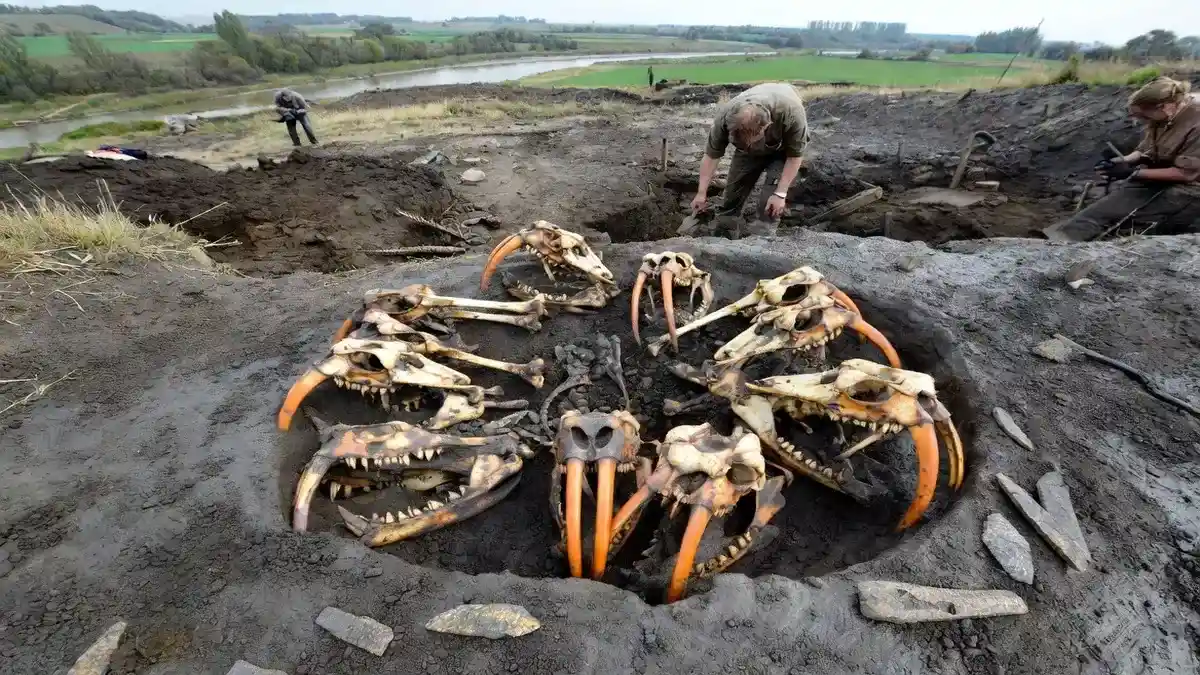
Archaeologists in Germany have made a fascinating discovery that sheds new light on the daily lives and resource strategies of Europe’s earliest farmers. Near the town of Alsleben in Saxony-Anhalt, researchers uncovered a small pit filled with the remains of at least 12 beavers, dating back approximately 7,000 years. This unusual find provides rare direct evidence of organized fur hunting practices during the early Neolithic period.
The beaver bone pit offers a unique glimpse into how prehistoric communities in central Europe utilized local wildlife. It suggests that these early agricultural societies actively hunted beavers not primarily for meat, but for their valuable pelts, which likely played a key role in clothing and warmth.
7,000-Year-Old Beaver Bones Reveal Neolithic Fur Hunting
 Ancient secrets of Maya blue revealed: a second method for creating the iconic pigment discovered
### Major Discovery During Infrastructure Project
The pit came to light during preparatory archaeological work for the SuedOstLink high-voltage electricity transmission line. This major project spans about 170 kilometers across Saxony-Anhalt, a region rich in fertile soils and layered human history. Archaeologists from the State Office for Heritage Management and Archaeology Saxony-Anhalt have been carefully investigating sites along the route to document heritage before construction begins.
The excavation area sits above the Saale River. In addition to the beaver pit, the team found traces of settlements from multiple eras, including the Neolithic, Bronze Age, and Iron Age. Features such as postholes, storage pits, and burials painted a picture of long-term human activity in the landscape. However, the small beaver bone concentration stood out immediately as something extraordinary.

### Inside the Beaver Bone Pit
The feature itself is modest in size—roughly 80 centimeters in diameter—but its contents are remarkable. It was packed with well-preserved beaver bones, including the distinctive orange-brown incisors that quickly caught the team’s attention. A flint tool found in the upper layers provided an initial clue to its early date.
Because of the unusual nature of the deposit, archaeologists removed the entire pit as a single block for detailed laboratory examination. Radiocarbon dating placed the bones between 4935 and 4787 BCE, firmly in the early Neolithic and associated with the Stroke-Ornamented Ware Culture, known for its distinctive decorated pottery.

Analysis confirmed that the pit contained exclusively beaver remains. Based on skull fragments, researchers estimate at least 12 individual animals. The bones were not in anatomical order and many skeletal elements were missing, indicating the carcasses had decomposed elsewhere before the bones were gathered and deposited together.
### Evidence of Targeted Fur Hunting Practices
The composition and condition of the bones point to deliberate hunting focused on beaver pelts rather than meat. Beavers were plentiful along the Saale River, making them a reliable local resource. Their thick, warm fur would have been highly prized for clothing, bedding, or trade in the cooler climate of Neolithic Europe.
After skinning, the carcasses were likely left to decay naturally. Later, people collected the remaining bones and placed them in this concentrated pit. The animals ranged in age from about one year old to over eight years, suggesting hunters targeted a cross-section of the local beaver population rather than focusing only on the largest individuals.
This organized approach differs from typical household waste deposits. The single-species concentration implies intentional activity—possibly a specialized hunting or processing event. Such evidence is exceptionally rare because organic materials like fur and hides rarely survive in the archaeological record for thousands of years.
### Life in the Early Neolithic Stroke-Ornamented Ware Culture
The Stroke-Ornamented Ware Culture represents some of central Europe’s first farming communities. These groups combined agriculture with continued reliance on wild resources. The Alsleben discovery highlights how they skillfully managed the local environment, incorporating beaver hunting into their broader subsistence strategies.
Beaver fur would have provided durable, insulating material for garments in a time before woven textiles became widespread. This find helps archaeologists better understand prehistoric clothing production and the economic value placed on different animal species. It also demonstrates sophisticated knowledge of local wildlife behavior and ecology.
### Broader Context of Neolithic Resource Use
During the Neolithic transition, communities across Europe shifted from pure hunting and gathering to farming and animal husbandry. However, wild game remained important for supplementing diets, obtaining raw materials, and possibly for social or ritual purposes. The beaver pit adds important nuance to this picture, showing that specialized hunting continued alongside early agriculture.
Similar bone concentrations are uncommon, making this deposit especially valuable. It provides tangible proof of practices that are otherwise invisible—such as fur processing and garment making—that shaped daily life more than 6,900 years ago.
The location near the Saale River was strategically significant. Rivers offered reliable water sources, fertile floodplains for crops, and rich habitats for animals like beavers. Early farmers clearly recognized and exploited these advantages.
### Archaeological Methods and Preservation
The careful recovery and block excavation of the pit allowed for exceptional preservation of the bones during analysis. Laboratory work revealed fine details about the animals’ ages and the deposit’s formation process. This methodical approach exemplifies best practices in modern rescue archaeology, where infrastructure projects create opportunities to study the past before development alters the landscape.
The SuedOstLink project has facilitated numerous important finds along its route, contributing significantly to our knowledge of Saxony-Anhalt’s prehistoric heritage. Each investigation helps build a more complete picture of how ancient communities lived, worked, and interacted with their environment.
### Significance for Understanding Prehistoric Clothing
One of the most exciting aspects of this discovery is its contribution to the study of ancient textiles and clothing. Because organic materials decay quickly, direct evidence of what people wore is scarce. Beaver bones in this context serve as indirect but compelling proof of fur-based garments that provided essential protection against the elements.
This aligns with other Neolithic finds across Europe that suggest diverse use of animal resources. Together, they paint a richer image of prehistoric ingenuity and adaptation—qualities that enabled farming communities to thrive in varied landscapes.
### Ongoing Research and Future Implications
Analysis of the beaver remains continues, with potential for further insights through isotopic studies that could reveal details about the animals’ diets and movement patterns. The discovery also encourages re-examination of other Neolithic bone deposits for similar specialized hunting evidence.
As more infrastructure and development projects incorporate archaeological monitoring, finds like the Alsleben beaver pit demonstrate the importance of preserving cultural heritage. They remind us that significant stories about our ancestors often lie just beneath the surface, waiting to be uncovered.
### Why This Matters Today
The 7,000-year-old beaver bone pit connects modern audiences with the resourcefulness of early European farmers. It shows how people thousands of years ago developed sophisticated strategies for utilizing nature’s gifts, from cultivating crops to harvesting animal materials for survival and comfort.
In an era of growing interest in sustainable practices and traditional knowledge, this ancient evidence feels remarkably relevant. It underscores humanity’s long history of creative adaptation to the environment and the value of studying the past to inform the present.
### Conclusion: A Window into Neolithic Resourcefulness
The discovery of a densely packed beaver bone pit near Alsleben represents a significant addition to our understanding of early Neolithic life in central Germany. It confirms organized fur hunting practices among the Stroke-Ornamented Ware Culture and highlights the importance of wild resources even as farming took hold.
This unassuming pit, filled with bones from at least a dozen beavers, opens a rare window into clothing production, hunting strategies, and daily resource management more than 6,900 years ago. As researchers continue to study the find, it will undoubtedly yield more insights into how our ancestors thrived in the challenging transition to agricultural societies.
The Alsleben discovery stands as a powerful reminder of the hidden depths of prehistory and the ongoing work needed to bring those stories to light. Through careful archaeology and scientific analysis, we gain deeper appreciation for the ingenuity of Neolithic communities and the foundations they laid for later European societies.
### FAQ: 7,000-Year-Old Beaver Bone Pit in Germany
**How old is the beaver bone pit and where was it found?**
The pit dates to between 4935 and 4787 BCE (about 7,000 years old) and was discovered near Alsleben in Saxony-Anhalt, Germany, during work for a major power line project.
**Why did Neolithic people hunt beavers?**
Evidence suggests they primarily targeted beavers for their valuable, warm fur rather than meat. The fur would have been used for clothing and other practical items in prehistoric Europe.
**How many beavers were found in the pit?**
Researchers estimate remains from at least 12 individual beavers, ranging in age from young to mature adults, based on skull and bone analysis.
**What culture is associated with this discovery?**
The deposit belongs to the Stroke-Ornamented Ware Culture, one of central Europe’s early farming societies known for its distinctive pottery styles.
**Why is this find significant for archaeology?**
It provides rare evidence of specialized fur hunting and resource use that is usually invisible in the record, helping reconstruct Neolithic clothing practices and subsistence strategies.
**Will more similar discoveries be made?**
Ongoing infrastructure projects and improved archaeological methods are likely to reveal additional evidence of early hunting and resource management across Europe.