
Table of Contents
- 1. A Preservation Miracle in the Peloponnese
- 2. Sophisticated Tools for Complex Tasks
- 3. Competing with Predators
- 4. Rewriting the History of Human Innovation
- 5. Frequently Asked Questions (FAQ)
- 5.1. 1. What is the significance of the Marathousa 1 wooden tools?
- 5.2. 2. Why are these tools so well preserved?
- 5.3. 3. What were these tools used for?
- 5.4. 4. How did scientists know the marks on the wood were made by humans?
- 5.5. 5. Does this finding change our view of early humans?
430,000-Year-Old Tools: Oldest Wooden Implements Ever Found
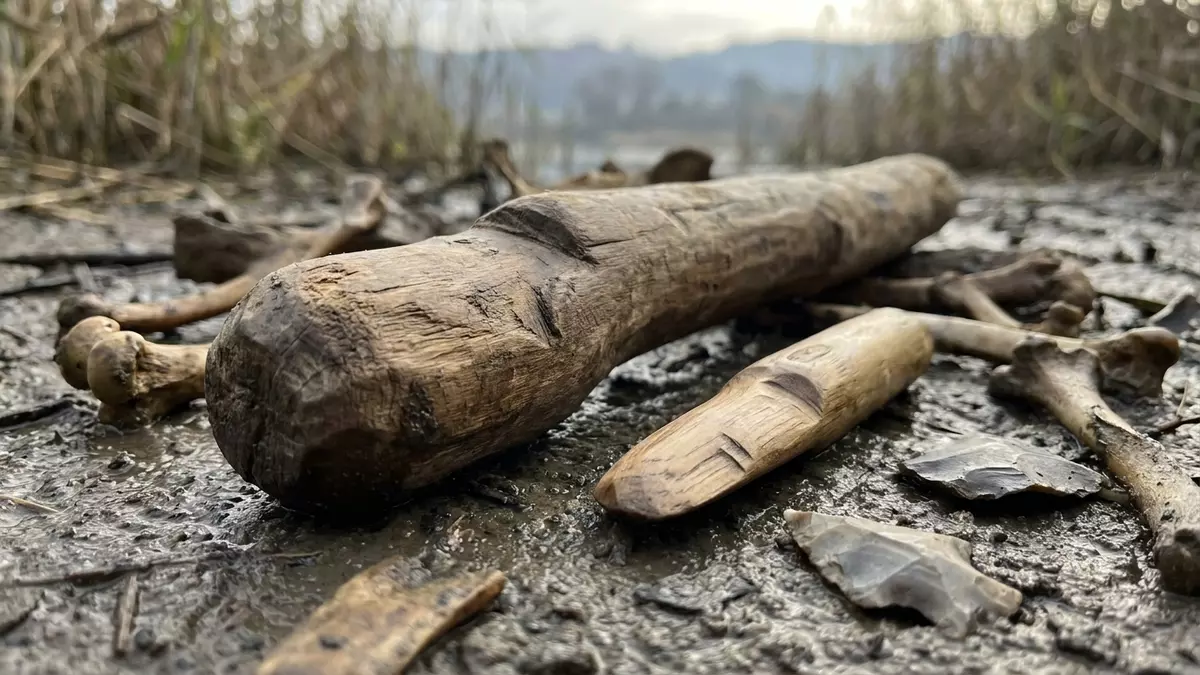
Archaeologists working in the Megalopolis Basin of southern Greece have unveiled a discovery that fundamentally shifts our understanding of human technological evolution. Excavations at the Marathousa 1 site have revealed the oldest handheld wooden tools ever discovered, dating back approximately 430,000 years to the Middle Pleistocene. These remarkably preserved artifacts provide a rare, tangible link to the daily lives of early hominins, showcasing a level of ingenuity and technical skill previously undocumented for this era.

430,000-Year-Old Tools Oldest Wooden Implements Ever Found
A Preservation Miracle in the Peloponnese
Marathousa 1 was once a vibrant lakeshore environment, a focal point for both ancient humans and the megafauna they hunted. Over the millennia, waterlogged, oxygen-poor sediments at the site acted as a natural preservative. While wood typically rots away after only a few years, these anaerobic conditions prevented decay, allowing the artifacts to remain intact for nearly half a million years.
The site is already well-known among researchers for its significant findings, including numerous stone flakes, animal bones bearing clear butcher marks, and the massive remains of a straight-tusked elephant. However, the identification of worked wood adds an entirely new dimension to the narrative of early human survival in southeastern Europe.

Sophisticated Tools for Complex Tasks
By applying rigorous microscopic analysis, the research team—led by experts from the University of Reading and international partners—was able to distinguish intentional human shaping from natural damage caused by sediment pressure, roots, or animal interference. Two specific wooden artifacts stood out for their clear design and evidence of use:
The Digging Stick: Crafted from alder wood, this tool features surface cut marks made by stone implements. The rounded areas on the wood indicate repeated contact with the earth, suggesting it was used as a digging stick to loosen wet soil or extract edible plant tubers near the ancient lake.
The Precision Tool: A much smaller fragment made from willow or poplar shows intentional carving and smoothing consistent with being held between the fingers. Researchers believe this was a specialized implement used for fine motor tasks, potentially for adjusting or sharpening stone flakes during the production of other tools.
Competing with Predators
The study also revealed the intensity of the environment at Marathousa 1. During their analysis, researchers identified a third wood fragment featuring deep, parallel grooves and crushed fibers. Microscopic examination confirmed these marks were caused by the claws of a large carnivore, likely a bear.
This discovery provides a vivid picture of the risks early humans faced. Humans were not the only ones attracted to the lakeshore; they were likely in direct, high-stakes competition with large predators for access to the carcasses of elephants and other prey.
Rewriting the History of Human Innovation
Before this discovery, the history of wooden tool use was largely defined by sites in Africa, Europe, and Asia that were significantly younger than 430,000 years. While an older wooden structure dating to 476,000 years ago was discovered at Kalambo Falls in Zambia, that find is interpreted as a component of a built feature rather than a handheld implement. The Marathousa 1 tools push the record for shaped, handheld wooden implements back by at least 40,000 years.

The findings demonstrate that early Middle Pleistocene hominins possessed a deep, nuanced understanding of their environment. They were not only selecting specific wood types—such as alder, willow, and poplar—for their unique properties but were also applying complex technical skills to create tools tailored for specific functions. This evidence of long-term planning, combined with the presence of stone and bone artifacts, paints a picture of a population that was highly adaptable, technically proficient, and intellectually capable.
Frequently Asked Questions (FAQ)
1. What is the significance of the Marathousa 1 wooden tools?
These are the oldest handheld wooden tools ever discovered, dating back approximately 430,000 years. They are the first evidence of shaped, handheld wooden implements from this period in southeastern Europe.
2. Why are these tools so well preserved?
The tools were found in waterlogged, oxygen-poor sediments. These conditions prevented the wood from decaying, allowing it to survive for nearly half a million years.
3. What were these tools used for?
The larger tool, made from alder, was likely a digging stick used to loosen soil or harvest plant foods. The smaller willow or poplar tool was likely a precision implement held in the fingers to help craft or adjust stone flakes.
4. How did scientists know the marks on the wood were made by humans?
Researchers used high-powered microscopes to study surface marks, internal structure, and wood species. This allowed them to distinguish between intentional carving marks made by stone tools and accidental damage caused by roots, sediment, or animals.
5. Does this finding change our view of early humans?
Yes. It demonstrates that early hominins had a broad knowledge of natural materials and possessed sophisticated technical skills much earlier than previously thought. It shows they were not just “opportunistic” users of stone, but were capable of designing specialized wooden tools for specific tasks.