
Table of Contents
- 0.1. Who Was Queen Elisenda of Montcada?
- 0.2. Opening the Tombs: What Archaeologists Found
- 0.3. Surprising Discoveries in the Abbesses’ Tombs
- 0.4. Scientific Analysis and Future Insights
- 0.5. The Historical Significance of Pedralbes Monastery
- 0.6. What These Findings Mean for Medieval Studies
- 0.7. Conclusion: A Bridge Between Past and Present
Archaeologists in Barcelona have made a remarkable discovery while exploring the Royal Monastery of Santa Maria de Pedralbes.
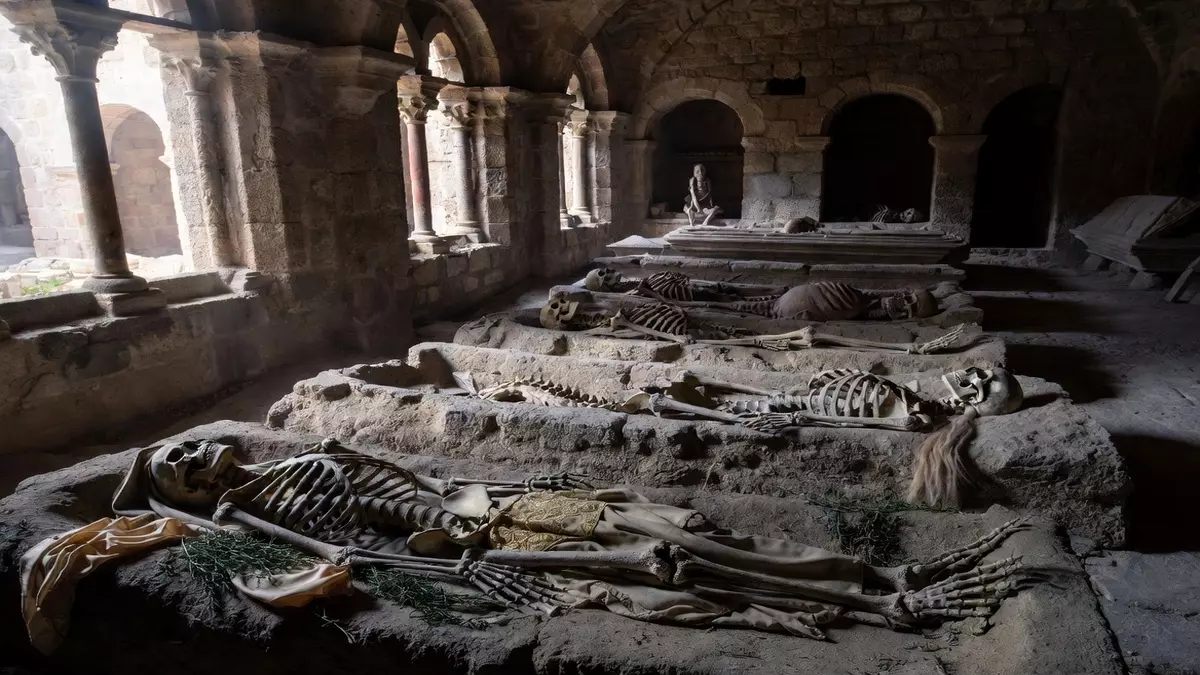
To mark the 700th anniversary of this historic site, experts opened eight 14th-century tombs and uncovered 25 skeletons, including those of Queen Elisenda of Montcada and members of her inner circle. The findings offer fresh insights into life, death, and burial practices during medieval times in Catalonia.
The investigation shines new light on one of the most influential women of 14th-century Europe. Queen Elisenda, who founded the monastery in 1326, lived a life bridging royal power and religious devotion.
Her story, and the surprises found alongside her remains, highlight the complex realities of medieval society.

Queen Elisenda’s Remains Reveal Medieval Secrets After 700 Years
Who Was Queen Elisenda of Montcada?
Born into a powerful Catalan family, Elisenda of Montcada married King James II of Aragon and Valencia in 1322. At 30 years old, she became the fourth wife of the 55-year-old monarch, who was already a father of 10 children. James II, known as “the Just,” ruled a significant portion of what is now eastern Spain until his death in 1327.
As her husband’s health declined, Elisenda channeled her influence into founding the Royal Monastery of Santa Maria de Pedralbes for the Order of the Poor Clares. This cloistered community of nuns became a spiritual and cultural landmark in Barcelona. After James II passed away, the queen lived in a small palace adjacent to the monastery until her own death in 1364 at around age 70.
Her dual identity — as both a political figure and a devout penitent — is reflected in the unique placement of her tomb, positioned between the church and the cloister. This arrangement symbolized her roles as sovereign and spiritual devotee.
Opening the Tombs: What Archaeologists Found
The recent study, conducted by the Culture Institute of Barcelona, focused on graves tied to the monastery’s earliest years. Researchers examined the final resting places of Queen Elisenda, the first two abbesses, and other individuals connected to the foundation.
In Queen Elisenda’s sarcophagus, experts discovered her bones inside a modest wooden box placed in one corner of the burial space. Despite her royal status, she was buried in simple monastic clothing. However, traces of luxurious gold-embroidered silk and fragrant herbs like rosemary and myrtle suggest elements of ceremony and status accompanied her to the afterlife. Initial bone analysis confirmed she was approximately 70 at death, with signs of osteoarthritis typical of advanced age.
Surprising Discoveries in the Abbesses’ Tombs
The tomb of Sobirana Olzet, the monastery’s first abbess, contained remains matching historical records. Yet a significant finding caught researchers off guard: a traumatic facial injury likely caused by a knife wound around the time of her death. Investigations into this injury continue, raising questions about violence in the lives of even high-status religious women.
Even more unexpected was the tomb originally attributed to the knight Artau de Foces. Instead of a single male burial, it held the remains of five individuals — two adult women and three children. No male bones were present. One woman’s long ponytail remained remarkably preserved, still attached to her skull, offering a rare glimpse of personal appearance from the period.
The most crowded grave belonged to Francesca Saportella, the second abbess and Queen Elisenda’s niece. This tomb contained bones from at least nine people deposited over different periods. Among them were four male skulls, each showing clear stab wounds. Additionally, researchers found the mummified torso of a pregnant woman with the remains of a 20- to 23-week-old fetus still in the birth canal — a poignant and tragic discovery.
These mixed burials challenge earlier assumptions about who was interred in the monastery’s sacred spaces and suggest evolving or practical approaches to burial during the monastery’s formative decades.
Scientific Analysis and Future Insights
Beyond visual examination, the team has begun genetic testing. So far, only about 6% of Queen Elisenda’s genome has been sequenced, but plans are underway to analyze DNA from bones and teeth. This work aims to verify identities, map family connections, and search for traces of ancient diseases that affected these individuals.
The researchers are also conserving papers and parchment recovered from the tombs, including sheet music, which may reveal more about daily life and cultural practices. Plant remains and textiles are being studied to understand burial rituals and environmental conditions of the era.
These findings align with historical knowledge that early burials at Pedralbes primarily involved high-status elderly women, many showing age-related bone changes. However, the presence of men with violent injuries and a pregnant woman adds layers of complexity to the monastery’s story.
The Historical Significance of Pedralbes Monastery
Founded in 1326, the Royal Monastery of Santa Maria de Pedralbes stands as a testament to medieval Catalan power and faith. The Poor Clares, known for their strict cloistered life, created a community that influenced religious and social spheres. Queen Elisenda’s decision to establish the monastery near the end of her husband’s reign reflects both personal piety and strategic legacy-building.
The 700th-anniversary project provides a unique window into this pivotal time. By studying these foundational graves, historians can better understand how the monastery evolved within broader medieval Catalan society, including relationships between royalty, nobility, and religious orders.
The discoveries also highlight the physical realities of medieval life — from common conditions like osteoarthritis to rarer evidence of violence and untimely death. They remind us that even elite women in religious settings were not entirely shielded from hardship.
What These Findings Mean for Medieval Studies
This archaeological effort demonstrates the value of revisiting historic sites with modern techniques. Non-invasive methods and careful DNA sampling allow researchers to honor the dead while extracting new knowledge. The presence of stab wounds among male remains in a women’s monastery raises intriguing questions about protection, political alliances, or external conflicts affecting the community.
The pregnant woman’s remains evoke the human stories behind historical records — lives cut short and the emotional weight carried by families and communities. Such details bring medieval history closer to modern audiences, showing that people then faced universal challenges of health, loss, and remembrance.
As analysis continues, experts expect full results by mid-2027. These will likely reshape understandings of daily life, medical knowledge, and social structures in 14th-century Barcelona.
Conclusion: A Bridge Between Past and Present
The unearthing of Queen Elisenda’s remains and the accompanying skeletons transforms a milestone anniversary into a profound historical revelation. What began as a commemorative study has uncovered unexpected tales of power, faith, violence, and resilience. These 700-year-old bones connect us to real individuals who shaped Catalan culture and whose stories continue to unfold through careful scientific work.
The Royal Monastery of Santa Maria de Pedralbes remains a living monument, now enriched by these discoveries. As researchers piece together identities and circumstances, they offer us a deeper appreciation for the complex tapestry of medieval European life.
FAQ
1. Who was Queen Elisenda and why is she important? Queen Elisenda of Montcada was a powerful 14th-century royal who founded the Pedralbes Monastery. She played key political and religious roles, bridging monarchy and the church in medieval Catalonia.
2. How many skeletons were found in the Barcelona monastery tombs? Researchers discovered 25 skeletons across eight graves during the 700th-anniversary investigation.
3. What unusual findings surprised archaeologists in the tombs? Discoveries included male skulls with stab wounds, a pregnant woman with a fetus in the birth canal, and a well-preserved ponytail on one female skull. Some tombs contained multiple unrelated individuals.
4. What will DNA analysis reveal about the remains? Genetic testing aims to confirm identities, establish family relationships, and detect ancient pathogens. Only a small portion of Queen Elisenda’s genome has been sequenced so far.
5. When will full results from the Pedralbes study be available? Comprehensive findings from bone analysis, textiles, documents, and plant remains are expected by mid-2027.
6. Why was Queen Elisenda buried in a special way? Her tomb’s location between church and cloister symbolized her dual roles as queen and penitent, reflecting both political authority and spiritual devotion.
7. What does this discovery tell us about medieval life? It reveals details about health conditions, burial practices, violence, and the diverse people connected to prestigious religious institutions in 14th-century Spain.