
Table of Contents
- 1. From Ocean to Afterlife: The Diverse Uses of Shells
- 1.1. Practical and Cosmetic Containers
- 1.2. A Scribe’s Creative Companion
- 1.3. Personal Adornment and Fashion
- 2. The Spiritual Dimension: Fertile Amulets and Eternal Tools
- 2.1. Cowrie Shells and the Magic of Rebirth
- 2.2. Equipping the Dead for Eternity
- 3. Engineering and Environmental Clues in Mudbricks
- 3.1. Reinforcing the Foundation of Society
- 3.2. Prehistoric Environmental Barometers
- 4. The Enigma of Scarcity: A Rare and Elegant Assemblage
- 4.1. The Power of Natural Perfection
- 5. Conclusion: Tying Human Culture to the Natural Nile
- 6. Frequently Asked Questions
- 6.1. Where were these ancient mollusk shells discovered?
- 6.2. How did ancient Egyptian scribes use clam shells?
- 6.3. Why were cowrie shells buried with children and pregnant women?
- 6.4. How were shells utilized in ancient Egyptian construction?
- 6.5. Why have so few shells been found at Saqqara if they were so useful?
Ancient Mollusk Shells Discovered in Saqqara Unlocking Secrets of Egyptian Rituals and Daily Life
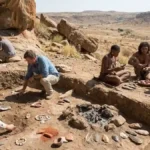
A fascinating archaeological revelation within Egypt’s expansive Saqqara necropolis has turned researchers’ attention toward the natural world, revealing how ancient Egyptians derived profound practical utility and deep spiritual solace from simple mollusk shells. The unexpected findings stem from the Saqqara West mission, a long-running excavation initiative spearheaded by Polish archaeologists who have been meticulously documenting the historic burial grounds since the late 1980s.
Situated roughly 30 to 40 kilometers south of modern Cairo—and sitting in the historic shadow of the iconic Step Pyramid of Netjerikhet (Djoser)—Saqqara served as the primary, magnificent cemetery for the ancient capital of Memphis. For thousands of years, it was the final resting place for pharaohs, powerful priests, and elite government administrators. Because of this elite status, the necropolis continues to provide an incredibly rich, multi-dimensional portrait of ancient Egyptian societal structures, beliefs, and day-to-day customs.
Ancient Mollusk Shells Discovered in Saqqara Unlocking Secrets of Egyptian Rituals and Daily Life
From Ocean to Afterlife: The Diverse Uses of Shells
While heavy stone statues and shimmering gold artifacts often dominate global headlines, the discovery of these delicate marine and freshwater shells provides an intimate, human-scale look at Egyptian life. The excavated shells demonstrate a remarkably broad spectrum of applications, bridging the gap between mundane daily tasks and elite cosmetic luxury.
Practical and Cosmetic Containers
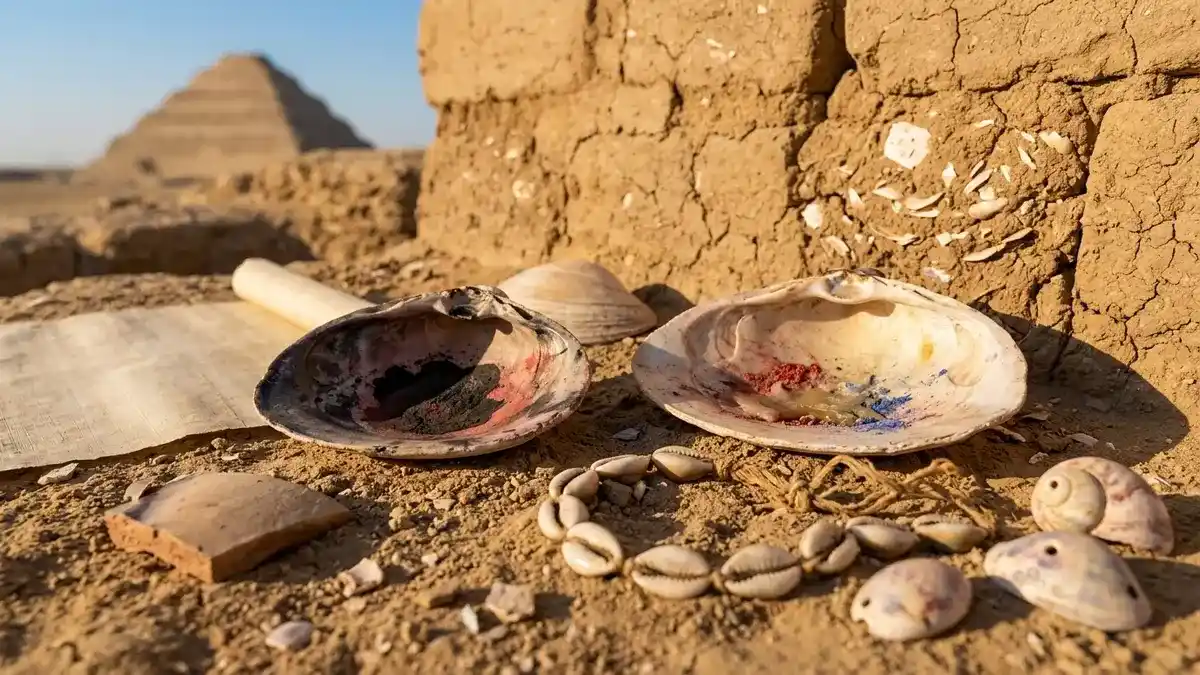
The physical structure of larger bivalve and gastropod shells made them naturally suited to serve as durable, elegant vessels. In daily life, upper-class Egyptians and court officials utilized them as shallow bowls or dishes to hold valuable cosmetic oils, rare imported perfumes, and medicinal salves.
A Scribe’s Creative Companion
Among the most specialized functional discoveries was the direct link between specific clam shells and the ancient Egyptian administrative class. Scribes routinely repurposed deep, sturdy clam shells as portable inkwells. These natural containers held the cakes of black carbon and red ochre ink that scribes reconstituted with water to document state taxes, pen religious papyri, and record royal decrees.
Personal Adornment and Fashion
Beyond their use as tools, smaller shells were highly valued for their geometric beauty, shifting iridescence, and rich textures. Artisans drilled tiny, precise holes into the shells to weave them seamlessly into elite clothing, intricate beaded collars, hair ornaments, and heavy necklaces. This widespread custom shows a deep, long-standing appreciation for the raw aesthetic forms created by the natural world.
The Spiritual Dimension: Fertile Amulets and Eternal Tools
The significance of these mollusk shells extended far beyond simple aesthetic charm or practical convenience. To the ancient Egyptian mind, objects from nature were heavily imbued with magical properties, leading to their deliberate, ritualistic burial alongside the deceased.
Cowrie Shells and the Magic of Rebirth
Among the various species recovered, cowrie shells held a particularly powerful spiritual position. Because their elongated, central aperture closely resembles the female reproductive anatomy, the ancient Egyptians naturally associated the cowrie shell with fertility, successful childbirth, and the broader concept of cosmic rebirth.
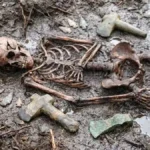
Women wore strings of cowries as protective amulets draped across their hips or abdomens during the dangerous periods of pregnancy and postpartum recovery to ward off malicious spirits. Highlighting this protective association, archaeologists have frequently uncovered these cowrie amulets within the fragile burial sites of young children, placed there to safeguard their souls in the next realm.
Equipping the Dead for Eternity
The inclusion of clam-shell inkwells within the tombs of professional scribes perfectly aligns with the foundational bedrock of ancient Egyptian funerary ideology: the doctrine of material continuity.
The Egyptian Belief: The ancient Egyptians firmly maintained that whatever tools, items, or professional trades were essential to a person’s happiness and survival in the physical world would be required anew in the afterlife. By burying a writer with his shell-inkwell, loved ones guaranteed that his career, social standing, and identity would remain fully intact throughout eternity.
Engineering and Environmental Clues in Mudbricks
In a surprising twist, the Polish archaeological team discovered that mollusk shells played a hidden but vital role in ancient Egyptian civil engineering and architecture.
Reinforcing the Foundation of Society
In the construction of ancient domestic structures, administrative buildings, and tomb enclosures, workers frequently integrated crushed shell fragments alongside traditional chopped straw into their wet mudbrick mixtures. As the clay dried in the sun, the jagged, calcium-rich shell pieces acted as a natural aggregate binding agent. This structural addition significantly increased the overall durability, moisture resistance, and longevity of the bricks—a clever building technique that remains actively utilized in certain rural, agrarian communities along the Nile today.
Prehistoric Environmental Barometers
Because mollusks are highly sensitive organisms that react dramatically to minute changes in water temperature, salinity, and local climate shifts, these trapped shells serve as priceless scientific data mines for modern researchers. By conducting chemical and isotopic testing on the shell fragments preserved inside the mudbrick walls, environmental archaeologists can reconstruct highly accurate profiles of the local weather patterns, flood stages of the Nile, and ecological conditions that existed thousands of years ago.
The Enigma of Scarcity: A Rare and Elegant Assemblage
Despite the extensive, decades-long footprint of the Saqqara West mission, these recovered shells remain a relatively exclusive and rare class of artifact. Since 1999, researchers have successfully logged only about 30 distinct specimens, comprising both complete, undamaged shells and localized fragments.
Historians have proposed two primary theories to explain this surprising scarcity:
Targeted Tomb Looting: It is highly probable that ancient grave robbers, while ransacking the tombs for gold and fine linen, carelessly smashed or discarded fragile shell artifacts, leaving only trace remnants behind in the disturbed dirt layers.
Restricted Regional Custom: The use of shells might have been a highly specialized, localized tradition that was not universally adopted by every family or dynasty burying their dead at the Saqqara site.
The Power of Natural Perfection
Curiously, none of the 30 specimens recovered from Saqqara display royal hieroglyphic inscriptions or elaborate, hand-carved ornamentation. Egyptologists suspect that the ancient craftsmen believed the natural design of the shells was already perfect in its own right.
Many of the freshly excavated pieces still retain traces of vibrant, contrasting color patterns that have managed to survive centuries of burial, while others are a pure, solid white. To the ancient mind, this natural whiteness was strongly synonymous with spiritual purity and cleanliness, making them ideal offerings for the gods of the underworld.
Conclusion: Tying Human Culture to the Natural Nile
The fascinating mollusk shells brought to light by the Saqqara West mission serve as a powerful reminder of how intimately connected ancient Egyptian civilization was to the vibrant ecosystem of the Nile River valley and the neighboring seas.
Rather than viewing nature as something to be completely conquered or ignored, the ancient Egyptians looked closely at the smallest details of the natural world—from the shape of a clam to the curve of a cowrie—extracting profound utility for their daily lives, creative inspiration for their art, and eternal spiritual solace for their journey into the afterlife.
Frequently Asked Questions
Where were these ancient mollusk shells discovered?
The shells were discovered during ongoing excavations at the Saqqara necropolis, located roughly 30 to 40 kilometers south of Cairo, Egypt. The specific discoveries were made by the Saqqara West mission, a long-term project led by Polish archaeologists.
How did ancient Egyptian scribes use clam shells?
Ancient scribes regularly repurposed deep, durable clam shells as natural inkwells. They used the hollow cavity of the shell to hold and mix the black and red inks required to write documents on papyrus scrolls.
Why were cowrie shells buried with children and pregnant women?
Because the shape of a cowrie shell resembles a female reproductive organ, the ancient Egyptians viewed it as a powerful symbol of fertility, life, and protection. Women wore them as magical amulets during pregnancy, and they were buried with children to offer spiritual protection and ensure safe passage and rebirth in the afterlife.
How were shells utilized in ancient Egyptian construction?
Ancient builders mixed crushed mollusk shells and straw directly into wet mudbrick clay. The inclusion of the hard shell fragments reinforced the structural integrity of the bricks, making the finished buildings much stronger and more resistant to the elements.
Why have so few shells been found at Saqqara if they were so useful?
Since 1999, only about 30 specimens have been uncovered at the site. Archaeologists believe this rarity is due either to extensive historical tomb looting—where fragile organic artifacts were broken and lost over the centuries—or because the ritual use of shells was a specialized custom limited to specific families or time periods.