
Table of Contents
- 1. Anatomy of a 99% Pure Gold “Rainbow Cup”
- 1.1. Deciphering the Sacred Celtic Iconography
- 2. Pushing Back the Saxon Timeline
- 3. Mapping Prehistoric Trade Paths and Amber Routes
- 4. A Masterclass in Citizen Science
- 5. Frequently Asked Questions
- 5.1. What makes the Gundorf gold coin historically unique?
- 5.2. Why is the coin called a “Rainbow Cup”?
- 5.3. What symbols are engraved on the coin?
- 5.4. If Saxony wasn’t a Celtic territory, how did the coin get there?
- 5.5. What was the coin’s primary function in antiquity?
Oldest Coin Found in Saxony Pushes Coinage History Back 2,200 Years
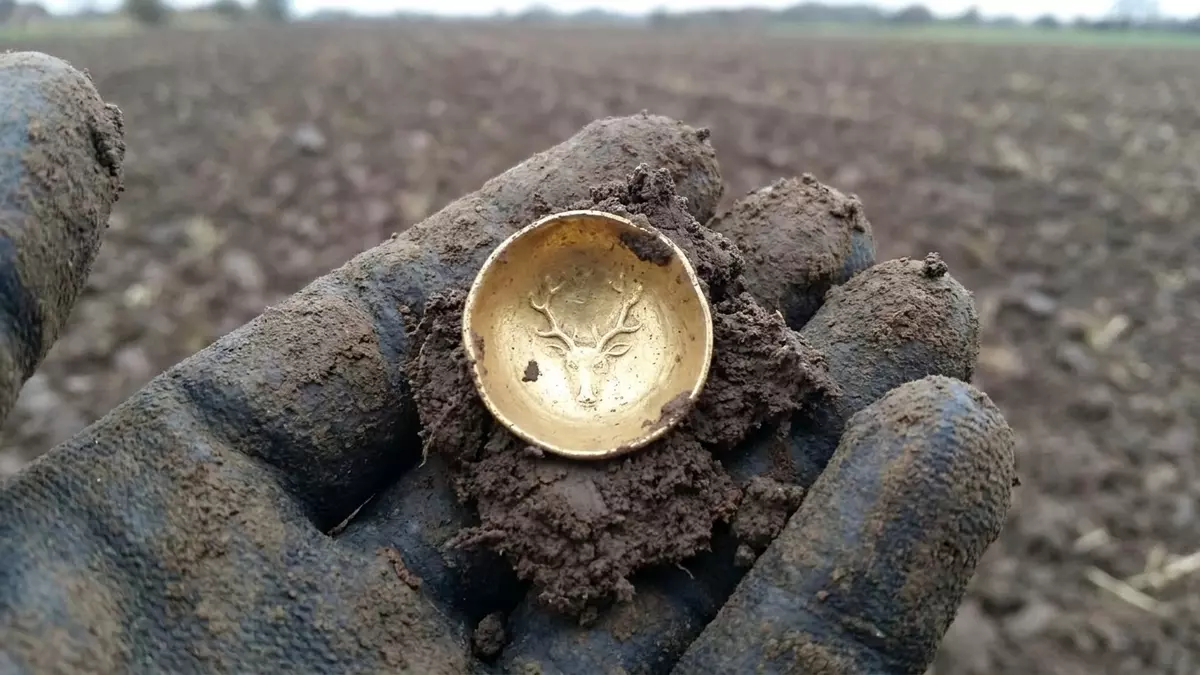
A breathtaking numismatic discovery near Leipzig has officially rewritten the monetary history of eastern Germany. While conducting a systematic sweep of an agricultural field near Gundorf, a certified volunteer metal detectorist named Daniel Fest uncovered a minuscule, glinting object that turned out to be a 2,200-year-old Celtic gold coin.
Formally identified by the Saxony State Office for Archaeology (LfA), the artifact stands as the absolute oldest coin ever pulled from Saxon soil. Dating back to the third century BCE, this pristine treasure provides undeniable physical evidence of sophisticated, long-distance trade and elite diplomatic connections linking the ancient inhabitants of Saxony with the powerful Celtic civilizations flourishing to the south.
Oldest Coin Found in Saxony Pushes Coinage History Back 2,200 Years
Anatomy of a 99% Pure Gold “Rainbow Cup”
The newly discovered artifact is classified by experts as a Celtic quarter stater, a high-value denomination minted during a brief window of the Hellenistic era. Despite its immense historical weight, the coin is incredibly tiny: it weighs a mere two grams and measures roughly half the size of a modern penny. Lab testing confirmed that the coin is composed of nearly pure gold, boasting an extraordinary fineness of approximately 99%.
Conforming to a distinct numismatic tradition, the coin possesses a gently curved, bowl-like shape. In German archaeology and folklore, these specialized concave coins are affectionately referred to as Regenbogenschüsselchen, or “Rainbow Cups.”
The Legend of the Rainbow Cups: Ancient European folklore long maintained that golden treasures could be found at the exact coordinates where a rainbow touched the horizon. Because heavy rainstorms frequently washed away topsoil and exposed these bright, cup-shaped gold coins in muddy fields, ancient farmers genuinely believed the objects were lucky tokens that had fallen directly from the heavens during thunderstorms.

Deciphering the Sacred Celtic Iconography
Despite its diminutive surface area, the Gundorf specimen displays an astonishing level of artistic detail, featuring sacred motifs that held deep spiritual and political meaning across the ancient Celtic world:
The Obverse (Front): Features a highly stylized animal head, interpreted by scholars as a sacred stag. The profile outlines distinct eyes flanking a elongated nose bridge, capped by a prominent, artistic bump on the forehead.
The Reverse (Back): Depicts a prominent, open torc (a sacred Celtic neck ring) finished with thickened, bulbous ends. Nestled safely inside the curvature of the torc is a stylized five-pointed rounded star positioned directly above a small, perfect sphere.

       [VISUAL ARCHITECTURE OF THE GUNDORF REINBOW CUP]

       [OBVERSE FACE (FRONT)]            [REVERSE FACE (BACK)]
                 │                                 │
                 ▼                                 ▼
        Stylized Stag Head                 Open Celtic Torc Ring
    (Symbol of Wild Rebirth)            (Sign of Nobility & Power)
                                                   │
                                                   ▼
                                         Central Star & Sphere
To the ancient Celts, the torc was far more than a luxury piece of jewelry. It served as a supreme symbol of aristocratic nobility, divine right, and spiritual protection. Its prominent inclusion on state-backed coinage indicates that these objects were manufactured to serve a dual purpose: facilitating high-level economic transactions while simultaneously reinforcing the social status and religious authority of the ruling class.
Pushing Back the Saxon Timeline
Prior to Daniel Fest’s historic discovery, the title of Saxony’s oldest coin belonged to a silver Büschelquinar unearthed near Zauschwitz back in 2007. That silver piece was securely dated to the early first century BCE. The Gundorf gold quarter stater effortlessly shatters that record, pre-dating the Zauschwitz coin by well over a century and permanently pushing the absolute timeline of Saxon coinage history much deeper into antiquity.
+-----------------------------------------------------------------------+
|                    SAXONY COINAGE AGE COMPARISON                      |
|                                                                       |
|  [OLD RECORD: ZAUSCHWITZ QUINAR]  ───> Early 1st Century BCE (Silver) |
|                                                                       |
|  [NEW RECORD: GUNDORF STATER]     ───> 3rd Century BCE (99% Pure Gold)│
|                                                                       |
|  *Historical Impact: Pushes Saxon monetary trade back by 100+ years*  |
+-----------------------------------------------------------------------+
Mapping Prehistoric Trade Paths and Amber Routes
The high-resolution artistry and flawless, unworn condition of the gold coin suggest it was minted within a centralized Celtic workshop located in northern Bohemia (modern-day Czech Republic), which operated as a dominant manufacturing hub during the third century BCE.
Crucially, the geographic region of modern Saxony sat well beyond the official, permanent settlement zones of the Celtic tribes. The presence of a pristine Bohemian gold coin near Leipzig serves as a clear indicator of strategic cross-border contact. Because the coin shows absolutely zero signs of surface wear, scrapes, or circulation smoothing, State Archaeologist Dr. Regina Smolnik notes that it likely never functioned as common pocket currency.
| Discovery Attribute | Lost 19th Century Specimen | Gundorf Stater Specimen |
| Material Base | Unknown / Missing Records | 99% Pure Solid Gold |
| Preservation State | Lost to history | Near-Mint / Perfect Flawless Profile |
| Iconography | Poorly documented | Labeled Stag Head, Torc, Star, & Sphere |
| Economic Context | Isolated surface find | Stores elite wealth from long-distance amber routes |
Instead, the coin functioned as an ultra-premium status symbol, a diplomatic gift, or a concentrated store of personal wealth for a high-ranking Saxon merchant or chieftain who was actively engaged in lucrative, long-distance trade. During this era, small gold quarter staters were manufactured briefly to facilitate high-stakes luxury commerce—specifically trading for raw amber harvested along the Baltic coasts—before being systematically replaced by larger, heavier one-third staters as trade networks formalized.
A Masterclass in Citizen Science
The Gundorf gold coin was officially presented to the international press during a celebratory heritage event attended by Barbara Klepsch, Saxony’s State Minister for Culture and Tourism. Klepsch took the opportunity to highly praise the responsible, ethical behavior of Daniel Fest, who immediately paused his survey, mapped the exact coordinates, and notified state archaeologists the moment the gold emerged from the dirt.
Historically, only eleven Celtic coins have ever been recovered across the entire province of Saxony—many of which are completely undecorated or were tragically lost to private black markets during the 19th century. Thanks to intensive, state-regulated volunteer detectorist networks active in recent years, nine new specimens have been safely brought to light.
By prioritizing transparent cooperation between passionate civilian volunteers and academic institutions, Saxony is setting a global standard for how to successfully discover, document, and protect the fragile material treasures of our shared ancient past.
Frequently Asked Questions
What makes the Gundorf gold coin historically unique?
The 2,200-year-old Celtic gold coin is the absolute oldest coin ever discovered in the province of Saxony, Germany, pushing the region’s documented monetary and trade history back by more than a century.
Why is the coin called a “Rainbow Cup”?
In European archaeology, these thin, concave Celtic coins are called “Rainbow Cups” (Regenbogenschüsselchen) because of their unique bowl-like shape. Ancient folklore held that they were lucky tokens dropped from the sky where a rainbow touched the earth, as they were often uncovered by farmers following heavy rainstorms.
What symbols are engraved on the coin?
The obverse (front) features a stylized head of a stag with prominent eyes and a forehead bump. The reverse (back) displays an open Celtic torc (neck ring) framing a five-pointed rounded star and a tiny golden sphere.
If Saxony wasn’t a Celtic territory, how did the coin get there?
The coin was minted in northern Bohemia (modern Czech Republic), a major Celtic center. Its presence near Leipzig proves that the ancient inhabitants of Saxony maintained highly organized, long-distance trade routes and elite diplomatic ties with Celtic societies to the south, likely trading for valuable Baltic amber.
What was the coin’s primary function in antiquity?
Because the coin is in flawless, near-mint condition with no circulation wear, scholars believe it did not change hands as everyday pocket change. Instead, it likely served as a high-status symbol, an elite diplomatic gift, or a concentrated store of wealth for a wealthy tribal leader.